FERN PLANTS GALLERY PAGES Fern Culture with British Ferns and their Allies comprising the Ferns, Club-mosses, Pepperworts and Horsetails by Thomas Moore, F.L.S, F.H.S., Etc. London George Routledge and Sons, Broadway, Ludgate Hill. Hardcover published in 1861 provides details on British Ferns |
TYPE OF FERN TO GROW
Where to see UNITED STATES WALES |
USE OF FERN
Where to see AUSTRALIA CANADA ENGLAND FRANCE GERMANY IRELAND NETHERLANDS
|
SPORE COLOUR BED PICTURES Where to see NEW ZEALAND SCOTLAND UNITED STATES |
A Natural History of Britain's Ferns by Christopher N. Page. Published by William Collins Sons & Co. Ltd in 1988. ISBN 0 00 219382 5 (limpback edition) provides details of Coastal, Man-made Landscapes, Woodland, Wetland, Grassland and Rock Outcrops, Heath and Moorland, Lower Mountain Habitats, Upper Mountain Habitats and Atlantic Fringe Ferns. Tree Ferns by Mark F. Large & John E. Braggins. Published by Timber Press in 2004. ISBN 978-1-60469-176-4 is a scientifically accurate book dealing with Tree Fern species cultivated in the United States and the Pacific, but little known and rare tree ferns are also included. The Observer's Book of Ferns, revised by Francis Rose, previous editions compiled by W.J.Stokoe. Published by Frederick Warne & Co. Ltd in 1965 provides a comprehensive guide to 45 British species of Ferns. It provides details of habitat and how to use those ferns. The Plant Lover's Guide to Ferns by Richard Steffen & Sue Olsen. Published in 2015 by Timber Press, Inc. ISBN 978-1-60469- Success with Indoor Ferns, edited by Lesley Young. Reprinted 1998. ISBN 1 85391 554 8. It details the care of indoor ferns with their position, choice and fern care. |
Where to see UNITED STATES |
|
|
|||
|
||||||||||
Fern |
Foliage Colour and |
Height x Spread in inches (cms) |
Type of Fern to Grow |
Use of Fern |
Comments |
Frond |
Credit |
Form |
||
Adiantum capillus-veneris |
|
|
|
|
|
|
|
|
||
Adiantum raddianum |
|
|
|
|
|
|
|
|
||
Aglaomorpha, all species |
|
|
|
|
|
|
|
|
||
Campyloneurum , most species |
|
|
|
|
|
|
|
|
||
Davallia, all species |
|
|
|
|
|
|
|
|
||
Goniophlebium , all species |
|
|
|
|
|
|
|
|
||
Nephrolepis, all species |
|
|
|
|
|
|
|
|
||
Phlebodium aureum |
|
|
|
|
|
|
|
|
||
Phlebodium pseudoaureum |
|
|
|
|
|
|
|
|
||
Platycerium, all species |
|
|
|
|
|
|
|
|
||
Polypodium, most species |
|
|
|
|
|
|
|
|
||
Pyrrosia lingua |
|
|
|
|
|
|
|
|
||
Rumohra adiantiformis |
|
|
|
|
|
|
|
|
||
Aglaomorpha coronans Crowning Bear's Claw Fern, Santa Rosa Fern, Basket Fern Semi-tender or hardier Native to Bangladesh, India, China, Taiwan, southeastern Asia, Malaysia, and the Ryuku Islands of Japan. Aglaomorpha is from the Greek aglaos (bright, pleasing) and morphe (shape) |
Deep green ornately lobed outarching "fronds" with sing like basal oak leaf pattern anchored on large sienna pelted showy rhizomes. Very sturdy and reliable.
This plant has been said to grow in the following regions: Clayton, California Hayward, California Long Beach, California Stockton, California Brandon, Florida |
36-48 x Spacing 72-96 (180-240) |
Staghorn Ferns Requires consistently moist soil; do not let dry out between waterings. Always makes an impressive basket fern when well grown. Does best in very couarse, porous epiphyt potting mix and allow it getting fairly dry between watering. "On rather dry or mossy rocks or on tree trunks in open places or in dense forests, not so rare at medium altitudes throughout Thailand." from Ferns of Thailand, Laos and Cambodia |
Suitable for Tropical - in Denver Botanic Garden - Conservatory or Heated Greenhouse Fern for Acid Soil: 5.6-6.0 pH Basket Ferns |
Best grown in well-drained, moist-dry potting mix or uncut moss. The species is easy to grow and thrives in both humid and drier environments. It can be cultivated in the ground - if given sufficient drainage by using a coarse medium - and in hanging baskets. They collect falling leaves and other organic debris that eventually decay to provide a soil for the roots. The dry, papery texture of this humus-collecting leaf-base resists decay. Though large, they are suitable as indoor plants because they tolerate low humidity and irregular watering. |
Glasshouse Works has photos of this fern.
The perennials prefer a shady situation on moist soil. They tolerate temperatures only above at least 1°C (USDA zone 10). Germination Instructions from Exotic Plants. |
|
|
||
Nephrolepis acuminata (Nephrolepis davallioides, Nephrolepis biserrata and other synonyms) Malaysia, Indonesia Tropical - Semi-tropical The genus name comes from the Greek nephros, kidney, and lepis, scale, referrring to the kidney-bean-shaped indusia. |
The fertile pinnae are deeply lobed and attractive. Tufted clusters of golden-yellow foliage arising from underground rhizomes. The round sori (clusters of spore-bearing organs) are in two rows near the margins on the underside of the pinnae. The fronds grow upright at first, then arch gracefully downwards. They grow in lovely arching rosette shaped and spread by runners. |
24-48 x 2-6 |
Boston Ferns (Nephrolepis)
Propagation: By spores sown on surface of pans of sandy peat under bell-glass and placed in temperature 75-85F (24-30C) any time; division of plants, February-April; or by pegging down creeping stems bearing young plants and removing when rooted. The most common problem in caring for established plants is overwatering combined with poor drainage. These ferns generally tolerate short periods of dryness. |
Suitable for Conservatory or Heated Greenhouse. Basket Fern. Stove Evergreen Ferns. Fronds linear, narrow, once divided, plain or crested. First introduced late eighteenth century. |
This fern can be grown as a garden plant in the tropics, as well as in a large container. |
|
|
|
||
Nephrolepis acutifolia (Isoloma lanuginosa, Lindsaea acutifolia, Lindsayoides acutifolia) Native of Tropical Africa and from southeastern Asia to Polynesia. Also occurs in Northern Australia. The genus name comes from the Greek nephros, kidney, and lepis, scale, referrring to the kidney-bean-shaped indusia. |
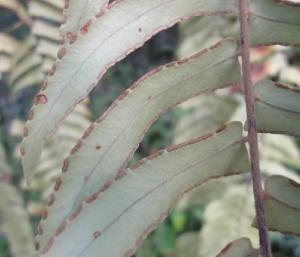
Leathery fronds, reddish scaly rachises and linear, marginal indusia. A large fern with short, stoloniferous rhizomes and fronds over 100cm long (36 inches). |
40 x 5 |
Boston Ferns (Nephrolepis)
Propagation: By spores sown on surface of pans of sandy peat under bell-glass and placed in temperature 75-85F (24-30C) any time; division of plants, February-April; or by pegging down creeping stems bearing young plants and removing when rooted. The most common problem in caring for established plants is overwatering combined with poor drainage. These ferns generally tolerate short periods of dryness. |
Suitable for Conservatory or Heated Greenhouse. Stove Evergreen Ferns. Fronds linear, narrow, once divided, plain or crested. First introduced late eighteenth century. |
Grows well under high light in moist, well-drained potting mix. It may grow on rocks or as an epiphyte, favouring palms. Plants are rather cold sensitive but in the tropics can be grown in the garden or in containers. Native Habitat : Terrestrial (Primary Rainforest; Secondary Rainforest; Coastal Forest; Freshwater Swamp Forest) in Singapore. In Singapore it may be grown in parks and gardens as well as in hanging baskets in Part Shade. |
|
Nephrolepis acutifolia (Creeping Sword Fern) DSC09856 (12). Photo taken 24 September 2013. By Kwan with his copyright © www. NatureLoveYou.sg
Nephrolepis acutifolia (Creeping Sword Fern) DSC09856 (12). Photo taken 24 September 2013. By Kwan with his copyright © www. NatureLoveYou.sg See other photos. |
|
||
Nephrolepis biserrata (Nephrolepis acuta, Aspidium biserrata) Malaysia, Malesiana, Indonesia, Southeast Asia, Australia, North and South America, the Pacific islands, Native Plants of South Florida Tropical - Semi-tropical
The genus name comes from the Greek nephros, kidney, and lepis, scale, referrring to the kidney-bean-shaped indusia. Species biserrata means double-toothed and refers to the leaf margin of the fern. |
The fertile pinnae are deeply lobed and attractive. Tufted clusters of golden-yellow foliage arising from underground rhizomes. The round sori (clusters of spore-bearing organs) are in two rows near the margins on the underside of the pinnae. The fronds grow upright at first, then arch gracefully downwards. They grow in lovely arching rosette shaped and spread by runners. Grow in Part Shade. |
24-48 x 2-6 |
Boston Ferns (Nephrolepis)
Propagation: By spores sown on surface of pans of sandy peat under bell-glass and placed in temperature 75-85F (24-30C) any time; division of plants, February-April; or by pegging down creeping stems bearing young plants and removing when rooted. The most common problem in caring for established plants is overwatering combined with poor drainage. These ferns generally tolerate short periods of dryness. |
Suitable for Conservatory or Heated Greenhouse. Basket Fern. Stove Evergreen Ferns. Fronds linear, narrow, once divided, plain or crested. First introduced late eighteenth century. |
This fern can be grown as a garden plant in the tropics, as well as in a large container. Found in swamps and hammocks. |
|
Nephrolepis biserrata Nephrolepis biserrata
Further photos. |
|
||
Nephrolepis cordifolia (Nephrolepis tuberosa, Polypodium cordifolium, Aspidium cordifolium) Native to northern Australia and Asia. The genus name comes from the Greek nephros, kidney, and lepis, scale, referrring to the kidney-bean-shaped indusia. Nephrolepis cordifolia has become an invasive species is some areas where it has been introduced. In New Zealand it is listed on the National Pest Plant Accord, which prohibits the sale, cultivation and distribution of the plant. |
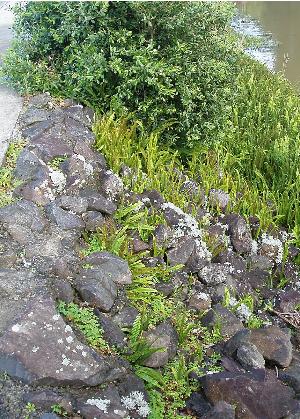
Nephrolepis cordifolia is a wood fern that typically grows in woodland areas. Both fertile and sterile fronds are pinnate, up to 3 feet in length and 3 inches wide. There are many leaflets, or pinnae, ranging from 40-100 mm (1.5 to 4 inches) on each side of the rachis. Each pinna is oblong to lanceolate with an auricle that overlaps rachis. Rhizomes are orange/brown to pale brown with linear scales having hair like tips. Stolons are straw colored and produce small underground tubers. The presence of tubers distinguishes sword fern from the native Nephrolepis exaltata fern. Numerous sori (spore containing structures) are also produced between the leaflet midvein and margin. Dispersal occurs via spores and through the movement of stolons, tubers, and rhizomes.
Hardy to 25°F. |
24-36 x 24-36 |
Boston Ferns (Nephrolepis)
Propagation: By spores sown on surface of pans of sandy peat under bell-glass and placed in temperature 75-85F (24-30C) any time; division of plants, February-April; or by pegging down creeping stems bearing young plants and removing when rooted. The most common problem in caring for established plants is overwatering combined with poor drainage. These ferns generally tolerate short periods of dryness. Grows in wet, shady places, limestone ledges, cliffs, rock and roadsides in North America. |
Suitable for Basket fern. Stove Evergreen Ferns. Fronds linear, narrow, once divided, plain or crested. First introduced late eighteenth century. |
Ground cover in tropical and subtropical areas. Grows from shade to full sun (grows in full sun if given ample water) in soil, among rocks or as an epiphyte (particularly on palm trunks). It is colony former and is popularly grown in temperate regions but in the tropics is generally regarded as a weed. It can be grown in gardens, pots or baskets. Bayabang grows in the Philippines as a hedge plant.
Also in |
|
Español: Cola de Quetzal (Nephrolepis cordifolia), jardín botánico de Tallinn, Estonia
Nephrolepis cordifolia (L.) C.Presl from Rodney Ecological District. This image has been released as "CCBY" by Auckland War Memorial Museum. By Ewen Cameron via Wikimedia Commons.
Nephrolepis cordifolia - Sori. Date 19 March 2008. By Ixitixel via Wikimedia Commons |
|
||
Nephrolepis exaltata Florida, Mexico, Brazil, West Indies. Tender to Semi-tender in USDA Zones 9-11. |
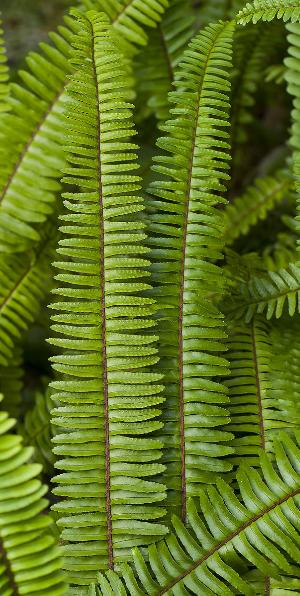
The fronds of Nephrolepis exaltata are 50–250 centimetres (20–98 in) long and 6–15 centimetres (2.4–5.9 in) broad, with alternate pinnae (the small "leaflets" on either side of the midrib), each pinna being 2–8 centimetres (0.79–3.15 in) long. Although the fern may appear totally dead due to frost, it will re-emerge in the spring. In general, the Boston fern likes damp, but not soggy soil that is rich in nutrients. Of the common cultivated ferns, the Boston fern is the most tolerant to drought. The fern thrives best in humid conditions, so when grown as a house plant it becomes necessary to mist the plant when relative humidity falls below around 80%. Although outdoors this plant prefers partial shade or full shade, inside it doesn't grow in shade and feels best in bright filtered light. |
20-100 x 48 It is safe for pets as it is known to be non-toxic. In 1989, the NASA Clean Air Study showed that the Boston Fern could filter Formaldehyde, Xylene and Toluene from the air.
Nephrolepis exaltata is classified as an invasive alien plant in South Africa. In some provinces it must, by law, be eradicated. |
Boston Ferns (Nephrolepis)
Propagation: By spores sown on surface of pans of sandy peat under bell-glass and placed in temperature 75-85F (24-30C) any time; division of plants, February-April; or by pegging down creeping stems bearing young plants and removing when rooted. This plant is usually propagated by division of the rooted runners, as named cultivars will not produce true spores. The most common problem in caring for established plants is overwatering combined with poor drainage. These ferns generally tolerate short periods of dryness. |
Suitable for Conservatory or Warm Greenhouse. Stove Evergreen Ferns. Fronds linear, narrow, once divided, plain or crested. First introduced late eighteenth century. It is a very popular house plant, often grown in hanging baskets. Grow in steamy bathroom. |
A medium-large fern with short, erect, stolonoiferous rhizomes. Grows best under medium to high light in moist-dry potting mixes. So commonly grown are these ferns that commercial growers have established the precise cultural conditions for optimum growth: 2000 foot-candles of light, temperatures between 18 and 35 degrees Centigrade (65-95 degrees Fahrenheit), fertilizers with a 3-1-2 composition, micronutrients, and dolomite to adjust the pH to 5.5. Use a mix with good drainage, and water when the soil surface is slightly dry. To prevent breakage and decay of fronds, water should be applied at the soil level, not on the foliage. Poor foliage results when temperatures are below 18 degrees Centigrade (65 Fahrenheit) for more than a month. Repotting just before the active growth in spring is recommended. |
|
Nephrolepis exaltata (in a greenhouse). English: Greenhouses of the Botanical garden (Saint Petersburg).
The Boston Sword Fern - Nephrolepis exaltata is widely planted from an origin in Central America and the Caribbean. Lomariopsidaceae Lotusland, Montecito, California. By Dick Culbert from Gibsons, B.C., Canada via Wikimedia Commons.
Nephrolepis exaltata. I take this photo from Chinese Medicine Garden in Saikung Hong Kong on 19th March 2006. By Xiaowei (talk | contribs) via Wikimedia Commons. |
See more photos. |
||
Nephrolepis exaltata 'Bostoniensis' The genus name comes from the Greek nephros, kidney, and lepis, scale, referrring to the kidney-bean-shaped indusia. Major cultivar grown in the USA in Zones 10-12. Native to Florida, West Indies, Mexico, Central America, South America, Polynesia and Africa. |
It has graceful, arching, green fronds with a ruffled appearance that is best displayed in a hanging basket or on a stand where it can cascade over the edge. In St. Louis, it is easily grown indoors as a houseplant. Use a peaty, soil-based potting mix. Site in bright indirect light with no direct sun. Tolerant of some shade. Soils should be kept consistently moist, with only a slight reduction in watering from fall to late winter. Prefers high humidity and may appreciate being set on a tray of wet pebbles. Weak fertilizer applications may be made monthly from spring to early fall. Will shed fronds if soils dry out, at which point all fronds may be cut back to about 2” to regenerate. |
24-36 x 24-36 Fronds initially grow upward but arch gracefully and then droop with age. Its fronds are broader and droop more than those of the species. |
Boston Ferns (Nephrolepis)
Propagation: By spores sown on surface of pans of sandy peat under bell-glass and placed in temperature 75-85F (24-30C) any time; division of plants, February-April; or by pegging down creeping stems bearing young plants and removing when rooted. The most common problem in caring for established plants is overwatering combined with poor drainage. These ferns generally tolerate short periods of dryness. |
Suitable for Conservatory or Warm Greenhouse. Stove Evergreen Ferns. Fronds linear, narrow, once divided, plain or crested. First introduced late eighteenth century. Average household temperatures 16-24°C, but no lower than 12°C. Avoid cold draughts. |
They're quite sensitive to chemicals and the smoke from coal fires or wood burners are fairly toxic, draughts must also be avoided. As an indoor fern, it is perhaps best for pedestals or hanging baskets. Locations in or near bathrooms or kitchens may have better humidity. Where winter hardy outdoors, it may be grown in groups or massed in shady areas, or it may be sited at the base of shrubs or around trees. |
Location taken: Brookside Gardens, Wheaton Maryland. Names: Nephrolepis exaltata 'Bostoniensis' , Boston Fer Classification: Plantae > Pteridophyta > Polypodiopsida > Polypodiales > Lomariopsidaceae > Nephrolepis > Nephrolepis exaltata 'Bostoniensis'. Date 8 March 2008. Photo by David J. Stang via Wikimedia Commons. |
||||
Nephrolepis falcata (Nephrolepis gibbosum, Nephrolepis gibbosa, Nephrolepis biserratum var. furcans, Nephrolepis falcata 'Furcans', Nephrolepis biserrata 'Furcans', Nephrolepis falcata, Nephrolepis biserrata var. furcans, Nephrolepis falcata f. furcans) Thailand, Vietnam, Malaysia Tender The genus name comes from the Greek nephros, kidney, and lepis, scale, referrring to the kidney-bean-shaped indusia. |
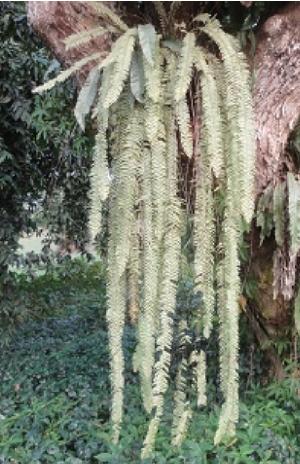
Long, strongly-weeping fronds.
Sub-erect fern, with drooping fronds, can grow up to 50 - 90 cm tall and 45 - 60 cm wide. |
40-100 x |
Boston Ferns (Nephrolepis)
Propagation: By spores sown on surface of pans of sandy peat under bell-glass and placed in temperature 75-85F (24-30C) any time; division of plants, February-April; or by pegging down creeping stems bearing young plants and removing when rooted. The most common problem in caring for established plants is overwatering combined with poor drainage. These ferns generally tolerate short periods of dryness. |
Suitable for Conservatory and Warm Greenhouse. Hanging Basket. Stove Evergreen Ferns. Fronds linear, narrow, once divided, plain or crested. First introduced late eighteenth century. |
A large fern with erect, stoloniferous rhizomes and erect or pendulous, long fronds. Grows well under medium to high light in moist-dry potting mix or uncut moss. Plants are excellent for a large basket and grow vigorously, quickly developing into an attractive specimen. They like plenty of light but should be protected from direct sun. Prefers part shade in moist, well-drained soil in Singapore within gardens and indoors. |
|
Location taken: the New York Botanical Garden. Names: Classification: Plantae > Magnoliophyta > Filicopsida > Filicales > Davalliaceae > Neprolepis > Neprolepis falcata. Nephrolepis falcata - Español: Jardín Botánico Faustino Miranda, Tuxtla Gutiérrez, Chiapas, México. Date: 22 January 2015. By Consultaplantas via Wikimedia Commons. |
|
||
Nephrolepis pectinata Central and South America, West Indies, Cuba The genus name comes from the Greek nephros, kidney, and lepis, scale, referrring to the kidney-bean-shaped indusia. |
In this species the fronds grow in a stiffly erect, tight cluster and arise from an upright rhizome which in old plants becomes a wiry trunk. Grayish-green foliage, often grown in hanging baskets |
12-20 x |
Boston Ferns (Nephrolepis)
Propagation: By spores sown on surface of pans of sandy peat under bell-glass and placed in temperature 75-85F (24-30C) any time; division of plants, February-April; or by pegging down creeping stems bearing young plants and removing when rooted. The most common problem in caring for established plants is overwatering combined with poor drainage. These ferns generally tolerate short periods of dryness. |
Suitable for Basket Fern for Conservatory. Stove Evergreen Ferns. Fronds linear, narrow, once divided, plain or crested. First introduced late eighteenth century. |
Plants grow in large colonies usually in shady forests. They can be grown easily as a garden or tub plant. "1 - Plant on blocks of cork for suspending |
Nephrolepis pectinata - Copenhagen Botanical Garden - Botanical specimen in the University of Copenhagen Botanical Garden, Copenhagen, Denmark. Date: 7 May 2012. By Daderot via Wikimedia Commons. |
||||
Doryopteris ludens (Dryopteris wallichii) Peninsular Malaysia with northern India to southern China. The Tropical Fern & Exotic Plant Society is based in South Florida. |
It has dimorphic leaves; the leaves change shape. It has a creeping rhizome and spaced fronds, the fertile ones of which are taller and more deeply lobed. Fronds are dark green and leathery and are carried on wiry black stems. Able to tolerate short spells of dryness at the root zone if there is high humidity; planting media/ soil should be moist, but not soggy or wet continually as this can cause the plant to rot. |
12 x
Welcome to hortipedia, the plant database that lets you search and find plants by life-form, bloom color, bloom time, size, and many more.. Currently our database holds entries about 32149 plants. |
Cloak, Lip, Hand Ferns and Their Hardy Relatives (Bommeria, Cheilanthes, Doryopteris, Gymnopteris, Hemionitis, Notholaena, Paraceterach, Pellae, Pleurosorus, Quercifilix)
Propagation: |
Suitable for Containers or Hanging Baskets in Conservatory or Heated Greenhouse in the UK. Bright to semi- shady, no sunlight. The same indoor temperature all year round. Not below 16° C (61° F) during the winter. Keep evenly moist. In winter water less when temperatures are low. Sensitive to water-logging. Give low doses of fertilizer every four weeks from early spring to early autumn. Make sure ventilation is good. Repot in spring if necessary. Best to keep above 50 degrees F (10 degrees C). |
This small fern is suitable for containers or hanging baskets in shade. A small-medium fern with slender, long-creeping rhizomes. Grows well under medium light in moist potting mix. Plants like warm, dry, airy conditions and a well-drained, alkaline soil mix. Grows on limestone. The perennials prefer a half-shady situation on moderately moist soil. The substrate should be gritty loam. They tolerate temperatures only above at least 1°C (USDA zone 10). Grows on Limestone rocks by streams in forests; 400-1000 m. |
|
Doryopteris ludens - Botanical specimen in Saigon Zoo and Botanical Gardens - Ho Chi Minh City, Vietnam. By Daderot via Wikimedia Commons.
Doryopteris ludens - Botanical specimen in the Marie Selby Botanical Gardens - Sarasota, Florida, USA. Date: 20 March 2017. By Daderot via Wikimedia Commons. See more photos. |
|
||
|
|
|
|
|
|
|
|
|
||
|
|
|
|
|
|
|
|
|
||
|
|
|
|
|
|
|
|
|
||
|
|
|
|
|
|
|
|
|
||
|
|
|
|
|
|
|
|
|
||
|
|
|
|
|
|
|
|
|
||
|
|
|
|
|
|
|
|
|
||
|
|
|
|
|
|
|
|
|
||
|
|
|
|
|
|
|
|
|
||
|
|
|
|
|
|
|
|
|
||
|
|
|
|
|
|
|
|
|
||
|
|
|
|
|
|
|
|
|
||
|
If you grow and sell ferns in any country, please tell me so that I can put them on this website and inform others where they can be bought online via mail-order. If you would provide photos and fern details to be only used by me on this website, they would be gratefully received, since I could assume that the photo was a valid one in regard to its name of fern in its filename to that fern in the photo. |
Site design and content copyright ©January 2009. DISCLAIMER: Links to external sites are provided as a courtesy to visitors. Ivydene Horticultural Services are not responsible for the content and/or quality of external web sites linked from this site. |
Fern Grower's Manual by Barbara Joe Hoshizaki & Robbin C. Moran. Revised and Expanded Edition. Published in 2001 by Timber Press, Inc. Reprinted 2002, 2006. ISBN-13:978-0-88192-495-4. |
|
|
|||||



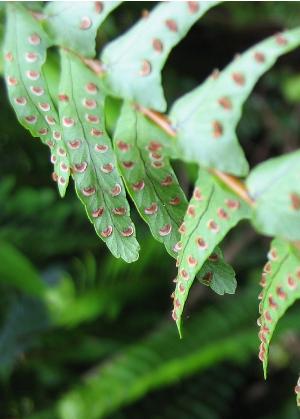


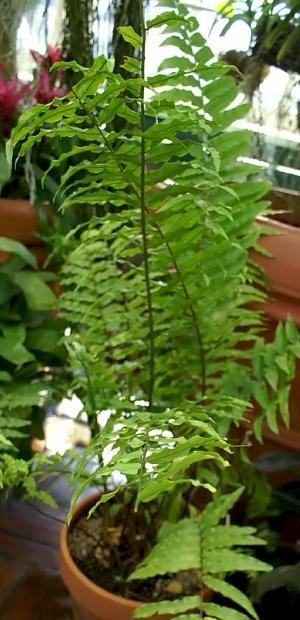
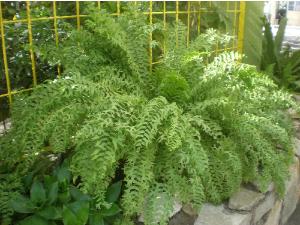


USE OF FERN WITH PHOTOS
using information from Fern Grower's Manual by Barbara Joe Hoshizaki & Robbin C. Moran and
The Encyclopaedia of Ferns An Introduction to Ferns, their Structure, Biology, Economic Importance, Cultivation and Propagation by David L. Jones ISBN 0 88192 054 1
Outdoor Use in
Northeastern United States Zones 3-6
Southeastern United States Zones 6-8
Southern Florida and Hawaii Zones 10-11
Central United States Zones 3-6
Northwestern United States Zones 5-8 with some Zone 9
Southwestern United States Zones 6-9
Coastal Central and Southern California Zones 9-10
Accent
Aquatic 1, 2
Basket 1,
Ferns for Hanging Baskets 2, 3, 4, 5, 6
Ferns for Hanging Baskets with Pendulous Fronds or weeping Growth Habit 7, 8
Bog or Wet-Soil 1,
Ferns for Wet Soils 2, 3
Border and Foundation 1, 2
Grow in Coastal Region
Cold-hardy Ferns 1, 2, 3, 4, 5, 6
Colour in Fern Fronds 1, 2, 3, 4
Conservatory (Stove House) or Heated Greenhouse 1, 2, 3, 4, 5
Drier Soil 1, 2, 3, 4
Grows on Rock (epilithic) 1, 2
Borne on Leaf (epiphyllous) 1, 2
Grows on another Plant (epiphyte) 1, 2
Evergreen and Deciduous
Fronds in Floral Decorations
Ferns for Acid Soil 1,
Lime-hating (Calcifluges) 2, 3, 4, 5
Ferns for Basic or Limestone Soil 1,
Ferns Found on Limestone or Basic Soils (Calciphiles) 2, 3, 4, 5, 6, 7, 8, 9, 10
Ferns for Ground Cover 1,
Ground Cover Ferns 2, 3, 4, 5
Ferns of the Atlantic Fringe with associated plants (1 - Atlantic Cliff-top Grassland, Ledges and Rough Slopes; 2 - Clay Coasts and Dunes of South-East Ireland; 3 - Limestones of Western Atlantic Coasts; 4 - Hebridean Machair; 5 - Horsetail Flushes, Ditches and Stream Margins; 6 - Water Margin Osmunda Habitats; 7 - Western, Low-lying, Wet, Acid Woodlands; 8 - Western, Oak and Oak-Birch Woodlands and Ravines, in the UK and Ireland)
Ferns in Coastal District with associated plants (Hard Rock Cliffs, Soft Rock Cliffs, Clay Coasts, or Coastal Sand-Dunes in the UK)
Ferns of Grasslands and Rock Outcrops (Grasslands; Rocks, Quarries and Mines in the UK)
Ferns of Heath and Moorland with associated plants (1 - Bracken Heath; 2 - Ferns of Moist Heathland Slopes and Margins of Rills and Streams; 3 - Heathland Horsetails, 4 - Heathland Clubmosses, in the UK)
Ferns of Lower Mountain Habitats with associated plants (1 - Upland Slopes and Screes; 2 - Base-rich, Upland Springs and Flushes; 3 - Base-rich, Upland, Streamside Sands and Gravels; 4 - Juniper Shrub Woodland, in the UK)
Ferns for Man-Made Landscapes with associated plants (South-western Hedgebanks, Hedgerows and Ditches, Walls and Stonework, Water Mills and Wells, Lime Kilns and abandoned Lime-Workings, Pit heaps and Shale Bings, Canals, Railways and Their Environs in the UK)
Ferns of Upper Mountain Habitats with associated plants (1 - High Mountain, Basic Cliffs and Ledges; 2 - High, Cliff Gullies; 3 - High Mountain Corries, Snow Patches and Fern beds; 4 - Ridges, Plateaux and High Summits, in the UK)
Ferns for Wetlands with associated plants (1- Ponds, Flooded Mineral Workings and Wet Heathland Hollows; 2 - Lakes and Reservoirs; 3 - Fens; 4 - Ferns of the Norfolk Broads' Fens; 5 - Willow Epiphytes in the UK)
Ferns in Woodland with associated plants (1 - Dry, Lowland, Deciduous Woodland; 2 - Inland, Limestone, Valley Woodland; 3 - Base-rich Clay, Valley Woodland; 4 - Basic, Spring-fed Woodland; 5 - Ravine Woodland on Mixed Rock-types; 6 - Native Pine Forest in the UK)
Ferns in Hedges or Hedgebanks
Outdoor Containers 1, 2, 3, 4, 5, 6, 7
Rapidly Growing Fern 1, 2
Resurrection Fern
Rock Garden and Wall Ferns 1, 2, 3, 4, 5
Shade Tolerant 1, 2, 3, 4
Slowly Growing Fern
Sun Tolerant 1, 2, 3, 4
House Fern in Trough Garden 1,
Fern Suitable for
Indoor Decoration 2, 3, 4, 5, 6
House Fern in Terrarium, Wardian Case or
Bottle Garden 1,
Ferns suitable for Terrariums, Wardian Cases 2, 3, 4,
5, 6
Grow in Woodlands 1, 2, 3, 4
TYPE OF FERN TO GROW WITH PHOTOS
using information from
Fern Grower's Manual by Barbara Joe Hoshizaki & Robbin C. Moran and
The Encyclopaedia of Ferns An Introduction to Ferns, their Structure, Biology, Economic Importance, Cultivation and Propagation by David L. Jones ISBN 0 88192 054 1
Aquatic Ferns (Azolla, Ceratopteris, Marsilea, Pilularia, Regnellidium, Salvinia)
Boston ferns (Nephrolepis exaltata), Fishbone ferns (Nephrolepis cordifolia), Lace ferns and Sword ferns
Cloak, Lip, Hand Ferns and their Hardy Relatives (Bommeria, Cheilanthes, Doryopteris, Gymnopteris, Hemionitis, Notholaena, Paraceterach, Pellae, Pleurosorus, Quercifilix) 1,
2, 3
Davallia Ferns (Araiostegia, Davallia, Davallodes, Gymno-grammitis, Humata, Leucostegia, Scyphularia, Trogostolon) 1, 2
Fern Allies (Psilotums or Whisk Ferns, Lycopodiums or Ground Pines, Selaginellas or Spike Mosses, and Equisetums, Horsetails or Scouring Rushes) 1, 2
Filmy and Crepe Ferns (Hymenophyllum, Trichomanes, Leptopteris) 1, 2
Lacy Ground Ferns (Culcita, Dennstaedtia, Histiopteris, Hypolepis, Leptolepia, Microlepia, Paesia, Pteridium) 1, 2
Lady Ferns and Their Allies (Allantodia, Athyrium, Diplazium, Lunathyrium, Pseudo-cystopteris, Callipteris, Cornopteris, Cystopteris) 1, 2
Maidenhair Ferns (Adiantum) 1, 2
Miscellaneous Ferns (Acrostichum, Actiniopteris, Anemia, Anogramma, Anopteris, Blotiella, Bolbitis, Christella, Coniogramma, Cryptogramma, Ctenitis, Cyclosorus, Didymochlaena, Dipteris, Elaphoglossum, Equisetum, Gymnocarpium, Llavea, Lonchitis, Lygodium, Macrothelypteris, Oeontrichia, Oleandra, Onoclea, Onychium, Oreopteris, Parathelypteris, Phegopteris, Photinopteris, Pityrogramma, Pneumatopteris, Psilotum, Stenochlaena, Thelypteris, Vittaria)
1, 2, 3, 4 including Fern Allies of Equisetum and Psilotum or Whisk Ferns
Polypodium Ferns and Relatives (Anarthropteris, Belvisia, Campyloneurum, Colysis, Crypsinus, Dictymia, Gonphlebium, Lecanopteris, Lemmaphyllum, Lexogramme, Microgramma, Microsorum, Niphidium, Phlebodium, Phymatosurus, Pleopeltis, Polypodium, Pyrrosia, Selliguea) 1, 2, 3
Primitive Ferns and Fern Oddities (Angiopteris, Botrychium, Christensenia, Danaea, Helminthostachys, Marattia, Ophioglossum, Osmunda and Todea)
Scrambling, Umbrella, Coral and Pouch Ferns (Dicranopteris, Diploptergium, Gleichenia, Sticherus)
Shield, Buckler, Holly Ferns and their Relatives (Arachniodes, Cyrtomium, Dryopteris, Lastreopsis, Matteuccia, Polystichum, Rumohra, Tectaria and Woodsia) 1, 2, 3, 4
Spleenworts Ferns (Asplenium) 1, 2, 3
Staghorns, Elkhorns and other large epiphytes (Aglaomorpha, Drynaria, Merinthosorus, Platycerium, Pseudodrynaria) 1, 2
Fern Allies - Tassel Ferns and Clubmosses (Lycopodium)
The Brakes (Pteris) 1, 2
Tree Ferns (Cibotium, Cnemidaria, Cyathea, Dicksonia, Nephelea and Trichipteris) 1, 2
Water, Hard, Rasp and Chain Ferns (Blechnum, Doodia, Woodwardia, Sadleria) 1, 2
Xerophytic Ferns (Actinopteris, Astrolepis, Cheilanthes, Doryopteris, Notholaena, Pellaea, Pityrogramma) 1, 2
Topic
|
|
|
|
STAGE 4C CULTIVATION, POSITION, USE GALLERY
Cultivation Requirements of Plant |
|
Outdoor / Garden Cultivation |
|
Indoor / House Cultivation |
|
Cool Greenhouse (and Alpine House) Cultivation with artificial heating in the Winter |
|
Conservatory Cultivation with heating throughout the year |
|
Stovehouse Cultivation with heating throughout the year for Tropical Plants |
|
|
|
Sun Aspect |
|
|
|
Soil Type |
|
|
|
Soil Moisture |
|
|
|
Position for Plant |
|
Ground Cover 0-24 inches (0-60 cms) |
|
Ground Cover 24-72 inches (60-180 cms) |
|
Ground Cover Over 72 inches (180 cms) |
|
1, 2, |
|
|
|
Use of Plant |
|
|
|
STAGE 4D Plant Foliage |
|
|
|
Flower Shape |
|
Number of Flower Petals |
|
|
|
Flower Shape - Simple |
|
|
|
|
|
|
Flower Shape - Elaborated |
|
|
|
Natural Arrangements |
|
|
|
STAGE 4D |
|
|
|
|
|
Form |
|
|
|
|
|
STAGE 1
Fragrant Plants adds the use of another of your 5 senses in your garden:- |
|
|
|
STAGE 2 Fan-trained Shape From Rhododendrons, boxwood, azaleas, clematis, novelties, bay trees, hardy plants, evergreens : novelties bulbs, cannas novelties, palms, araucarias, ferns, vines, orchids, flowering shrubs, ornamental grasses and trees book, via Wikimedia Commons |
|
Ramblers Scramblers & Twiners by Michael Jefferson-Brown (ISBN 0 - 7153 - 0942 - 0) describes how to choose, plant and nurture over 500 high-performance climbing plants and wall shrubs, so that more can be made of your garden if you think not just laterally on the ground but use the vertical support structures including the house as well. The Gardener's Illustrated Encyclopedia of Climbers & Wall Shrubs - A Guide to more than 2000 varieties including Roses, Clematis and Fruit Trees by Brian Davis. (ISBN 0-670-82929-3) provides the lists for 'Choosing the right Shrub or Climber' together with Average Height and Spread after 5 years, 10 years and 20 years. |
|
|
|
STAGE 2
|
|
|
|
STAGE 4D Trees and Shrubs suitable for Clay Soils (neutral to slightly acid) Trees and Shrubs suitable for Dry Acid Soils Trees and Shrubs suitable for Shallow Soil over Chalk Trees and Shrubs tolerant of both extreme Acidity and Alkalinity Trees and Shrubs suitable for Damp Sites Trees and Shrubs suitable for Industrial Areas Trees and Shrubs suitable for Cold Exposed Areas Trees and Shrubs suitable for Seaside Areas Shrubs suitable for Heavy Shade Shrubs and Climbers suitable for NORTH- and EAST-facing Walls Shrubs suitable for Ground Cover Trees and Shrubs of Upright or Fastigiate Habit Trees and Shrubs with Ornamental Bark or Twigs Trees and Shrubs with Bold Foliage Trees and Shrubs for Autumn Colour Trees and Shrubs with Red or Purple Foliage Trees and Shrubs with Golden or Yellow Foliage Trees and Shrubs with Grey or Silver Foliage Trees and Shrubs with Variegated Foliage Trees and Shrubs bearing Ornamental Fruit Trees and Shrubs with Fragrant or Scented Flowers Trees and Shrubs with Aromatic Foliage Flowering Trees and Shrubs for Every Month:- |
|


_5.jpg)
_2.jpg)
,_jard%C3%ADn_bot%E1nico_de_Tallinn,_Estonia,_2012-08-13,_DD_01.JPG)
_C.Presl_(AM_AK297005-2).jpg)
.jpg)
_01.JPG)
.jpg)


.jpg?uselang=en-gb)
Companion Plants
A question Shady Plants get asked many times is what flowering plants are suited for growing with ferns. There are a few choice plants, with elegant flowers with subtle shades that compliment ferns and grow well in shade. Here is a collection of plants that, in my opinion, go very well with ferns:-
and
Ferns of the Atlantic Fringe with associated plants (1 - Atlantic Cliff-top Grassland, Ledges and Rough Slopes; 2 - Clay Coasts and Dunes of South-East Ireland; 3 - Limestones of Western Atlantic Coasts; 4 - Hebridean Machair; 5 - Horsetail Flushes, Ditches and Stream Margins; 6 - Water Margin Osmunda Habitats; 7 - Western, Low-lying, Wet, Acid Woodlands; 8 - Western, Oak and Oak-Birch Woodlands and Ravines, in the UK and Ireland)
Ferns in Coastal District with associated plants (Hard Rock Cliffs, Soft Rock Cliffs, Clay Coasts, or Coastal Sand-Dunes in the UK)
Ferns of Grasslands and Rock Outcrops (Grasslands; Rocks, Quarries and Mines in the UK)
Ferns of Heath and Moorland with associated plants (1 - Bracken Heath; 2 - Ferns of Moist Heathland Slopes and Margins of Rills and Streams; 3 - Heathland Horsetails, 4 - Heathland Clubmosses, in the UK)
Ferns of Lower Mountain Habitats with associated plants (1 - Upland Slopes and Screes; 2 - Base-rich, Upland Springs and Flushes; 3 - Base-rich, Upland, Streamside Sands and Gravels; 4 - Juniper Shrub Woodland, in the UK)
Ferns for Man-Made Landscapes with associated plants (South-western Hedgebanks, Hedgerows and Ditches, Walls and Stonework, Water Mills and Wells, Lime Kilns and abandoned Lime-Workings, Pit heaps and Shale Bings, Canals, Railways and Their Environs in the UK)
Ferns of Upper Mountain Habitats with associated plants (1 - High Mountain, Basic Cliffs and Ledges; 2 - High, Cliff Gullies; 3 - High Mountain Corries, Snow Patches and Fern beds; 4 - Ridges, Plateaux and High Summits, in the UK)
Ferns for Wetlands with associated plants (1- Ponds, Flooded Mineral Workings and Wet Heathland Hollows; 2 - Lakes and Reservoirs; 3 - Fens; 4 - Ferns of the Norfolk Broads' Fens; 5 - Willow Epiphytes in the UK)
Ferns in Woodland with associated plants (1 - Dry, Lowland, Deciduous Woodland; 2 - Inland, Limestone, Valley Woodland; 3 - Base-rich Clay, Valley Woodland; 4 - Basic, Spring-fed Woodland; 5 - Ravine Woodland on Mixed Rock-types; 6 - Native Pine Forest in the UK)