Ivydene Gardens Plants:
Groundcover Plant
Name - A

Plant Name

Major source of honey in the UK Yes/No
Used by
HoneyBees - HB,
Short-Tongued Bumblebees - ST,
Long-Tongued Bumblebees - LT,
Solitary Bees - SOL

Type

The key ingredients a bird needs from your garden are
Shelter,
Food and
Water,
as expanded in Groundcover Plant
Name W Page

Height x Spread in inches (cms)

Spacing distance between plants of same species in inches (cms)

Foliage

Some poisonous ground cover plants are indicated, but there are others in Cultivated Poisonous Plants and
Wildflower Poisonous Plants

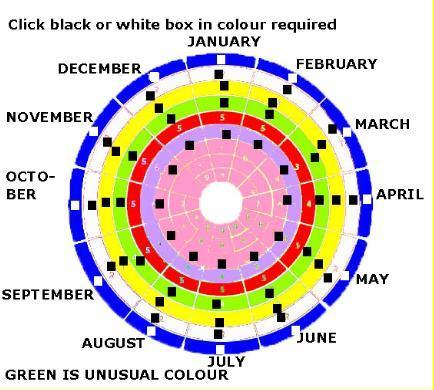
Flower Colour in Month(s).

Use Pest Control using Plants to provide a Companion Plant to aid your selected ground cover plant or deter its pests

Comments

United States Department of Agriculture
Plant Hardiness Zone Map
-
This map of USA is based on a range of average annual minimum winter temperatures, divided into 13 of 10-degree F zones, that this plant will thrive in USA, Alaska, Hawaii and Puerto Rico.
There are other Hardiness Zone Maps for the rest of the world including the one for Great Britain and Ireland of zones 7a to 10a.
Zone 5-9 indicates that the minimum zone temperature this plant will grow is 5 and top minimum zone temperature is 9 - above this number is too hot or below 5 is too cold for the plant. If your zone in your area of your country is within that range or your zone number is greater, then you can grow it in your garden.

Pruning of
Woody Plants in Groups 1 - 13 and
Herbaceous Perennials in Group 14 with
Ferns in Group 15 and
Evergreen Perennials in Group 16.

Aster novi-belgii
'Ada Ballard'
 

Deciduous Rhizome Perennial 24-72 inches (60-180 cms) in height

36 x 18
(90 x 45)

Spacing 9-12
(23-30)

Mid Green

Lavender-Blue in
September-October

Pruning Group 14
Partial Shade or Full Sun
Fully Hardy
Any well-drained moist Soil
Clump-forming

All Aster novae-belgii cultivars are susceptible to mildew.

Aster novi-belgii
'Royal Velvet'
 

Deciduous Rhizome Perennial 24-72 inches (60-180 cms) in height

48 x 24
(120 x 60)

Mid Green

Violet-Blue in
September-October

Pruning Group 14
Partial Shade or Full Sun. Fully Hardy. Any well-drained moist Soil. Clump-forming.

Aster novi-belgii combine well with strongly textured or structured plants such as miscanthus, pampas grass, and some of the late-flowering kniphofias. Plants need spraying against mildew, and all but the shortest need staking. It is best to divide them in the spring, replanting a vigorous section of rhizome, but they can be left undisturbed for up to 3 years, before they start to decline.

Aster x frikartii 'Monch'

Herbaceous Perennial 24-72 inches (60-180 cms) in height

30 x 18
(75 x 45)

Spacing 24-30
(60-75)

Dark Green

astercflopfrikartiimonchreadcoblands

Lavender-Blue in
July-September

Pruning Group 14
Full Sun. Fully Hardy Zone 4-9. Any well-drained Soil. Upright.

Contrast with orange - some late-flowering crocosmias, or the early autumn tints of Vitis coignetiae. Associates with silver foliage, chrysanthemums, or dahlias with their yellow, pink and purple flowers. It benefits from staking with brushwood, which should be worked into the plant when about two-thirds of its flowering height, and is best replanted in fresh ground every 3 years or so.

Astilbe
'Fanal'


Deciduous Rhizome Perennial 24-72 inches (60-180 cms) in height

24 x 18
(60 x 45)

Dark Green

Dark Crimson in
June-August

astilbefanalcflocoblands

"False Spirae, Meadowsweet".
Pruning Group 14. Partial Shade. Fully Hardy Zone 5-8. Any well-drained Soil. Clump-forming.
Best for red spring foliage

All Astilbes are Rabbit Resistant - see other Rabbit Resistant Plants.
Astilbe companions - Hosta, pulmonaria, helleborus, epimedium, ferns, polygonatumJapanese iris; particularly effective in groups.
Astilbes are attractive near pools and streams and in woodland settings. They combine well with bergenias and adapt to container culture.

Astilbe
'Professor van der Wielen'
 

Deciduous Rhizome Perennial 24-72 inches (60-180 cms) in height

48 x 39
(120 x 98)

Mid Green

White in
July flowers in gracefully arching plumes

Pruning Group 14
Partial Shade
Fully Hardy Zone 5-8
Any well-drained Soil
Clump-forming
Good cut flower

Other smaller Astilbe for scree beds in rock gardens.

Astilbe 'Straussenfeder'
 

Deciduous Rhizome Perennial 24-72 inches (60-180 cms) in height

36 x 24
(90 x 60)

Bronze tinted Green in Spring, Dark Green in Summer and Autumn

Coral-Pink in
August-September

Pruning Group 14
Partial Shade
Fully Hardy Zone 5-8
Any well-drained Soil
Clump-forming
Vigorous

Astiles make an excellent cut flower if harvested when half open. Many are also cut and air-dried then used in dried floral arrangements. The seedheads can be left on to extend the interest in the winter.

Astrantia major
 

Astrantia species
No HB, ST, LT, SOL

Herbaceous Perennial 24-72 inches (60-180 cms) in height

24 x 18
(60 x 45)

Dark Green

Purple-Red in
June-July

astrantiacflos1majorkevock

"Greater Masterwort, Masterwort". Pruning Group 14
Partial Shade or Full Sun. Fully Hardy Zone 4-9. Any well-drained Soil. Clump-forming.
Plant near a lightly shaded patio or path where you can enjoy their detail. This is an ideal cut flower, fresh or dried. Self-sows.
Astrantia major 'Sunningdale Variegated' has leaves strikingly marked cream and yellow, becoming less variegated from mid summer onwards. This associates with early-leafing hostas, bluebells, forget-me-nots, rock cress, aurinias, primroses, polyanthus and euphorbias.

Astrantia companions - Lilium martagon, iris sibirica, milium effusum 'Aureum', hosta, pulmonaria, chaerophyllum, pimpinella, campanula, phlox paniculata, adenophora, geranium.

Athyrium filix-femina
 

Deciduous Fern 24-72 inches (60-180 cms) in height

48 x 24
(120 x 60)

Light Green fronds like shuttle-cocks

...

athyriumfilixfeminacpfolwikimediacommons

"Lady Fern" is a very beautiful, lacy, fresh green fern, preferring fairly moist positions.
Pruning Group 15. Partial Shade. Fully Hardy Zone 5. Acid moist Soil in sheltered site. Erect.
It makes excellent ground cover in woodland gardens, bog or alongside streams.
It is perhaps most effective in schemes based on shades of green, especially in late spring and early summer, when its foliage is at its freshest. It contrasts well with smaller bamboos, hart's tongue ferns, grasses, and sedges. It may be grown through a carpet of low ground cover, when the repeated pattern of its shuttlecock-shaped clumps of fronds can make an arresting sight.
The 'Plumosum Cristatum Group' all have beautifully crested and finely cut fronds.

See further details and photos in Fern Nursery page and Fern Gallery.
The Fern Nursery garden is open on Saturdays from May until September. They have events, talks and ferns photo gallery.

Aubretia x cultorum 'Argenteo-variegata'

Honey Bees collect Pollen and Nectar. Bumble bees visit the flowers

No, HB, ST, LT, SOL

Evergreen Alpine below 24 inches (60 cms) in height

2 x 24
(5 x 60)

Mid-Green margined Silvery-White

Pinkish-Mauve
in March-May

"Aubretia, Rock Cress".
Pruning Group 16
Full Sun
Fully Hardy
Alkaline well-drained Soil - thrives in the sun in dry, rich, sandy loam and leaf-mould.
Mat-forming. Use in rock garden, spring bedding and for edging. If cut back after flowering, it produces a new crop of variegated leaves and shoots, which will add interest when the plant is out of flower.
Aubretia Companions - Phlox subulata, Alyssum saxatile and Iberis sempervirens. Others are early-flowering euphorbias, soft yellow wallflowers, aurinias, white rock cress, smaller narcissi, ipheions, chionodoxas, and small spring-flowering shrubs like daphes or spiraeas.
A single plant will, over 2 or 3 years, cover a square yard (metre) of soil or cascade over a similar area of wall, and when smothered with its small blue, purple, or white flowers it would be difficult to imagine a more pleasing sight. The plants are usually only a few inches high, but will 'clamber up' to a height of 24 (60) or so if taller plants nearby provide competition. They are equally at home in sunny south-facing crevices on walls or rock gardens with virtually no soil or moisture and a high pH, as they are in richer soils with a low pH and a northerly aspect. The bees will, of course, prefer those plants in full sun.

Aucuba japonica

Birds eat the scarlet berries.

Evergreen Shrub 24-72 inches (60-180 cms) in height

60 x 60
(150 x 150)

Mid Green

Purple in
May

aucubacflosjaponicawikimediacommons

"Spotted Laurel, Japanese Aucuba, Japanese Laurel". Remarkably tolerant of poor conditions, though it responds to good treatment like moist instead of its normal dry soil
Pruning Group 1
Partial Shade or Full Shade or Full Sun
Zones 7-10, Fully Hardy
Any Chalk or Clay Soil
Rounded
Thrives even in dark corners in town gardens. This continues to spread by basal sprouting and self-layering of its weak, soft-wooded stems and, as it thickens up, the mass of stems will support one another, allowing it to reach 120 inches (300 cms).

Aucuba japonica 'Crotonofolia'

Birds eat the scarlet berries.

Evergreen Shrub 24-72 inches (60-180 cms) in height

60 x 48
(150 x 120)

Green mottled Yellow

Purple in
May

Pruning Group 1
Partial Shade
Zones 7-10, Fully Hardy
Any Chalk or Clay Soil. Rounded
Aucuba japonica is one of the best evergreen shrubs for shady places, under trees, and for town gardens. The male and female flowers are borne on separate bushes, and when the 2 sexes are grown near together, the female bush produces bright-red berries in autumn.

Aucuba japonica 'Rozannie'

Birds eat the scarlet berries.
 

Deciduous Shrub 24-72 inches (60-180 cms) in height

36 x 120
(90 x 300)

Dark Green

Red-Purple in
May

Pruning Group 1
Partial Shade
Zones 7-10, Fully Hardy
Any Chalk or Clay Soil
Rounded.
Hard pruning, when required for Aucuba japonica, is best done early in May; shorten long shoots, if desired , in summer.

Aucuba japonica 'Variegata'

Birds eat the scarlet berries.

Deciduous Shrub 24-72 inches (60-180 cms) in height

60 x 48
(150 x 120)

Green, Yellow speckled

Reddish-Purple in
May

Pruning Group 1
Partial Shade
Zones 7-10, Fully Hardy
Any Chalk or Clay Soil
Rounded

Aurinia saxatilis 'Citrina'

Honey Bees collect Pollen and Nectar

Evergreen Alpine below 24 inches (60 cms) in height

8 x 12
(20 x 30)

Grey-Green

Lemon-Yellow
in May-June

"Basket of Gold, Yellow Alyssum". Very popular as a rock garden or wall plant. Ideal on slopes, fronts of borders, in large rock gardens, hanging over low walls;
and for carpeting rose beds where its grey leaves make a good foil for the bright colours.
Pruning Group 1. Full Sun. Zones 4-9, Fully Hardy. Any Soil. Mound-forming. Plant it in a prominent spot to show off its brilliant colour. It can also be grown in containers and moved to suitable spots in the landscape.
A large expanse of aurinias can appear dull in texture, so they are best arranged in diffuse groups, intermingled with other plants of contrasting form, such as bulbs or, in a larger rock garden, dwarf conifers.

Azalea

No, HB, ST, LT, SOL
 

Shrub


Lime-free soil mixed with humus in partial shade is required. Leave the fallen leaves of the evergreen Japanese Azaleas to complete its groundcover. Use Rhododendron kiusianum, Rhododendron indicum and Rhododendron simsii varieties. The Scottish Rhododendron Society have articles of interest, with review and yearbook back issues as well as –
Hannah Miller has a Guide to getting children started with gardening and garden sustainability

Azalea nectar is toxic to bees. Rarely visited by the honeybee because the nectar is too deep-seated to be readily available and because grayanotoxins are toxic to them.
Azaleas are Rabbit Resistant - see other Rabbit Resistant Plants.

Procedure to compare ground cover plants in flower/foliage colour, flower shape and plant use, execute this:-

  • Load Plants and transfer table on Groundcover plants B to this table in Plants Name A page within Evergr Per Gallery. Then, get close Plants.
  • Load Evergr Perenn Gallery and load this page from it onto Safari. Then load Wildflower Shape Gallery. Do 3 plants from the Groundcover plants in this page by updating them from the internet and changing each plant row to brown when updated. Put the plants flower thumbnail into the relevant pages in these flower colour/month pages and then into the relevant flower shape comparison pages in Wildflower Shape Gallery. Then close Wildflower Shape Gallery and load Plants. Copy 3 changed and updated brown text rows to the respective rows in Ground cover Plants B page. Repeat this row until all the plants in that groundcover plant page have been done.
  • When Page B has been done above then, close Wildflower Shape Gallery and load Evgr Per Shape Gallery and using the thumbnails from this gallery copy them to the relevant plant use pages in the Evgr per shape gallery.
  • When the above has been done, then close Evgr per Shape Gallery and open up the relevant plant type gallery to copy the thumbnail to the valid flower colour/month or flower colour comparison pages in that gallery.
  • When that has been done, then repeat the process for the next groundcover plant page letter.

Ivydene Gardens Plants:
Ground-cover Plant
Name - A

Plant Name

Major source of honey in the UK Yes/No
Used by
HoneyBees - HB,
Short-Tongued Bumblebees - ST,
Long-Tongued Bumblebees - LT,
Solitary Bees - SOL

Type

The key ingredients a bird needs from your garden are
Shelter,
Food and
Water,
as expanded in Ground-cover Plant
Name W Page

Height x Spread in inches (cms)

Spacing distance between plants of same species in inches (cms)

Foliage

Some poisonous ground cover plants are indicated, but there are others in Cultivated Poisonous Plants and
Wildflower Poisonous Plants

Flower Colour in Month(s).

Use Pest Control using Plants to provide a Companion Plant to aid your selected ground cover plant or deter its pests

Comments

United States Department of Agriculture
Plant Hardiness Zone Map
-
This map of USA is based on a range of average annual minimum winter temperatures, divided into 13 of 10-degree F zones, that this plant will thrive in USA, Alaska, Hawaii and Puerto Rico.
There are other Hardiness Zone Maps for the rest of the world including the one for Great Britain and Ireland of zones 7a to 10a.
Zone 5-9 indicates that the minimum zone temperature this plant will grow is 5 and top minimum zone temperature is 9 - above this number is too hot or below 5 is too cold for the plant. If your zone in your area of your country is within that range or your zone number is greater, then you can grow it in your garden.

Pruning of
Woody Plants in Groups 1 - 13 and
Herbaceous Perennials in Group 14 with
Ferns in Group 15 and
Evergreen Perennials in Group 16.

Acer campestre

Acer species
No HB, ST, LT, SOL

Deciduous Tree above 6 feet in height

180 x 120 (450 x 300)

Mid Green in Spring and Summer, Yellow with Red in Autumn

Delicate Green in Apr-May and produces nectar freely
acercflopmalecampestremaplefoord1

Male Flower

"Field Maple, Hedge Maple, Common Maple" Used as field hedge. Native UK maple from Maple Family - nectar and pollen for insects. Makes excellent clipped hedge.
Pruning Group 1 from late Autumn to Midwinter.
Full Sun or Partial Shade
Zone 4-9, Fully Hardy
Moist Clay or Sandy Soil
Broadly Upright

All Acers can be used for Flower Arranging - see other Flower Arranging Plants and plants with scented flowers.

Acer capillipes
 

Deciduous Tree above 6 feet in height

360 x 300 (900 x 750)

Bright Green with Bright Red in Autumn

Yellow in May. Green bark with white striations. New growth is coral-red

Pruning Group 1 from late Autumn to Midwinter.
Full Sun or Partial Shade
Fully Hardy
Any Acid Clay, Sandy or Peaty Soil
Spreading / creeping, Arching. Rounded crown with ascending branches. Snake-bark of brown streaked with white.

This is one of the trees for lawns in Trees for Lawns .

Acer cappadocicum 'Aureum'

Deciduous Tree above 6 feet in height

600 x 360 (1500 x 900)

Bright Yellow in Spring, Light Green in Summer, Green with Yellow tints in Autumn

Yellow-green
acercflopcappadocicumaureumgarnonswilliams1

in
May

"Golden Coliseum Maple, Golden Cappadocian Maple" Better suited to parks and streets rather than a suburban garden. Can be used as a specimen tree. Use with Acer cappadocicum Rubrum.
Pruning Group 1 from late Autumn to Midwinter.
Full Sun or Partial Shade
Zone 5-9, Fully Hardy
Moist Acid Clay or Sandy Soil, but not waterlogged. It will also grow in chalk soil.
Spreading / creeping. Does not tolerate paving over its roots. Valuable for bees and butterflies. Can be used as a clearstem tree or multi-stem tree.

Acer tataricum subsp. ginnala (Acer ginnala) groundcover grows on any, clay, Lime-free (Acid) or Sandy Soil.

Deciduous Tree above 6 feet in height

336 x 300 (840 x 750)

Bright Green, Red in Autumn

Cream in
May-June

acercfloginnalacommonswikimedia1

followed by red fruit

"Amur Maple". 3-lobed leaves which turn red in autumn; cream flowers are followed by red fruit.
Valuable to bees. See Bee Forage Plants and UK Butterfly
with Egg, Caterpillar, Chrysalis and Butterfly Usage
of Plants.

Pruning Group 1 from late Autumn to Midwinter.
Full Sun or Partial Shade
Zone 4-9, Fully Hardy
Dry Clay or Sandy Soil
Slender Arching - it often branches from the base into several long cane-like stems.
Flattened Spherical Growth Shape.
Locally invasive species Category A in America.

Acer griseum
(血皮楓; 
pinyin: xuè pí fēng)

Deciduous Tree above 6 feet in height

360 x 360 (900 x 900)

Dark Green three-lobed leaves turn Red and Orange in Autumn

Yellow-green pendulous flowers in
April-May

"Paperbark Maple" Prized for its bark - chestnut brown with paler corky dots which it sheds each year in wide curling strips. Slow-growing, Spreading / creeping tree. Green foliage ages to red and orange in autumn. Speciman tree within lawn area for 15 years. This is one of the trees for lawns in Trees for Lawns .
Pruning Group 1 from late Autumn to Midwinter.
Full Sun or Partial Shade. Zone 5-9, Fully Hardy
Moist, Clay, Sand or Peaty Soil. Spreading. Ascending branches form slender, high-crowned trees.
Associate with bronze and red-flushed foliage plants like Berberis thunbergii 'Atropurpurea Nana', Berberis wilsoniae and Euphorbia amygdaloides 'Purpurea'.

Acer negundo 'Flamingo'

It produces nectar freely.

Deciduous Tree above 6 feet in height

300 x 300 (750 x 750)

Broad Pink margins that turn White in Summer, on Green leaves

White in April-May

"Box-elder Maple, Box Elder". Use for Flower Arranging. Pink juvenile foliage matures to green with creamy margin. Excellent Hedge on well-drained soil.
Pruning Group 1 from late Autumn to Midwinter.
Full Sun or Dappled Shade
Zone 4-10, Fully Hardy
Moist Clay, Sand and Acidic Soil. This acer will tolerate drought.
Fast-growing Upright with Rounded / Spherical tree shape

Acer palmatum 'Atro-purpureum'

Deciduous Tree above 6 feet in height

144 x 144 (360 x 360)

Spacing 72-96 (180-240)

Reddish-Purple, Brilliant Red in Autumn

Reddish-Purple in
April

"Japanese Maple". Suitable for woodland garden. Associate with Ophiopogon planiscapus 'Nigrescens'.
All Acer palmatum cultivars require shelter from wind, particularly in spring, if the new growth is not to be badly scorched.
Pruning Group 1 from late Autumn to Midwinter.
Full Sun or Partial Shade
Fully Hardy
moist, Clay, Sand or Peaty acidic Soil
Round-headed

Acer palmatum 'Senkaki'

Deciduous Tree above 72 inches (180 cms) in height

240 x 180 (600 x 450)

Coral-Red in Spring, Orange-Yellow in Summer and Yellow in Autumn

Red-purple in April-May

"Japanese Maple, Coral Bark Maple". Tree for effect of coral red bark in the winter. Suitable for woodland garden. Associate with Ophiopogon planiscapus 'Nigrescens'.
Pruning Group 1 from late Autumn to Midwinter.
Partial Shade, shelter from Sun and strong winds
Zones 5-10, Fully Hardy
Moist, well-drained, Clay, Sand or Peaty acidic Soil. Round-headed.

Cut out dead wood of all acers in the summer. Thin crowded shoots and shorten very long unbalanced branches in early winter.

Achillea clypeolata 'Moonshine'

Butterflies attracted by the flowers.

Evergreen Perennial 24-72 inches (60-180 cms) in height

24 x 20
(60 x 50)

Spacing 18 (45)

Silver

Bright Yellow in
April-August
achilleacflospclypeolatamoonshinereadcoblands1

"Yarrow" Pruning Group 16.
Full Sun
Fully Hardy Zone 3-8
Any, moist, well-drained Soil
Mat-forming
Divide each Spring.
Good foliage, does not spread. When achilleas die back for the year, they dry out and give a great structure to the garden, so are often used for dry f
lower arrangements.

Achillea ptmarmica
'The Pearl'

Butterflies attracted by the flowers.
 

Deciduous Rhizome Perennial 24-72 inches (60-180 cms) in height

30 x 24
(75 x 60)

Dark Green

White in
July-August
achilleacflospptmarmicathepearlreadcoblands1

Pruning Group 14.
Partial Shade
Fully Hardy Zone 3-8
Any, moist, well-drained Soil
Divide in Spring. Vigorous spreader, self-sows.

Aciphylla aurea groundcover grows on any Soil.
 

Evergreen Perennial 24-72 inches (60-180 cms) in height

36 x 36
(90 x 90)

Grey-Green with bold Yellow margins and midribs.

Dry

Golden Brown in
June-August

aciphyllacforaureawikimediacommons1
from
Commons-wikimedia

"Bayonet Plant, Golden Bayonet, Taramea, Golden Spear-grass".
Pruning Group 16.
Full Sun
Fully Hardy
Any Soil
Rosette-forming

Fierce spine-tipped leaves. Grows in well-drained gritty soil, preferring a generally cool but not too wet climate. Coloniser of arid windswept, cold dry grassland and tussock areas in New Zealand. Use in rock garden.

Actinidia kolomicta
 

Deciduous Climber above 72 inches (180 cms) in height

160 x indefinite
(150 x indefinite)

Dark Green, Purple tinged in Spring, Dark Green becoming variegated with White and Pink in the top half of the leaf in Summer and Autumn

Fragrant White in
June

actinidiacfloskolomiktawikimediacommons1

"Variegated Kiwi". Pruning Group 11 in late winter.
Full Sun
Zone 8 - Fully Hardy
Any moist Soil
Twining Climber for garden walls and fences. Tie main vines to wires against walls and fences as required.
The roots prefer a cool shady spot and will root by layering as they spread. A good plant for holding soil on a steep slope. Grow twining stems into old trees. It requires support since it will not self-cling. Green and white foliage tipped with pink. Attractive to cats
.
If trained on wall, it is advisable to prune this every winter, leaving a framework of branches but shortening sideshoots to one or two buds.


Adiantum
pedatum
 

Deciduous Fern below 24 inches (60 cms) in height

12 x 12
(30 x 30)

Mid Green

adiantumcforpedatumgarnonswilliams1

Ferns do not have flowers

"Five-finger Fern, Maidenhair Fern, Five-fingered Maidenhair Fern". Cold Hardy. Pair with broad-leaved plants. Use as Green foliage Ground cover. The 'Klondyke' variety has young fronds tinged with red.
Pruning Group 15.
Dappled Shade, Full Shade
Fully Hardy Zone 3
Any moist, well-drained Soil
Erect
Grow in woodland or shady border where they slowly increase and are very hardy anywhere in Britain - see
photo from The Fern Nursery. It may be interplanted with flowers or tucked into the pockets of a stone wall.
The Fern Nursery garden is open on Saturdays from May until September. They have events, talks and ferns photo gallery.

Adiantum venustum
 

Evergreen Fern below 24 inches (60 cms) in height

6 x indefinite
(15 x indefinite)

Bronze-Pink in Spring, Mid Green on black stems remainder of year

Ferns do not have flowers
adiantumpforpvenustumwikimediacommons

"Himalayan Maidenhair Fern, Evergreen Maidenhair". Cold Hardy. Use as Ground Cover and underplanting of roses and shrubs
Pruning Group 15.
Partial Shade
Fully Hardy Zone 3
Any Moist, well-drained Soil
Grow in woodland or shady border where they slowly increase and are very hardy anywhere in Britain - see
photo from The Fern Nursery.

Aegopodium podagraria 'Variegatum'
groundcover grows on any, clay, Lime-free (Acid) or Sandy Soil.

Deciduous Rhizome Perennial 24-72 inches (60-180 cms) in height

24 x indefinite
(60 x indefinite)

Deep Green margined and splashed Creamy White
aegopodiumcfolpodagrariavariegatumwikimediacommons1

Moist

Compound umbels of numerous white, pink or cream flowers in
May-June

"Variegated Ground Elder, Ash Weed, Bishop's Weed, Gout-weed, Ground Ash, Herb Gerard. Ground Elder in Wild-flower". Invasive plant.
Pruning Group 14.
Full or Partial Shade
Fully Hardy Zone 3-8
Any Soil, but prefers Clay Soil
Ground-covering. Invasive - Ground Elder, Gout Weed or Bishop's Weed should be planted between barriers, such as a path and a house foundation. Mowing it 2 or 3 times a season keeps it low and even and the leaves small and compact.

Frost hardy but drought tender, preferring moist well-drained soil in an open sunny position. It has off-white splotches on the edges and surface of its variegated leaves. Excellent weed-proof ground-cover. Invasive. Best in a pure, contained planting as a ground cover. Can be quite effective when grown in the shade of trees or large shrubs.

Ajuga reptans 'Atropurpurea'

Ajuga reptans and its cultivars produce dense ground cover from which emerge spikes of blue flowers and are very popular with bumblebees

No HB, ST, LT, SOL

Evergreen Perennial below 24 inches (60 cms) in height

6 x 36
(15 x 90)

Reddish-Purple

Moist

Deep Blue in
April-June
ajugacfloreptansatropurpurea1

"Bugle, Bugleweed". Bugle in Wildflower. Reddish-purple foliage. Full sun brings out the richest leaf colour on this creeping plant, but, if the foliage is to form a dense, ground-covering, shining, metallic purple carpet, the roots must be fairly moist. It will put up with the poorest of soils so is good for planting around the base of trees/shrubs as well.
Pruning Group 16. Partial Shade, although it colours best in sun. Fully Hardy Zone 5
Any Moist Soil

All Ajuga can be used for Flower Arranging - see other Flower Arranging Plants and plants with scented flowers. Bugle can make a carpet to replace grass as one of the plant alternatives to traditional lawn grass.
Ajuga reptans is Mat-forming groundcover spreading / creeping by creeping stems from which root new plantlets. Its rounded, flat and purple leaves contrast to anything with a soft feathery leaf such as geraniums or the grassy leaves of irises.
Ajuga companions - A good edge-softener for polygonatum, coreopsis verticillata 'Moonbeam', hosta 'Sum and Substance', bronze fennel, grasses, iris, lysimachia nummularia 'Aurea', and like plants; also works well under fruit trees and bulbs.
Bugles can be used with other prostrate foliage plants to create a carpet of varied textures and colours. The dark foliage of this plant can be contrasted against the tiny, pale, glaucous leaves of Hebe pinguifolia 'Pagei'.

Ajuga reptans
'Bur
gundy Glow'

Butterflies attracted by the flowers.

Evergreen Perennial below 24 inches (60 cms) in height

6 x 24
(15 x 60)

Silvery Green suffused deep Wine-Red

Moist

Sky Blue in February-May

"Bugle, Carpenter's Herb". Pruning Group 16.
Partial Shade, which inhibits weed growth, but will scorch in full sun.
Fully Hardy Zone 3-10
Any Moist Soil
Mat-forming groundcover, which spreads fast but does not like to be dry. This has leaves which are basically green and cream but which are overlaid with a suffusion of bright pink and clear wine-red. Cold weather intensifies the foliage colour. In soils that retain moisture easily, this plant makes excellent ground-cover.
Rabbit Resistant -
see other Rabbit Resistant Plants.

Ajuga reptans 'Catlins Giant'

Butterflies attracted by the flowers.

Evergreen Perennial below 24 inches (60 cms) in height

6 x 24
(15 x 60)

Dark Bronze and Purple

Moist

Blue in April-August
ajugareptanscatlinsgiantcflorvroger1

"Carpet Bugle". Pruning Group 16. Can be planted over spring bulbs such as snowdrops (Galanthus).Use at edge of shady border to make an evergreen carpet of large, glossy, bronze-purple leaves and under deciduous trees and shrubs. Does not like to dry out. Deer resistant.
Partial Shade
Fully Hardy Zone 4-10
Any Moist Soil
Mat-forming and vigorous groundcover.
Rabbit Resistant -
see other Rabbit Resistant Plants. Avoid planting adjacent to lawn areas since little islands of ajuga may start appearing in the grass. Bugle is very effective when planted in the semi-shade of other plants or buildings.

Ajuga reptans 'Multicolor'
 

Evergreen Perennial below 24 inches (60 cms) in height

6 x 24
(15 x 60)

Dark Bronze Green leaves marked with Cream and Pink

Moist

Dark Blue in
April-June
ajugacflospreptansmulticolorbreadcoblands1

"Bugle Weed". Pruning Group 16.
Partial Shade. Fully Hardy Zone 3-10. Any Moist Soil
Mat-forming groundcover, which is slow to grow.
Use at woodland edge, between trees or shrubs in mostly light shade.
Variegated white with green midrib foliage.
Ajuga reptans is an excellent plant for providing an infill between other late spring and early summer flowers, its tints helping to highlight brighter blooms of bolder shape. Try it with pink, lilac, and white Symphytum ibericum and it also harmonizes with the flowers of Helleborus x hybridus.

Ajuga reptans 'Rainbow'

Butterflies attracted by the flowers.

Semi-Evergreen Perennial below 24 inches (60 cms) in height

6 x 24
(15 x 60)

Dark Bronze in Green marked with cream and pink

Dark Blue in April-July
centaurea montana flower

"Bugle". Pruning Group 16.
Partial Shade. Fully Hardy Zone 3-10
Any Moist Soil
Mat-forming groundcover, which is slow to grow. Glossy, purple-brown tinted, deep-green, crinkly-textured leaves that are irregularly margined with cream and pink. Grow in rock garden. Attracts bees.
See Bee Forage Plants and UK Butterfly with Egg, Caterpillar, Chrysalis and Butterfly Usage of Plants.
Rabbit Resistant -
see other Rabbit Resistant Plants.

Ajuga reptans 'Variegata'

See Ground Cover below 24 inches

Evergreen Perennial below 24 inches (60 cms) in height

6 x 24
(15 x 60)

Grey-Green leaves margined and splashed Cream

Dark Blue in
April-July
ajugacfloreptansvariegata1

"Bugle". Pruning Group 16.
Partial Shade
Fully Hardy Zone 3-10
Any Moist Soil
Mat-forming groundcover
Perfect contrast to ferns. Needs part shade for best variegation. Perfect addition to an alpine container to highlight other plants, with glossy, grey-green and creamy variegated foliage. Plant with hostas and in pots.

Akebia quinata
 

Semi-Evergreen Climber above 72 inches (180 cms) in height

336 x 36
(840 x 90)

Mid Green, Tinged Purple in Autumn

Fragrant
Red-Purple in
April-June
akebiacfloquinataroseland1

"Chocolate Vine, Akebia five-leaf" with fruity fragrance.
Pruning Group 11 after flowering.
Partial Shade or Full Sun
Zone 7 - Fully Hardy
Any Moist Soil
Twining Climber through other shrubs or small trees or against wires on walls and fences. Has unusual shaped fruit. Useful on slopes where it quickly covers bare ground and its deep roots hold the soil, providing some erosion control. It should be planted away from low-growing shrubs since its aggressive habit can smother them.

Alcea rosea (Althaea rosea)

Butterflies attracted by the flowers.

No HB, ST, LT
Alcea rosea 'Queeny Mix' has fully double flowers which are no use whatsoever to bees. You need 'single-flowered ' hollyhocks to be useful to bees.

Biennial 24-72 inches (60-180 cms) in height

24 x 12
(60 x 30)

Spacing 24-36 (60-90)

Pale green

Moist

White, Pink, Red, Yellow, Lavender in June-September
alceacflosroseahardyplantsociety1

Self-seeds

"Common Hollyhock". Cannot be grown alongside foxgloves. Grow as biennial to limit growth of hollyhock rust. Use in cottage gardens and against fences or walls.
Pruning Group 14.
Full Sun
Fully Hardy Zone 3-9
Any Soil
Tall upright inflorescences.
The flowers are in a range of colours from white to dark red, including pink, yellow and orange. Different colours prefer different soils. The darker red variety seems to favour sandy soils, while the lighter colour seems to favour clay soils. Grown for their tall spikes of single flowers on rich, moist but well-drained soil. Stake plants on exposed sites and water copiously in dry spells. Renew each year due to possible rust problems. Soak with liquid manure occasionally when the flower spikes are developing. If not removing each year, then cut down to within 6 inches (15 cms) of soil after flowering. Will not tolerate wet winter soils. When preparing the soil, trench it 3 spits deep and work in plenty of decayed manure. If planted singly in April, they should be 36 inches (90 cms) apart each way, or they can be planted in groups of 3 with 12 inches (30 cms) from plant to plant.

Alcea companions - delphinium, larger campanulas, large grasses, picket fence - remember to paint the picket fence in a contrasting colour to Hollyhock flower. Alcea rosea 'Nigra' has 'single flowers. There are other cultivars of Alcea rosea.

Alnus cordata

Birds eat the catkins.

Deciduous Tree above 72 inches (180 cms) in height

960 x 360 (2400 x 900)

Glossy Dark Green

Yellow catkins in March-April

"Italian Alder". Thrives in dry situations. A park tree or wide avenues and streets, tolerant of paving in poor, dry soil. Shallow rooting.
Pruning Group 1 between leaf fall and midwinter.
Full Sun
Fully Hardy
Any Moist or Dry Soil
Conical

Alyssum montanum 'Mountain Gold'
 

Evergreen Perennial below 24 inches (60 cms) in height

6 x 18
(15 x 45)

Grey

Fragrant Golden Yellow in
June

"Mountain Alison". Trim lightly after flowering to maintain compactness.
Pruning Group 16
Full Sun
Fully Hardy
Any Moist Gritty Soil which is well-drained.
Mat-forming and prostrate. Other smaller Alyssum for scree beds in rock gardens.
This is one of the Patio plants, which are normally container grown and only moved outside to the patio or garden for the summer months. At other times they would be best kept in a frost free greenhouse or conservatory. Many patio plants are grown for their foliage colour or for ornamental or architectural effect rather than simply for their flowers. A good patio plant must be able to withstand full sun and be suitable for pot growing. Further details in Containers in Garden Use Page.

Alyssum wulfenianum

Evergreen Alpine below 24 inches (60 cms) in height

6 x 18
(15 x 45)

Grey or White-hairy

Pale Yellow in June

Trim lightly after flowering to maintain compactness. Pruning Group 16. Full Sun. Zones 7-10, Fully Hardy.
Any moist Gritty Soil which is well-drained. Rock garden, stone wall or cascading over banks to use its foliage next to other foliage colours. Tufted.

Alyssum saxatile (Golden alyssum) is a great favourite for old lime mortar walls. This Gold Dust being a cottage garden favourite has hot, hard yellow flowers every spring.

Amelanchier laevis
(Amelanchier canadensis)

Deciduous Tree above 72 inches (180 cms) in height

240 x 240 (600 x 600)

Bronze in Spring, Mid Green in Summer, Red or Orange in Autumn

White in
April
amelanchiercanadensiscflot1

"Allegheny Serviceberry, Sarvis Tree". It flowers as the leaves unfold in late spring followed by Blue-Black Fruit.
Pruning Group 1
Partial Shade or Full Sun
Zones 4-9, Fully Hardy
Acid Moist Soil
Broadly
Spreading / creeping. Speciman plant for its spring and autumn foliage

Amelanchier lamarckii

No HB, ST, LT, SOL
Bees collect nectar and pollen

Deciduous Tree above 72 inches (180 cms) in height

276 x 240 (690 x 600)

Bronze in Spring, Dark Green in Summer, Red and Orange in Autumn

White, 5-petalled, strap-
shaped flowers blanket coppery brown juvenile leaves on the shoots in
April-May

"Juneberry, Snowy Mespilus, Lamarck Serviceberry". Purple-Black Fruit. Glossy, purple-brown tinted, deep-green, crinkly-textured leaves that are irregularly margined with cream and pink. Grow in rock garden. Attracts bees. Can be used in the container through summer and planted into the border or possibly raised beds for winter.
Pruning Group 1. Partial Shade or Full Sun
Zones 6-9, Fully Hardy
Acid Moist Soil
Broadly
Spreading / creeping
Amelanchier is defintely 1 of the top 5 plants for autumn colour and
it must one of the earliest sources of pollen in the year.
See Bee Forage Plants and UK Butterfly with Egg, Caterpillar, Chrysalis and Butterfly Usage of Plants.
Associate with soft pink flowering Clematis montana cultivar, white lilacs in spring and cotoneasters for autumn harmonies.

Anaphalis margaritacea

Deciduous Rhizome Perennial 24-72 inches (60-180 cms) in height

24 x 24
(60 x 60)

Mid Green

White in
August-
October

"Pearl Everlasting".
Pruning Group 14
Partial Shade or Full Sun - but must be in an open position otherwise it becomes straggly.
Fully Hardy Zone 4-8
Any Moist Soil, which must not dry out in the Summer - prefers chalky soil.
Clump-forming and cover the ground by means of root runners.
All Anaphalis can be used for Flower Arranging - see other Flower Arranging Plants and plants with scented flowers. Use dried as Winter decoration, but must be cut in tight bud.
Companions - sedum, verbascum, carex, hosta, low fall asters, salvia, lychnis coronaria, scabiosa ochroleuca.

Andromeda polifolia 'Alba'

Evergreen Alpine below 24 inches (60 cms) in height

16 x 24
(40 x 60)

Dark Grey

White or Pale Pink in April-June

"Common Bog Rosemary, Marsh Andromeda". It grows in bog-like conditions. This species require an acid soil where constant moisture is assured, and are best grown in peat beds, shady woodlands, or rock gardens. Other smaller Andromeda for peat beds and raised beds.
Pruning Group 16
Partial Shade or Full Sun
Fully Hardy Zone 2
Acid Wet Soil
Semi-Prostrate
More Details can be had from Heather World as linked to in the last row in this table.

Anemone apennina

See other Anemones in Allium and Anemone Gallery
 

Deciduous Rhizome Perennial below 24 inches (60 cms) in height

8 x 12
(20 x 30)

Spacing
3-4
(7.5-10)

Dark Green in Autumn, Winter and Spring

Blue in
April-May

anemonecflosapenninawikimediacommons1

"Windflower". Pruning Group 14 . Partial Shade. Fully Hardy Zone 6. Any Moist Soil. Semi-Prostrate mound.
Plant under deciduous shrubs or deciduous woodland, as its leaves die down by midsummer. Spreads quickly in a shaded site. Ideal for naturalising in short grass. The clumps can be divided and moved successfully in spring after flowering.
All Anemone can be used for Flower Arranging - see other Flower Arranging Plants and plants with scented flowers.
May require a full season after planting to establish and produce reliable results. Ideal for naturalizing to create a carpet through which to grow larger spring flowers and bulbs, such as narcissi, smaller tulips, primroses, polyanthus, cowslips, erythroniums and epimediums. It enjoys humus-rich soils and a sunny site in cool climates, although in warmer areas it can tolerate a considerable amount of shade, such as that of deciduous woodland.

Anemone blanda 'Atrocaerulea'

See other Anemones in Allium and Anemone Gallery

Honey Bees collect Pollen and Bumble -bees visit the Anemone flowers

Deciduous Tuber Perennial below 24 inches (60 cms) in height

6 x 6
(15 x 15)

Anemone blanda Spacing
3-4
(7.5-10)

Dark Green in Autumn, Winter and Spring

Deep Blue in
April-May

Pruning Group 14.
Partial Shade or Full Sun
Fully Hardy Zone 4-8
Any Moist Soil
Clump-forming for deciduous woodland or between deciduous witch hazel or Daphne mezereum, with woodland ferns. Anemone blanda and Anemone coronaria are recommended for a change of position at intervals of 2 or 3 years, for the maintenance of size and richness of the flowers.

Rabbit Resistant - see other Rabbit Resistant Plants.
Anemone blanda star-shaped flowers are produced above the leaves. Anemone blanda will grow in dry soil.
The bulbs are best planted in Aug-Sep, 3-4 (7.5-10) deep. Soak overnight before planting if bulbs very dry. Mix leaf mould with the soil before planting to provide moisture retention in the summer. When growing happily, it will start to seed about to form large colonies. Annual top dressing of leaf mould in the autumn.
Anemone companions - For spring bloomers - bulbs, aquilegia, dicentra, helleborus, omphalodes, ranunculus ficaria, trillium, primula.
For late summer and autumn bloomers - grasses, hardy fuchsias, aster, dahlia, eupatorium, phlox, astrantia.

Anemone blanda 'Radar'

See other Anemones in Allium and Anemone Gallery

Deciduous Tuber Perennial below 24 inches (60 cms) in height

6 x 6
(15 x 15)

Dark Green in Autumn, Winter and Spring

Magenta with white centres in
April-May
anemonecfloblandaradarrvroger1a

Pruning Group 14 . Partial Shade or Full Sun. Fully Hardy Zone 4-8. Any Moist Soil.
Clump-forming for deciduous woodland or between deciduous witch hazel or Daphne mezereum, with woodland ferns.
Other smaller Anemones for scree beds in rock gardens, trough or sink, or peat beds and raised beds.
Although in Anemone blanda's Mediterranean homeland this anemone grows in full or part shade, in cooler gardens the flowers require full sun to open completely. For more naturalistic plantings Anemone blanda contrasts well with soft yellow flowers such as those of primroses - Primula vulgaris.

Anemone blanda
'Violet Star'

See other Anemones in Allium and Anemone Gallery

Deciduous Tuber Perennial below 24 inches (60 cms) in height

6 x 6
(15 x 15)

Dark Green in Autumn, Winter and Spring

Amethyst with White backs in
April-May
anemonecfloblandavioletstarrvroger1a

Pruning Group 14
Partial Shade or Full Sun
Fully Hardy Zone 4-8
Any Moist Soil
Clump-forming for deciduous woodland or between deciduous witch hazel or Daphne mezereum, with woodland ferns.
The winter bark of Silver Birch makes an excellent setting for the anemone blanda bulbs, as do the yellow and red coloured twigs of Cornus stolonifera and Cornus alba.

Anemone nemorosa

See other Anemones in Allium and Anemone Gallery

No HB, ST, LT, SOL

Deciduous Rhizome Perennial below 24 inches (60 cms) in height

4 x 12
(10 x 30)

Mid Green in Autumn, Winter and Spring

White in
April-June
anemonenemerosacflot1a1a

"Windflower, Wood Anemone". Pruning Group 14 . Partial Shade. Fully Hardy Zone 4-8. Any Moist Soil
Creeping
Plant - cover rhizome with soil to a depth of 1 inch (2-3cms) - under deciduous shrubs, in soil which has been enriched with leafmould, as its leaves die down by midsummer, and in woodlands.
If you have autumn leaves fall on your lawn, mow them up and mulch the flower beds with that. If you have autumn leaves in the street, repeat the process to obtain the material for leafmould. Plant with Narcissus 'February Gold', which flowers at the same time, under deciduous shrubs. Its varieties are excellent rock garden or peat garden plants for cool part-shaded situations.
This plant is excellent for naturalizing in woodland, and for planting among late-leafing perennials and taller bulbs in beds such as Anemone x lipsiensis, Arum italicum 'Marmoratum', Corydalis solida, Dryopteris erythrosora, Hosta undulata var. albomarginata, Lathyrus vernus, Muscarii armeniacum and Primula denticulata 'Snowball'.

Anemone ranunculoides

See other Anemones in Allium and Anemone Gallery

Deciduous Rhizome Perennial below 24 inches (60 cms) in height

2 x 18
(5 x 45)

Mid Green in Autumn, Winter and Spring

Deep Yellow in
April-May
anemonepflosranunculoidesrvroger1a1

"Buttercup Anemone". Spreading / creeping rapidly if given peaty soil and abundant moisture like near a waterfall. When planting only cover rhizome with soil to a depth of 1 inch (2-3cms).
Pruning Group 14
Partial Shade (Light Shade)
Fully Hardy Zone 4
Any Moist Soil
Companion for other shade-loving plants such as Hepatica (Anemone hepatica), Hellebores and Trillium, and is ideal in a cool part of a rock garden or on a peat bed.

Antennaria dioica rosea

Evergreen Alpine below 24 inches (60 cms) in height

2 x 18
(5 x 45)

Grey-green

Rose-pink
in May-August
antennariaclospdioicaroseawikimediacommons1a

"Cat's Ears, Pussy-toes".
Pruning Group 16
Full Sun
Fully Hardy Zone 5
Any dry Soil
Mat-forming
Use in rock garden, growing against walls, ground cover between stepping stones or well-drained border verges.
Antennaria companion for other small, undemanding rock plants - little achilleas, creeping thymes, rock roses (helianthemum) and the blue grass Festuca glauca.

Anthemis punctata cupaniana
 

Evergreen Perennial below 24 inches (60 cms) in height

12 x 36
(30 x 90)

Finely dissected, Silvery-Grey with dull Grey-Green in Winter topped by flowers

White, yellow-eyed daisies in
June-August . deadhead to encourage more flowers

This makes wide masses of foliage. Take out the flowered stems as the heads fade to keep the plant neat and encourage more flowers. Pruning Group 16. Full Sun. Frost Hardy Zone 6, but likely to die out in wet winters, but small rooted pieces usually survive. Any Sandy or Gravelly dry Soil in rock garden. Mat-forming

All Anthemis can be used for Flower Arranging - see other flower arranging Plants and plants with scented flowers.
Anthemis nobilis is useful for mowing as a substitute for grass in very sandy soil; fragrant when bruised; 'Plena' - the double-flowered form (no good for bees) is more ornamental; the variety 'Treneague' is dwarf and non-flowering.

Anthemis companions - solidago, grasses, sages, geranium, monarda, patrinia.
Grow at front of border, where it can tumble over adjacent paving or edging stones. It succeeds in a gravel garden. Associate with other silver foliage, with lavenders, sages, Dwarf Bearded Irises, and with lime green flowers such as euphorbias or compact grasses like the smaller Stipa species.

Anthyllis montana
(Vulneraria montana)

Evergreen Alpine below 24 inches (60 cms) in height

12 x 24
(30 x 60)

Grey-green

Red, Pink or Purple
in May-July
anthylliscflospmontanawikimediacommons1

"Mountain Kidney Vetch" is native to the mountains of Southern Europe and parts of the Alps.
Pruning Group 16. Full Sun. Fully Hardy.
Any Soil
Clump-forming with small, finely divided, silvery green leaves with purple, white or pink clover-like single flower-heads followed by seeds in pods. Use in rock garden or alpine garden.
Other smaller Anthyllis for scree beds in rock gardens.

Arabis caucasica 'Variegata'

Honey Bees collect Pollen and Nectar

Arabis species
No, HB, ST, LT, SOL

Evergreen Alpine below 24 inches (60 cms) in height

6 x 18
(15 x 45)

Olive- Green margined cream foliage below flowers.

Scented White
in
Mar-Jun

"Wall Rock Cress, Variegated Wall Cress" for rock gardens, rabbit resistant and edging. Trim its spays of 4 petal, star-shaped, umbels of flowers after flowering to maintain compactness. Pruning Group 16. Full Sun
Fully Hardy in Zones 3-9
Any well-drained dry Soil and it will tolerate poor, dry, infertile soil, but not clay or bog. It prefers a rough limy soil.
Mat-forming. Perfect nook-and-crany plants. Especially suited for covering slopes, spilling over walls and tucking between stones. It will grow in containers.
Arabis Companions - Aubretia, Phlox subulata and Alyssum saxatile.
Other
smaller Arabis for scree beds in rock gardens, trough or sink, or peat beds and raised beds.
Arabis albida loves to sow itself in an old mortar-and-lime wall and from a tiny crevice will make great mats of foliage that hang down 12 (30 cms) or more. When once established, then cut it right back to the wall every summer. It then produces new foliage and is very pleasant for the rest of the year.

Arctostaphylos uva-ursi

Birds eat the scarlet fruit.
No HB, ST, LT, SOL

Evergreen Alpine below 24 inches (60 cms) in height

4 x 20
(10 x 50)

Bright Green. Leaves develop intense red tones in autumn and winter.

Pinkish-White
in Dec-Jun followed by deep red berries
arctostaphyloscflos1uvaursihansen1

"Common Bearberry, Bearberry, Kinnikinnick" is circumpolar in northern latitudes in rocky, open woods; dry, sandy hills; mountainous regions. A completely prostrate shrub that can cascade over walls or embankments to form curtains of neat, dark green foliage. The leaves remain green for 1–3 years before falling in autumn, when their colour changes to a reddish-green or purple, pale on the underside. Terminal clusters of small urn-shaped, 5 petal, flowers. Bears and other animals eat the berries. Pruning Group 1. Partial Shade or Full Sun - it grows well in poor soil, as long as it has full sun. Zones 4-9, Frost Hardy. Acid well-drained dry or moist unfertilized Soil. Mat-forming, that it is useful to control erosion on hillsides and slopes due to its deep roots and in rock gardens.
This is one of the plants that are unlikely to succeed on Alkaline Soils and others are listed in Plants for Lime-Free (Acid) Soil A-F Page 3.
Other
smaller Arctostaphylos for peat beds and raised beds.

Arisaema sikokianum
(Arum sazensoo, Arisaema magnificum)

Birds eat the red berries.

Deciduous Tuber Perennial below 24 inches (60 cms) in height

18 x 6
(45 x 15)

Bright Green, divided leaves are below the flowers

Purple base, white cup and hood with purple, green and white stripes in April-May

"Japanese Cobra Lily, Japanese Jack-in-the-pulpit". Grow frost-tolerant species in shelter, part-shade, or woodland in cool peaty soil. Give protective mulch in winter, guard from slugs. Plant in woodland or cottage garden and underplant roses and shrubs. These tubers must not dry out when dormant and may need winter protection in colder areas.
Roots are poisonous.
Pruning Group 14. Partial Shade. Frost Hardy Zone 5-9. Acid well-drained, moist, sandy, humus-rich Soil. Stemless. Likes a sheltered site.
Arisaema companions - Ferns, helleborus, shade-loving hosta and bleeding hearts, primula, polygonatum, smilacina, disporum, disporopsis.

Aris-arum probos-cideum
 

Deciduous Rhizome Perennial below 24 inches (60 cms) in height

6 x 10
(15 x 25)

Arrow-head-shaped Green shi-ning leaves on long stalks dire-ctly from the ground

Maroon and White in
April-May
arisarumcfloproboscideum1a

It is a woodland plant from the Italian Apennine mountain range, thriving in any cool shady or partly shaded position. Hidden Maroon and White flowers enclosed within hooded Dark Brown-Purple spathe; with the 6 (15) long tail of the flower earning it the name of "Mouse Plant". Pruning Group 14. Partial Shade.
Fully Hardy Zone 7-9. Any well-drained humus-rich Soil. Cushion-forming
A dense,
Spreading / creeping, woodland plant with hidden flowers for edges of paths and beds.

Arisarum companions - ferns, primula, polygonatum humile, small cyclamen, viola cornuta, corydalis.

Artemisia schmi-dtiana
 

Evergreen Perennial below 24 inches (60 cms) in height

12 x 18
(30 x 45)

Silver and hairy

Fragrant Yellow flower-heads in
Aug-Nov. Seeds ripen Sep-Nov

"Silvermound" is native in Japan.This has a foamy mass of silky, platinum-pale, finely dissected leaves to make a strong impact as a mat-forming edging, in alpine and rock gardens as well as in pots. Attracts butterflies.
Pruning Group 16. Full Sun. Fully Hardy, Zone 1-9. Any well-drained Soil, including dry sand or clay soil in a rock garden.
Spreading / creeping silver carpet and grow better in poor soil. Artemisia stelleriana makes a more dense ground-cover and Artemisia schmidtiana 'Nana' is a choice miniature also for dry soil.
Other smaller Artemisia for scree beds, trough or sinks in rock gardens.
Associate with other silver-leaved plants like lavenders, sages, pinks and cistus. In a broad and shallowly banked grouping, a carpet of compact silvery Artemisia schmidtiana 'Nana' spreads before tussocks of bronze sedge - Carex flagellifera, in front of the handsome spurge Euphorbia characias.

Arum creticum
 

Deciduous Tuber Perennial below 24 inches (60 cms) in height

12 x 6
(30 x 15)

Glossy spear-shaped Dark Green from December-May are below the flowers

Single Sweetly scented White or deep Yellow goblet-shaped spathe in
Mar-Apr

"Lords and Ladies, Cretan Arum". Pruning Group 14. Full Sun - Although tender, given a sheltered sunny site this species can survive over winter in cold areas, although they prefer part shade. In hot areas it requires some shade. Toxic if eaten. Plant may not flower in the first year after planting. Frost Hardy Zone 7-9. Any well-drained humus-rich Soil in sheltered moist woodland edge site. Grow in pots, but do not let the soil dry out.
Mat-forming. Dormant from June through September, orange-red berries.

Arum companions - Astilbe, epimedium, hosta, ferns, snowdrops and other early bulbs, helleborus orientalis, helleborus foetidus, vancouveria planipetala, xanthorhiza, disporum, smilacina racemosa, anemone blanda, trillium.

Arum italicum subsp. italicum 'Marmo-ratum'

Deciduous Tuber Perennial below 24 inches (60 cms) in height

12 x 6
(30 x 15)

Pale Green are marbled with Cream from Nov-Jun

Greenish-White spathe in
Jun-Aug above the leaves

"Italium Arum". Pruning Group 14. It has large, arrow-shaped, glossy green leaves heavily marbled with cream. Over time it makes a dense clumping carpet that covers the ground from late autumn till mid spring under trees, shrubs and hosta. Flowers are followed in Sep-Nov by a display of vivid red-orange berries. Plant them in May-Jun. Partial Shade or Full Shade. Fully Hardy Zone 6-9. Any well-drained moist Soil in sheltered site. Mat-forming.
Associate with ferns, galanthus, helleborus. It is toxic to cats, dogs, horses and people.

Aruncus dioicus 'Kneiffii'
 

Deciduous Rhizome Perennial 24-72 inches (60-180 cms) in height

48 x 18
(120 x 45)

Very finely divided fern-like mid Green leaves

Cream in
May-Jul in high plumes

"Goats beard". Pruning Group 14. Partial Shade or Full Shade. Fully Hardy Zone 3-9.
Moist Clay Soil in border or woodland garden. Best grown on moist, even somewhat boggy soil, but will grow well in dry soil. Clump-forming and grown for its foliage which is extremely finely divided.
Associate in waterside plantings, or for use as a specimen - It contrasts with a crisply formal opening through a hedge of beech - Fagus sylvatica. A pair of clipped box (Buxus sempervirens) in pots, one on each side, echoes the formality of the beech. Partner with euphorbias, ligularias, telekias, golden philadelphus and medium-sized bamboos.
Aruncus companions - Campanula latiloba, shrub roses, grasses, hosta, corydalis; it's good as a speciman plant, for the more wild parts of the garden, or the back of the perennial border.

Arundi-naria auricoma
(Pleiobl-astus aurico-mus)

Bamboo 24-72 inches (60-180 cms) in height

60 x 60
(150 x 150)

Brilliant Yellow with Green stripes and margined with fine bristles

...

Pruning Group 17. Partial Shade or Full Sun. Fully Hardy. Zones 6-10 Any moist sandy or clay Soil in sheltered site. Upright bamboo. Grow in open glades in a woodland garden in enclosed root barrier areas. Shear to ground each spring to encourage new and healthy growth. Arundinaria is one of the shrubs used in the first line of wind reduction from the sea. Gardening by the sea has the problems posed by salt-carrying gales and blown sand. Copious amounts of compost and mulch to conserve soil moisture, and the following defensive planting will protect the more tender plants from strong winds in your garden in the Coastal Conditions Garden Use Page.
Types of bamboo 1. Runner types send out underground stems to varying distances and sent up a vertical shoot. These will grow in large thickets or grove if left alone. Runners are mainly found in temperate regions.
2. Clump bamboos have underground stems that sprout vertical shoots much closer their parent plants glowing slowly outward. Clumpers tend to be tropical or subtropical.

Arund-inaria fortunei
(P
leio-blastus auricomus, Pleioblastus variegatus, Pleioblastus variegatus fortunei)

Bamboo below 24 inches (60 cms) in height

15 x 12
(37 x 30)

Dark Green with Cream stripes

...

"Chigozasa, Dwarf White-striped Bamboo" is native in Japan. Prefers well-drained but moist rich soil in full sun. Variegated clones need sun to keep their colour. Most are best pruned to ground level each spring. Invasive, difficult to control and even surviving mowing. Pruning Group 17. Zone 4-10.
Full Sun, but prefers Part Shade and out of cold, drying winds, easpecially coastal winds. Frost Hardy.
Any moist acidic Soil in sheltered site surrounded by concrete or buildings, or in pot. Upright bamboo.
Grow in open glades in a woodland garden. Use in poor growing conditions to control erosion, but it will displace native plants.

Arundi-naria japonica
(Pseudo-sasa japonica)

Evergreen Bamboo above 72 inches (180 cms) in height

138 x 30
(345 x 75)

Arching canes of large, heavy and glossy deep-green leaves

...

"Arrow Bamboo, Metake" is native to Japan and Korea in damp woodland areas, forming dense thickets in open areas.
Pruning Group 17. Partial Shade or Full Sun. Frost Hardy to -17.7 C. Any moist Soil in sheltered site.
Grow as dense hedge or screen by plaiting the smaller canes together, in pots and in coastal areas. The culms make an excellent wind break for windy gardens as they slow windspeeds without creating turbulence.

Arun-dinaria murielae
(Fargesia muriel-iae)

Evergreen Bamboo above 72 inches (180 cms) in height

120 x 36
(300 x 90)

Bright Green in Spring, Yellow-Green rest of year

...

"Umbrella Bamboo" is native in mountains of central China, which forms a dense clump of closely spaced canes that are hard to see under a mass of foliage. Pruning Group 17. Partial Shade or Full Sun. Fully Hardy. Any moist Soil in sheltered site. Grow as dense hedge or screen next to a pond or a stream.
Like all other fargesias, it does not have running rhizomes and needs no containment to prevent spread. There are two basic types of bamboo; clumping (non-invasive) and running. Individual bamboo canes are called culms or stems. The clump type, in which category Fargesia murielae falls, grows in large clumps and is relatively slow in spreading.

Arundinaria nitida
(Fargesia nitida)

Bamboo above 72 inches (180 cms) in height

156 x 36
(390 x 90)

Dark Green

...

"Fountain Bamboo, Chinese Fountain Bamboo" is native to China and it has Dark Green, large, lanceolate leaves with purple flushed green canes. Non-invasive and clump-forming. In its native habitat it grows in damp semi wooded areas. This species of bamboo is an important source of food for the giant panda, but is of little value to UK wildlife. Pruning Group 17. Partial Shade - Tolerates sun, but the leaves will curl up readily in strong sunlight. Fully Hardy. Zones 5-9. Any moist well-drained Soil in sheltered site.
Grow as speciman in a large container, as a hedge or screen, along sides of ponds and streams, deer resistant.

Arundi-naria pygmaea
(Pleio-blastus pyg-maeus, sasa pygmaea)

Bamboo below 24 inches (60 cms) in height

16 x 36
(40 x 90)

Mid Green

...

"Pygmy Bamboo, Dwarf fern-leaf Bamboo, Keorishimachiku". A dwarf-suckering species long cultivated in Japan, where it carpets the floors of forests. Prefers well-drained but moist rich soil in full sun or part shade. Most are best pruned to ground level each spring.
Pruning Group 17. Zones 7-10 - it is hardy to UK zone 6. Partial Shade or Full Sun, but prefers full shade and a position sheltered from North and East winds. Fully Hardy. Any moist acidic Soil in sheltered site, with lots of space for it to spread at will. Upright bamboo.
Grow in open glades in a woodland garden, in pots, as speciman, or as erosion control on banks.

Asarina procum-bens
(Antirrhinum asarina)

Evergreen Alpine below 24 inches (60 cms) in height

2 x 24
(5 x 60)

Grey-green, kidney-shaped

Pale Yellow streaked with red in a single standard, 2 wings and a keel flower
in Apr-Oct

"Creeping Snapdragon, Climbing Snapdragon" is a trailing, sticky-stemmed plant with softly furred, grey-green leaves and white snapdragon flowers tinged with yellow, from the Pyrenees. It prefes to be out of the hottest sun, but is content in a dry wall in light shade, where it is likely to sow itself into small crevices.
Pruning Group 16. Prefers Partial Shade. Frost Hardy - Zone 7. Well-drained dry Sandy Soil.
Trailing over shady walls or rocks, raised beds or a shady bank. Spills out of pots and can be used in bedding as an annual. Usually killed in severe winters so provide a winter mulch of straw or evergreen boughs.

Asarum europ-aeum
 

Evergreen Perennial below 24 inches (60 cms) in height

3 x 12
(7 x 30)

Glossy, leathery, heart-shaped, Dark Green leaves above the flowers

Greenish-Purple then Brown, bell-shaped, solitary, terminal and nodding in
Mar-May

"European Wild Ginger, Asarabacca, Hazelwort, Wild Spikenard" is native to Europe.
Pruning Group 16. Part Shade, Full Shade. Fully Hardy Zone 3-9. Chalk. Moist not boggy cool soil, but will grow in dry soil as well. Creeping.
Use as ground cover at the edge of a border, on bank, on slope, in deciduous or coniferous woodland or rock garden, and underplant shrubs. European wild ginger spreads slowly. Attracts butterflies and is deer resistant.

Asarum companions - perfect counterpoint to Maidenhair Ferns, then on to rhododendron, trillium, hosta, ajuga, vancouveria, astilbe, polygonatum. In a naturalistic woodland garden, gingers form an exceptionally attractive dense mat. Combine with evergreen shrubs or wildflowers.
All parts of this plant are poisonous.

Asplen-ium scolope-ndrium
 

Evergreen Fern 24-72 inches (60-180 cms) in height

24 x 24
(60 x 60)

Glossy bright, strap-like, leathery Green fronds with wavy margins

...

aspleniumcfolpscolopendriumgarnonswilliams1

"Hart's Tongue Fern" is excellent on chalk, and makes dense cover in clumps if closely planted and originates from the Northern Hemisphere. Pruning Group 15. Partial Shade. Fully Hardy Zone 5. Alkaline well-drained Soil with added grit. Stemless.
Growing in a crevice in a limestone rock garden, the unfurling fronds of Asplenium scolopendrium are furnished from spring into summer with the blue blooms of Lithodora diffusa 'Heavenly Blue'.
See further details and photos in
Fern Nursery page and Fern Gallery.
The Fern Nursery garden is open on Saturdays from May until September. They have events, talks and ferns photo gallery.

Aster novae-angliae
 

Deciduous Rhizome Perennial 24-72 inches (60-180 cms) in height

60 x 24
(150 x 60)

Mid Green

Violet-Purple in
August-October
astercflopnovaeangliaewikimediacommons1

"New England Aster" is native to eastern North America. The flowers are visited by bees, birds and butterflies. Rabbit and Deer resistant.
Pruning Group 14. Partial Shade or Full Sun. Fully Hardy Zone 4-8. Any well-drained moist Soil. Clump-forming and it self-seeds.
Mildew resistant. Grow in cottage garden, butterfly gardens. Cut flower.

Aster novi-belgii
(Symhyo-trichum novi-belgii)
Novi-belgii means "from New York", which was formerly named Novum Belgium ("New Belgium")

Deciduous Rhizome Perennial 24-72 inches (60-180 cms) in height

48 x 36
(120 x 90)

Mid Green to purple-tinted leaves on erect, branching stems

Violet disc flowers in Sprays in
August-October

"Michaelmas Daisy, New York Aster" is native to the eastern United States of America growing in abandoned fields and wet meadows. There are over 1000 cultivars of this plant. Pruning Group 14
Partial Shade or Full Sun. Fully Hardy Zone 4-8. Any well-drained moist Soil. Plant in open position. The richer the soil in humus the taller the plants grow. Clump-forming. Mildew is a problem.
Use in rock garden, cottage garden, butterfly garden. Cut flowers last well in a vase.
Most members of the daisy family are highly attractive to bees, and provide nectar and pollen in good quantity. The late-flowering Michaelmas daisies have the added advantage of coming into flower when there is very little bee forage, and colonies are needing to collect fresh pollen to add to their winter store of protein. Not only is pollen stored in the cells at this time of year, but the bees are also storing protein within their bodies, in an organ called the fatbody, and this helps them survive the winter and reduces the ill effects of some diseases, such as nosema, a protozoan gut parasite. To the honey bee, any income of fresh food in autumn is very valuable, and the beekeeper-gardener should remember this when planning his/her garden.

Aster novi-belgii
'Ada Ballard'
 

Deciduous Rhizome Perennial 24-72 inches (60-180 cms) in height

36 x 18
(90 x 45)

Spacing 9-12
(23-30)

Mid Green

Lavender-Blue in
September-October

Pruning Group 14
Partial Shade or Full Sun
Fully Hardy
Any well-drained moist Soil
Clump-forming

All Aster novae-belgii cultivars are susceptible to mildew.

Aster novi-belgii
'Royal Velvet'
 

Deciduous Rhizome Perennial 24-72 inches (60-180 cms) in height

48 x 24
(120 x 60)

Mid Green

Violet-Blue in
September-October

Pruning Group 14
Partial Shade or Full Sun. Fully Hardy. Any well-drained moist Soil. Clump-forming.

Aster novi-belgii combine well with strongly textured or structured plants such as miscanthus, pampas grass, and some of the late-flowering kniphofias. Plants need spraying against mildew, and all but the shortest need staking. It is best to divide them in the spring, replanting a vigorous section of rhizome, but they can be left undisturbed for up to 3 years, before they start to decline.

Aster x frikartii 'Monch'

Herbaceous Perennial 24-72 inches (60-180 cms) in height

30 x 18
(75 x 45)

Spacing 24-30
(60-75)

Dark Green

astercflopfrikartiimonchreadcoblands1

Lavender-Blue in
July-September

Pruning Group 14
Full Sun. Fully Hardy Zone 4-9. Any well-drained Soil. Upright.

Contrast with orange - some late-flowering crocosmias, or the early autumn tints of Vitis coignetiae. Associates with silver foliage, chrysanthemums, or dahlias with their yellow, pink and purple flowers. It benefits from staking with brushwood, which should be worked into the plant when about two-thirds of its flowering height, and is best replanted in fresh ground every 3 years or so.

Astilbe
'Fanal'


Deciduous Rhizome Perennial 24-72 inches (60-180 cms) in height

24 x 18
(60 x 45)

Dark Green

Dark Crimson in
June-August

astilbefanalcflocoblands1

"False Spirae, Meadowsweet".
Pruning Group 14. Partial Shade. Fully Hardy Zone 5-8. Any well-drained Soil. Clump-forming.
Best for red spring foliage

All Astilbes are Rabbit Resistant - see other Rabbit Resistant Plants.
Astilbe companions - Hosta, pulmonaria, helleborus, epimedium, ferns, polygonatumJapanese iris; particularly effective in groups.
Astilbes are attractive near pools and streams and in woodland settings. They combine well with bergenias and adapt to container culture.

Astilbe
'Professor van der Wielen'
 

Deciduous Rhizome Perennial 24-72 inches (60-180 cms) in height

48 x 39
(120 x 98)

Mid Green

White in
July flowers in gracefully arching plumes

Pruning Group 14
Partial Shade
Fully Hardy Zone 5-8
Any well-drained Soil
Clump-forming
Good cut flower

Other smaller Astilbe for scree beds in rock gardens.

Astilbe 'Straussenfeder'
 

Deciduous Rhizome Perennial 24-72 inches (60-180 cms) in height

36 x 24
(90 x 60)

Bronze tinted Green in Spring, Dark Green in Summer and Autumn

Coral-Pink in
August-September

Pruning Group 14
Partial Shade
Fully Hardy Zone 5-8
Any well-drained Soil
Clump-forming
Vigorous

Astiles make an excellent cut flower if harvested when half open. Many are also cut and air-dried then used in dried floral arrangements. The seedheads can be left on to extend the interest in the winter.

Astrantia major
 

Astrantia species
No HB, ST, LT, SOL

Herbaceous Perennial 24-72 inches (60-180 cms) in height

24 x 18
(60 x 45)

Dark Green

Purple-Red in
June-July

astrantiacflos1majorkevock1

"Greater Masterwort, Masterwort". Pruning Group 14
Partial Shade or Full Sun. Fully Hardy Zone 4-9. Any well-drained Soil. Clump-forming.
Plant near a lightly shaded patio or path where you can enjoy their detail. This is an ideal cut flower, fresh or dried. Self-sows.
Astrantia major 'Sunningdale Variegated' has leaves strikingly marked cream and yellow, becoming less variegated from mid summer onwards. This associates with early-leafing hostas, bluebells, forget-me-nots, rock cress, aurinias, primroses, polyanthus and euphorbias.

Astrantia companions - Lilium martagon, iris sibirica, milium effusum 'Aureum', hosta, pulmonaria, chaerophyllum, pimpinella, campanula, phlox paniculata, adenophora, geranium.

Athyrium filix-femina
 

Deciduous Fern 24-72 inches (60-180 cms) in height

48 x 24
(120 x 60)

Light Green fronds like shuttle-cocks

...

athyriumfilixfeminacpfolwikimediacommons1

"Lady Fern" is a very beautiful, lacy, fresh green fern, preferring fairly moist positions.
Pruning Group 15. Partial Shade. Fully Hardy Zone 5. Acid moist Soil in sheltered site. Erect.
It makes excellent ground cover in woodland gardens, bog or alongside streams.
It is perhaps most effective in schemes based on shades of green, especially in late spring and early summer, when its foliage is at its freshest. It contrasts well with smaller bamboos, hart's tongue ferns, grasses, and sedges. It may be grown through a carpet of low ground cover, when the repeated pattern of its shuttlecock-shaped clumps of fronds can make an arresting sight.
The 'Plumosum Cristatum Group' all have beautifully crested and finely cut fronds.

See further details and photos in Fern Nursery page and Fern Gallery.
The Fern Nursery garden is open on Saturdays from May until September. They have events, talks and ferns photo gallery.

Aubretia x cultorum 'Argenteo-variegata'

Honey Bees collect Pollen and Nectar. Bumble bees visit the flowers

No, HB, ST, LT, SOL

Evergreen Alpine below 24 inches (60 cms) in height

2 x 24
(5 x 60)

Mid-Green margined Silvery-White

Pinkish-Mauve
in March-May

"Aubretia, Rock Cress".
Pruning Group 16
Full Sun
Fully Hardy
Alkaline well-drained Soil - thrives in the sun in dry, rich, sandy loam and leaf-mould.
Mat-forming. Use in rock garden, spring bedding and for edging. If cut back after flowering, it produces a new crop of variegated leaves and shoots, which will add interest when the plant is out of flower.
Aubretia Companions - Phlox subulata, Alyssum saxatile and Iberis sempervirens. Others are early-flowering euphorbias, soft yellow wallflowers, aurinias, white rock cress, smaller narcissi, ipheions, chionodoxas, and small spring-flowering shrubs like daphes or spiraeas.
A single plant will, over 2 or 3 years, cover a square yard (metre) of soil or cascade over a similar area of wall, and when smothered with its small blue, purple, or white flowers it would be difficult to imagine a more pleasing sight. The plants are usually only a few inches high, but will 'clamber up' to a height of 24 (60) or so if taller plants nearby provide competition. They are equally at home in sunny south-facing crevices on walls or rock gardens with virtually no soil or moisture and a high pH, as they are in richer soils with a low pH and a northerly aspect. The bees will, of course, prefer those plants in full sun.

Aucuba japonica

Birds eat the scarlet berries.

Evergreen Shrub 24-72 inches (60-180 cms) in height

60 x 60
(150 x 150)

Mid Green

Purple in
May

aucubacflosjaponicawikimediacommons1

"Spotted Laurel, Japanese Aucuba, Japanese Laurel". Remarkably tolerant of poor conditions, though it responds to good treatment like moist instead of its normal dry soil
Pruning Group 1
Partial Shade or Full Shade or Full Sun
Zones 7-10, Fully Hardy
Any Chalk or Clay Soil
Rounded
Thrives even in dark corners in town gardens. This continues to spread by basal sprouting and self-layering of its weak, soft-wooded stems and, as it thickens up, the mass of stems will support one another, allowing it to reach 120 inches (300 cms).

Aucuba japonica 'Crotonofolia'

Birds eat the scarlet berries.

Evergreen Shrub 24-72 inches (60-180 cms) in height

60 x 48
(150 x 120)

Green mottled Yellow

Purple in
May

Pruning Group 1
Partial Shade
Zones 7-10, Fully Hardy
Any Chalk or Clay Soil. Rounded
Aucuba japonica is one of the best evergreen shrubs for shady places, under trees, and for town gardens. The male and female flowers are borne on separate bushes, and when the 2 sexes are grown near together, the female bush produces bright-red berries in autumn.

Aucuba japonica 'Rozannie'

Birds eat the scarlet berries.
 

Deciduous Shrub 24-72 inches (60-180 cms) in height

36 x 120
(90 x 300)

Dark Green

Red-Purple in
May

Pruning Group 1
Partial Shade
Zones 7-10, Fully Hardy
Any Chalk or Clay Soil
Rounded.
Hard pruning, when required for Aucuba japonica, is best done early in May; shorten long shoots, if desired , in summer.

Aucuba japonica 'Variegata'

Birds eat the scarlet berries.

Deciduous Shrub 24-72 inches (60-180 cms) in height

60 x 48
(150 x 120)

Green, Yellow speckled

Reddish-Purple in
May

Pruning Group 1
Partial Shade
Zones 7-10, Fully Hardy
Any Chalk or Clay Soil
Rounded

Aurinia saxatilis 'Citrina'

Honey Bees collect Pollen and Nectar

Evergreen Alpine below 24 inches (60 cms) in height

8 x 12
(20 x 30)

Grey-Green

Lemon-Yellow
in May-June

"Basket of Gold, Yellow Alyssum". Very popular as a rock garden or wall plant. Ideal on slopes, fronts of borders, in large rock gardens, hanging over low walls;
and for carpeting rose beds where its grey leaves make a good foil for the bright colours.
Pruning Group 1. Full Sun. Zones 4-9, Fully Hardy. Any Soil. Mound-forming. Plant it in a prominent spot to show off its brilliant colour. It can also be grown in containers and moved to suitable spots in the landscape.
A large expanse of aurinias can appear dull in texture, so they are best arranged in diffuse groups, intermingled with other plants of contrasting form, such as bulbs or, in a larger rock garden, dwarf conifers.

Azalea

No, HB, ST, LT, SOL
 

Shrub


Lime-free soil mixed with humus in partial shade is required. Leave the fallen leaves of the evergreen Japanese Azaleas to complete its groundcover. Use Rhododendron kiusianum, Rhododendron indicum and Rhododendron simsii varieties. The Scottish Rhododendron Society have articles of interest, with review and yearbook back issues as well as –
Hannah Miller has a Guide to getting children started with gardening and garden sustainability

Azalea nectar is toxic to bees. Rarely visited by the honeybee because the nectar is too deep-seated to be readily available and because grayanotoxins are toxic to them.
Azaleas are Rabbit Resistant - see other Rabbit Resistant Plants.


TABLE A with white background column

Pre July 2022, the
Evergreen Perennials used this
gallery only.

The Evergreen Perennials have

  • Plant Description Pages
  • their flower colour compared in a 7 Flower Colour per month Gallery
  • their Flower Shape compared in a Gallery, and
  • their Plant Use compared in another Gallery

The following Column cells with White Background explains the above process in this table.
The next 2 tables (TABLE B and TABLE C) support this explaination.

If both 'Evergreen Perennials' and
'Every Plant detailed in this website' use the same Flower Colour per Month Gallery or
flower shape table,
then the 2 cells are joined together)

This TABLE A will be appended to every page
(TABLE B and TABLE C will be appended
only to the site map pages)
comparing Evergreen Perennials in
the following galleries:-

P-Evergreen A-L Evergreen Perennial
Plant Descriptions

P-Evergreen M-Z
Evergreen Perennial
Plant Descriptions
.

Evergreen Perennial for 7 flower colours per month .

Evergreen Perennial Flower Shape
for
Evergreen Perennial Flower Shape
.

Evergreen Perennial Plant Use .


TABLE A with yellow background column

Post July 2022, then
'Every plant detailed in this website' will also use this gallery.

Every Plant detailed in this website has

  • Plant Description Pages or row in a table
  • their flower colour compared in a 7 Flower Colour per month Gallery
  • their Flower Shape compared in a Gallery, and
  • their plant Use compared in another Gallery

The following Column cells with Yellow Background explains the above process in this table.
The next 2 tables (TABLE B and TABLE C) support this explaination

If both 'Evergreen Perennials' and
'Every Plant detailed in this website' use the same Flower Colour per Month Gallery or
flower shape table,
then the 2 cells are joined together)

This TABLE A, TABLE B and TABLE C will be appended only to the site map pages in the remaining galleries and to the site map pages comparing 'Every Plant detailed in this website' in the following galleries:-

Plants detailed in this website by Botanical Name as shown in the next row,
Wildflowers detailed in their Common Name and Botanical Name in the second row down, and the third row down shows even more.

Evergreen Perennial 7 flower colours per month .

Wildflower Flower Shape for
Flower Shape
.

Evergreen Perennial Flower Shape for Plant Use .


Their Plant Description Pages in


...P-Evergreen A-L

...P-Evergreen M-Z
with the following
Evergreen Perennial and Alpine Evergreen Index Pages
A, B, C, D, E, F, G,
H, I, J, K, L, M, N,
O, P, Q, R, S, T, U,
V, W, X, Y, Z ,
 

Their Plant Description Page or row in


Plants detailed in this website by
Botanical Name
A, B, C, D, E, F, G,
H, I, J, K, L, M, N,
O, P, Q, R, S, T, U,
V, W, X, Y, Z ,


CREAM WILD FLOWER GALLERY PAGE MENUS


Common Name with Botanical Name, Wild Flower Family, Flower Colour and Form Index of each of all the Wildflowers of the UK in 1965:- AC,AL,AS,BE,
BL,BO,BR,CA,
CL,CO,CO,CO,
CR,DA,DO,EA,
FE,FI,FR,GO,
GR,GU,HA,HO,
IR,KN,LE,LE,
LO,MA,ME,MO,
NA,NO,PE,PO,
PY,RE,RO,SA,
SE,SE,SK,SM,
SO,SP,ST,SW,
TO,TW,WA,WE,
WI,WO,WO,YE

Extra Common Names have been added within a row for a different plant. Each Extra Common Name Plant will link to an Extras Page where it will be detailed in its own row.

EXTRAS 57,58,
59,60,


Continuing from October 2023
All
use of plants will be compared in Evergreen Perennial Flower Shape Gallery,
Flower colour/month in Evergreen Perennial Gallery and
Flower Shape in Wildflower Flower Shape Gallery

BROWN WILD FLOWER GALLERY PAGE MENUS

Botanical Name with Common Name, Wild Flower Family, Flower Colour and Form Index of each of all the Wildflowers of the UK in 1965:- AC, AG,AL,AL,AN,
AR,AR,AS,BA,
BR,BR,CA,CA,
CA,CA,CA,CA,
CA,CE,CE,CH,
CI,CO,CR,DA,
DE,DR,EP,EP,
ER,EU,FE,FO,
GA,GA,GE,GL,
HE,HI,HI,HY,
IM,JU,KI,LA,
LE,LI,LL,LU,LY, ME,ME,MI,MY,
NA,OE,OR,OR,
PA,PH,PL,PO,
PO,PO,PO,PU,
RA,RH,RO,RO,
RU,SA,SA,SA,
SC,SC,SE,SI,
SI,SO,SP,ST,
TA,TH,TR,TR,
UR,VE,VE,VI

Extra Botanical Names have been added within a row for a different plant. Each Extra Botanical Name Plant will link to an Extras Page where it will be detailed in its own row.

EXTRAS 91,


The process below provides a uniform method for
comparing every plant detailed in the following galleries with
the ones already compared in the relevant plant gallery
from the last list of plant galleries in this cell:-

These are the galleries that will provide the plants to be added to their own Extra Index Pages

  • Bee plants for hay-fever sufferers -
    The Index and Flower Colour per month plants are detailed in the Yellow background of Table 4 in the next Table on the right.
    A, B, C, D, E, F, G, H, I, J, K, L, M, N, O,
    P, Q, R, S, T, U, V, W, XYZ
    The Header Row for the above Extra Indices pages is the same as used in the 1000 Ground Cover A of Plants Topic:-
    A, B, C, D, E, F, G, H, I, J, K, L, M, N,
    O, P, Q, R, S, T, U, V, W, XYZ
  • Plants that grow in Chalk -
    A, B, C, D, E, F, G, H, I, J, K, L, M, N,
    O, P, QR, S, T, UV, WXYZ ,
  • Rock Garden and Alpine Flowers -
    A, B, C, D, E, F, G,H, I, J, K, L, M,
    NO, PQ, R, S, T,UVWXYZ ,
  • Bulbs from the Infill Galleries see Hardy Bulbs, Half-hardy Bulbs, etc in the previous column of this table.

    Also, the plants detailed
    in the yellow background of Table 1 in the next table on the right.

    Also the plants detailed in
    All Plants Index Gallery
    in the aquatic colour background of Table 1 in the next table on the right.
  • The complete Camera Photo is displayed on the screen as detailed in Table 6 below in the previous column
  • Climber in 3 Sector Vertical Plant System as detailed in Table 8 in the next table on the right
  • Plants with Sense of Fragrance from Roy Genders as detailed in the yellow background of Table 7 in the next table on the right
  • Lists from from Landscaping with Perennials by Emily Brown. She is writing about perennials in America as detailed in the yellow background of Table 2 in the next table on the right


The following Extra Index of Bulbs is created in the
Bulb Plant Gallery, to which the Bulb found in the above list will have that row copied to.
The Header Row for the Extra Indices pages is the same as used in the 1000 Ground Cover A of Plants Topic:-
A 1, 2, 3, B, C 1, 2, D, E, F, G, H, I, J,
K, L 1, 2, M, N, O, P, Q, R, S, T, U, V, W, XYZ


Having transferred the Extra Index row entry to the relevant Extra Index row for the same type of plant in a gallery below; then
its flower or foliage thumbnail will be compared per month in that relevant gallery:-


Further details on bulbs from the Infill Galleries, which comes from the list
Hardy Bulbs, Half-hardy Bulbs, etc
in the second row of Topic Table, which is usually positioned as the first table on the left:-
Hardy Bulbs
...Aconitum
...Allium
...Alstroemeria
...Anemone

...Amaryllis
...Anthericum
...Antholyzas
...Apios
...Arisaema
...Arum
...Asphodeline

...Asphodelus
...Belamcanda
...Bloomeria
...Brodiaea
...Bulbocodium

...Calochorti
...Cyclobothrias
...Camassia
...Colchicum
...Convallaria 
...Forcing Lily of the Valley
...Corydalis
...Crinum
...Crosmia
...Montbretia
...Crocus

...Cyclamen
...Dicentra
...Dierama
...Eranthis
...Eremurus
...Erythrnium
...Eucomis

...Fritillaria
...Funkia
...Galanthus
...Galtonia
...Gladiolus
...Hemerocallis

...Hyacinth
...Hyacinths in Pots
...Scilla
...Puschkinia
...Chionodoxa
...Chionoscilla
...Muscari

...Iris
...Kniphofia
...Lapeyrousia
...Leucojum

...Lilium
...Lilium in Pots
...Malvastrum
...Merendera
...Milla
...Narcissus
...Narcissi in Pots

...Ornithogalum
...Oxalis
...Paeonia
...Ranunculus
...Romulea
...Sanguinaria
...Sternbergia
...Schizostylis
...Tecophilaea
...Trillium

...Tulip
...Zephyranthus

Half-Hardy Bulbs
...Acidanthera
...Albuca
...Alstroemeri
...Andro-stephium
...Bassers
...Boussing-aultias
...Bravoas
...Cypellas
...Dahlias
...Galaxis,
...Geissorhizas
...Hesperanthas

...Gladioli
...Ixias
...Sparaxises
...Babianas
...Morphixias
...Tritonias

...Ixiolirions
...Moraeas
...Ornithogalums
...Oxalises
...Phaedra-nassas
...Pancratiums
...Tigridias
...Zephyranthes
...Cooperias

Uses of Bulbs:-
...for Bedding
...in Windowboxes
...in Border
...naturalized in Grass
...in Bulb Frame
...in Woodland Garden
...in Rock Garden
...in Bowls
...in Alpine House
...Bulbs in Green-house or Stove:-
...Achimenes
...Alocasias
...Amorpho-phalluses
...Arisaemas
...Arums
...Begonias
...Bomareas
...Caladiums

...Clivias
...Colocasias
...Crinums
...Cyclamens
...Cyrtanthuses
...Eucharises
...Urceocharis
...Eurycles

...Freesias
...Gloxinias
...Haemanthus
...Hippeastrums

...Lachenalias
...Nerines
...Lycorises
...Pencratiums
...Hymenocallises
...Richardias
...Sprekelias
...Tuberoses
...Vallotas
...Watsonias
...Zephyranthes

...Plant Bedding in
......Spring

......Summer
...Bulb houseplants flowering during:-
......January
......February
......March
......April
......May
......June
......July
......August
......September
......October
......November
......December
...Bulbs and other types of plant flowering during:-
......Dec-Jan
......Feb-Mar
......Apr-May
......Jun-Aug
......Sep-Oct
......Nov-Dec
...Selection of the smaller and choicer plants for the Smallest of Gardens with plant flowering during the same 6 periods as in the previous selection


Their 7 flower colours per month compared in Evergreen Perennial
with the
Evergreen Perennial and Alpine Evergreen Index - pre July 2022 -
in each page

Their 7 flower colours per month compared in Evergreen Perennial
 

I have updated the plant type and plant use for the Evergreen Perennials by February 2023,

then,
I will continue from September 2023 to insert all the 1000 Ground-cover Plants using
'Ground Cover a thousand beautiful plants for difficult places' by John Cushnie ISBN 1 85626 326 6
into these relevant 3 GALLERIES:-


GALLERY 1. FLOWER COLOUR PER MONTH
Flower Colour per Month Comparison Page within Evergreen Perennial Gallery
including those of foliage only in January Unusual Flower. This compares the Flower Colour per month for
both the Evergreen Perennials prior to July 2022 and
all plants detailed in the rest of the website including Evergreen Perennials


colormonthbulb9a1a1a1a


Ground Cover from PLANTS is within the text box under the thumbnail, and by clicking on the centre of the thumbnail, the page shall be changed


  • to its descriptive row within one of these pages in PLANTS Topic -
    1000 Ground
    ...Cover A, B, C,
    ...D, E, F, G, H, I,
    ... J, K, L, M, N,
    ...O, P, Q, R, S, T,
    ...U, V, W, XYZ
    ...with Ground
    ...Cover for 14
    ...Situation
    s
    1 Dry Shade
    2 Damp Shade
    3 Full Sun
    4 Banks and Terraces
    5 Woodland
    6 Alkaline Sites
    7 Acid Sites
    8 Heavy Clay Soil
    9 Dry Sandy Soil
    10 Exposed Sites
    11 Under Hedges
    12 Patios and Paths
    13 Formal Gardens
    14 Swimming Pools and Tennis Courts.
    Also, Use
    ...Ground Cover
    ...in Landscape
    ...noise reducti
    on


Their Flower Shape compared in Evergreen Per Shape Gallery
...Flower Shape

Every Plant in this website has their Flower Shape compared in
Wildflower Flower Shape


GALLERY 2. FLOWER SHAPE
Evergreen Per Shape Gallery for Evergreen Perennials and into
Wildflower Shape Gallery pages for all the other plants in this website:-


GALLERY 3. GARDEN USE OF PLANT
into pages in the
...Flower Shape for Plant Use


Most of the
Plant Selection by Garden Use of different types of plant in
Level 2c and Level 2cc from the PLANTS and PLANTS EXTRA Topic in Table 5 (End Table on the right for the complete PLANTS and EXTRA Topic Menus) have been transferred to
Evgr Per Shape Gallery:-

Garden Plant Use
ANIMAL RESISTANT PLANTS ,
Aquatic ,
Aromatic Foliage ,
ATTRACTS BEES ,
ATTRACTS BUTTERFLIES ,
Back of Shady Border ,
Bedding ,
Bog Garden ,
Coastal Conditions ,
Containers in Garden ,
COTTAGE GARDEN ,
Crevice Garden ,
CUT FLOWERS ,
Desert Garden ,
EDGE OF BORDER ,
Edibles in Containers ,
Finely Cut Leaves ,
FRAGRANT FLOWERS ,
Front of Border ,
Hanging Basket ,
Hedge ,
Large Leaves ,
Non-Green Foliage 1 ,
Non-Green Foliage 2 ,
Other Garden ,
Pollution Barrier 1, 2 ,
Raised Bed ,
Rest of Border ,
Rock Garden ,
Scree Bed ,
Specimen Plant ,
Sword-shaped Leaves ,
Thorny Hedge ,
Trees for Lawns ,
Trees for Small Garden ,
Wildflower ,
Windbreak ,
Woodland .


Alpines without a Garden as detailed for their uses in the white background of Table 3 in the next table on right


Lists from from Landscaping with Perennials by Emily Brown. She is writing about perennials in America as detailed for their uses in the yellow background of Table 2 in the next table on the right.


Table 6
Camera Photo Galleries showing all 4000 x 3000 pixels of each photo on your screen that you can then click and drag it to your desktop:-

RHS Garden at Wisley
Plant Supports -
When supporting plants in a bed, it is found that not only do those plants grow upwards, but also they expand their roots and footpad sideways each year. Pages
1
, 2, 3, 8, 11,
12, 13,
Plants 4, 7, 10,
Bedding Plants 5,
Plant Supports for Unknown Plants 5
,
Clematis Climbers 6,
the RHS does not appear to either follow it's own pruning advice or advice from The Pruning of Trees, Shrubs and Conifers by George E. Brown.
ISBN 0-571-11084-3 with the plants in Pages 1-7 of this folder. You can see from looking at both these resources as to whether the pruning carried out on the remainder of the plants in Pages 7-15 was correct.
Narcissus (Daffodil) 9,
Phlox Plant Supports 14, 15

Coleus Bedding Foliage Trial - Pages
1, 2, 3, 4, 5,
6, 7, 8, 9, 10,
11, 12, 13, 14, 15,
16, 17, 18, 19, 20,
21, 22, 23, 24, 25,
26, 27, 28, 29, 30,
31, 32, Index

National Trust Garden at Sissinghurst Castle
Plant Supports -
Pages for Gallery 1
with Plant Supports
1, 5, 10
Plants
2, 3, 4, 6, 7, 8, 9,
11, 12
Recommended Rose Pruning Methods 13
Pages for Gallery 2
with Plant Supports
2
,
Plants 1, 3, 4, 5, 6, 7

Dry Garden of
RHS Garden at
Hyde Hall
Plants - Pages
without Plant Supports
Plants 1
, 2, 3, 4, 5, 6, 7, 8, 9

Nursery of
Peter Beales Roses
Display Garden
Roses Pages
1, 2, 3, 4, 5,
6, 7, 8, 9, 10,
11, 12, 13

Nursery of
RV Roger
Roses - Pages
A1,A2,A3,A4,A5,
A6,A7,A8,A9,A10,
A11,A12,A13,A14,
B15,
B16,B17,B18,B19,
B20,
B21,B22,B23,B24,
B25,
B26,B27,B28,B29,
B30,
C31,C32,C33,C34,
C35,
C36,C37,C38,C39,
C40,
C41,CD2,D43,D44,
D45,
D46,D47,D48,D49,
E50,
E51,E52,F53,F54,
F55,
F56,F57,G58,G59,
H60,
H61,I62,K63,L64,
M65,
M66,N67,P68,P69,
P70,
R71,R72,S73,S74,
T75,
V76,Z77, 78,

Damage by Plants in Chilham Village - Pages
1, 2, 3, 4

Pavements of Funchal, Madeira
Damage to Trees - Pages
1, 2, 3, 4, 5,
6, 7, 8, 9, 10,
11, 12, 13
for trees 1-54,
14, 15,
16, 17, 18, 19, 20,
21, 22, 23, 24, 25,
for trees 55-95,
26, 27, 28, 29, 30,
31, 32, 33, 34, 35,
36, 37,
for trees 95-133,
38, 39, 40,
41, 42, 43, 44, 45,
for trees 133-166

Chris Garnons-Williams
Work Done - Pages
1, 2, 3, 4, 5,
6, 7, 8, 9, 10,
11, 12, 13

Identity of Plants
Label Problems - Pages
1, 2, 3, 4, 5,
6, 7, 8, 9, 10,
11

Ron and Christine Foord - 1036 photos only inserted so far - Garden Flowers - Start Page of each Gallery
AB1 ,AN14,BA27,
CH40,CR52,DR63,
FR74,GE85,HE96,

Plant with Photo Index of Ivydene Gardens - 1187
A 1, 2, Photos - 43
B 1, Photos - 13
C 1, Photos - 35
D 1, 2, 3, 4, 5, 6, 7,
Photos - 411
with Plants causing damage to buildings in Chilham Village and Damage to Trees in Pavements of Funchal
E 1, Photos - 21
F 1, Photos - 1
G 1, Photos - 5
H 1, Photos - 21
I 1, Photos - 8
J 1, Photos - 1
K 1, Photos - 1
L 1, Photos - 85
with Label Problems
M 1, Photos - 9
N 1, Photos - 12
O 1, Photos - 5
P 1, Photos - 54
Q 1, Photos -
R 1, 2, 3,
Photos - 229
S 1, Photos - 111
T 1, Photos - 13
U 1, Photos - 5
V 1, Photos - 4
W 1, Photos - 100
with Work Done by Chris Garnons-Williams
X 1 Photos -
Y 1, Photos -
Z 1 Photos -
Articles/Items in Ivydene Gardens - 88
Flower Colour, Num of Petals, Shape and
Plant Use of:-
Rock Garden
within linked page


followed by continuing to insert all the plants with flowers from Camera Photo Galleries as indicated by
"
Plant with Photo Index" from
Plant with Photo Index of Ivydene Gardens - 1187 A 1, 2, Index
into the Colour Wheel comparison pages above of EVERGREEN PERENNIAL Gallery in Blue
having started in January 2023.
Menu in Table 6 in the previous column

I will continue to insert all the plants planted in chalk as indicated by
"from Chalk Garden" from
GARDEN CONSTRUCTION Index using
'A Chalk Garden' by F C Stern. Published by Thomas Nelson and Sons Ltd in 1960
into the Colour Wheel Comparison Pages above of EVERGREEN PERENNIAL Gallery in black.

The following plants shall be added to the Flower Shape pages of this gallery
from


Both native wildflowers and cultivated plants, with these
...Flower Shape,
...Uses in USA,

after the entries have been completed in the Landscaping List Pages.


Add these plants from PLANTS topic from the soil it prefers:-
Information for its Plants - Any Soil
Any Soil A-F
Any Soil G-L
Any Soil M-R
Any Soil S-Z

Information for its Plants -
Chalky Soil
Chalky Soil A-F 1
Chalky Soil A-F 2
Chalky Soil A-F 3
Chalky Soil G-L
Chalky Soil M-R
Chalky Soil Roses
Chalky Soil S-Z
Chalky Soil Other
Information for its Plants - Clay Soil
Clay Soil A-F
Clay Soil G-L
Clay Soil M-R
Clay Soil S-Z
Clay Soil Other
Information for its Plants - Lime-Free (Acid) Soil
Lime-Free (Acid) A-F 1
Lime-Free (Acid) A-F 2
Lime-Free (Acid) A-F 3
Lime-Free (Acid) G-L
Lime-Free (Acid) M-R
Lime-Free (Acid) S-Z
Information for its Plants - Sandy Soil
Sandy Soil A-F 1
Sandy Soil A-F 2
Sandy Soil A-F 3
Sandy Soil G-L
Sandy Soil M-R
Sandy Soil S-Z
Information for its Plants - Peaty Soils
Peaty Soil A-F
Peaty Soil G-L
Peaty Soil M-R
Peaty Soil S-Z

Poisonous Plants
Rose Rose Use


FINALLY
I am inserting these from February 2023, I will continue to insert all the plants
from the following book on planting sites for perennials, which include most plant types except Annuals and Biennials. She is writing about perennials for use in America.
into the Landscaping List Pages of this Wildflower Shape Gallery and
into the Flower Colour per Month Colour Wheel Comparison Pages above of EVERGREEN PERENNIAL Gallery in royal blue.
Landscaping with Perennials by Emily Brown. 5th printing 1989 by Timber Press. ISBN 0-88192-063-0.

The above will take time!!!


The following design concepts from my anaylsis of the Royal Horticultural Garden at Wisley may be useful to you together with the rest of the data on that page concerning that part of the East or West Border of the MIXED BORDERS:-
 

Garden Design Comments on RHS Garden at Wisley in the 71 pages of the EAST and WEST Borders in the MIXED BORDERS
Flower Colours in each of the 71 Parts of the Mixed Borders - with area indicating that the respective colour has not been used in this part .

More (See un-labelled bedding) than 102 plants (This is 29%, which is almost a third) were missing their identity when in flower in 2013 out of 348 in 768 square metres of Mixed Borders garden beds - These herbaceous borders are 6 metres (20 feet) deep and 128 metres (427 feet) long.
 

Part Number of East and West Mixed Borders


Each page provides details and photos of every plant used in that part


Unu-sual Col-our


Number of either invisible or missing identity when in Flower

Each page may also detail a
Design Concept

Perm-anent Herb-ace-ous Pere-nnial

Other Perm-anent Plants

Bed-ding

49 mis-sing out of 176

19 mis-sing out of 73

34 mis-sing out of 99

East 1


Formal style required in moving people from Entrance to outlying areas

East 2


1


Position plants with tiny flowers close to the lawn or path

Provide plant support structures

East 3


3


Make plant labels visible to aid plant sales and

No plant labels on Pansy / Viola Display

East 4


5


Create History of each garden bed, so that planting errors can be corrected

East 5


4

1

1

Use a system to select your plants from their flower colour

East 6


2

1

1

Use the colours of the buds, flowers and seedheads with different foliage colours in Winter, Spring, Summer and Autumn of each heather for your groundcover and background

East 7


5

1


Use

to choose from

East 8


6


Use turf protected paths instead of slabbed paths for small gardens

East 9


2


Make your flowers all the same colour like White to harmonise as your flower colour in the simplest flower colour scheme

East 10


1


Bulbs can provide flowers from January through to May in the bare ground round the permanent shrubs and perennials

East 11


1


Replace bedding and perennials with wildflower lawn edged with normal lawn to reduce gardening time to 1 hour a week

East 12


1


With limited garden space, put a wildflower lawn on the roof of your shed / garage / leanto or concreted area on ground to provide flowers

East 13


1


1

Create fun version of Snakes and Ladders game using clock flowers

East 14


2


1

Further reasons to create garden bed Histories

East 15


1

1


Create track and use the Square Foot Gardening system for:-

  • wheelchair-bound disabled to use for radio-controlled models on the ground-level of the garden
  • wheelchair-bound children/adults to maintain and replant the raised beds, whilst sitting with their knees under each raised bed
  • school pupils to learn to grow plants
  • wheelchair supported children/adults recovering in hospital, rest or care home to go outside, view them and/or maintain those beds themselves
  • transport the raised bed into the patient's room, so that the patient can admire close-up what they normally see outside from their bed; and then for them to maintain or simply view for a while before that raised bed is returned outside that same day
  • infirm children, adults or pensioners to maintain and replant the raised beds, when they do not need to kneel down, bend their knees or reach above their shoulders

East 16


1

2


Climber not seen due to plants in front growing higher than it.

East 17


3

2


Create game using Slider Signs that alternate turning left or turning right at each Path Row Junction for you to pick your fruit, flowers, grasses or vegetables.

East 18


2

1


Turf protection from wear by people walking or standing on it

East 19


2


Balance Income with Expenditure in Garden

East 20


2

2


Safety - If a visitor reports a safety concern, then do not ignore it

East 21


3

2


East 22


2

1

1


East 23


1

1

1


East 24


2


East 25


1

3


Hide unwanted views of buildings or other areas of garden

East 26


1

2


East 27


1

1


East 28


2


East 29


3

1


East 30


1

2


East 31


3

2


East 32


4


East 33


3

1


Select tender plants and then provide Plant Protection from Frost

East 34


2

2


Control human movement through areas

Part Number


Unu-sual Col-our


Either invisible or missing identity when in Flower

Unlabelled Bedding plants

Plant Labelling - A suggestion for plant labelling to help visitors

Further Plant Label and Path Foundation Comments

WISLEY WISLEY Rose Classification System

Perm-anent Herb-ace-ous Pere-nnial

Other Perm-anent Plants

Bed-ding

West 35


3


West 36


4


West 37


1

3


West 38


3

1


West 39


5


West 40


5


West 41


3


West 42


2


West 43


2

1


West 44


1

1


West 45


1

1


West 46


2

1


Build soil fertility and structure with legumes and mulches

West 47


1

1


West 48


1


West 49


2


West 50


3

1


West 51


2

2


West 52


1


Split garden area into separate shapes

even when a public path goes through the garden

West 53


1


Use Companion planting with Green Manure to deter Pests / Diseases and

Another Climber not seen due to plants in front growing higher than it.

West 54


1


Use long-flowering Speciman Roses as a backdrop

West 55


West 56


West 57


2

2


West 58


2

2


West 59


2


1


West 60


1


1


West 61


2


West 62


2


West 63


2


Reduce time for garden maintenance by avoiding mixing plants together

West 64


2

1


West 65


1

2


West 66


4


West 67


3

1


West 68


2

2


West 69


1

2


West 70


1


West 71


1


Provide irrigation facilities to water plants and clean paths

Part Number


Unu-sual Col-our


Either invisible or missing identity when in Flower

Confidential email replies from the Royal Horticultural Society to emails from Chris Garnons-Williams with their following instructions for everybody else:-
The contents of this email and any files transmitted with it are confidential, proprietary and may be legally privileged. They are intended solely for the use of the individual or entity to whom they are addressed. If you have received this email in error please notify the sender. If you are not the intended recipient you may not use, disclose, distribute, copy, print or rely on this email. The sender is not responsible for any changes made to any part of this email after transmission. Any views or opinions presented are solely those of the author and do not necessarily represent those of the Society.

Perm-anent Herb-ace-ous Pere-nnial

Other Perm-anent Plants

Bed-ding


TABLE C

TABLE 5

EXTRA PAGES OF PLANTS
MENU
Introduction
Site Map
 

PLANT USE
Plant Selection
Level 1
Bee Forage Plants
Attracts Bird/Butterfly
Photos - Butterfly

Bee Pollinated Plants for Hay Fever Sufferers in
Bee Pollinated Calendar and Index Galleries
0-24 inches
(0-60 cms)
24-72 inches
(60-180 cms)
Above 72 inches
(180 cms)
Photos - Bee Pollinated Plant Bloom per Month
Blooms Nov-Feb
Blooms Mar-May
Blooms Jun-Aug 1, 2
Blooms Sep-Oct

Groundcover Height
0-24 inches
(0-60 cms)
1, 2, 3
24-72 inches
(60-180 cms)
4, 5, 6
Above 72 inches
(180 cms)
7
 

Poisonous Cultivated and UK Wildflower Plants with Photos
or
Cultivated Poisonous Plants

or
Wildflower Poisonous Plants


Rabbit-Resistant Plant
Flower Arranging
Wildflower
Photos - Wildflowers


PLANTS FOR SOIL
Plant Selection
Level 2
Info - Any Soil
Any Soil A-F
Any Soil G-L
Any Soil M-R
Any Soil S-Z

Info - Chalky Soil
Chalky Soil A-F 1
Chalky Soil A-F 2
Chalky Soil A-F 3
Chalky Soil G-L
Chalky Soil M-R
Chalky Soil Roses
Chalky Soil S-Z
Chalky Soil Other

Info - Clay Soil
Clay Soil A-F
Clay Soil G-L
Clay Soil M-R
Clay Soil S-Z
Clay Soil Other

Info - Lime-Free (Acid) Soil
Lime-Free (Acid)
A-F 1

Lime-Free (Acid)
A-F 2

Lime-Free (Acid)
A-F 3

Lime-Free (Acid) G-L
Lime-Free (Acid) M-R
Lime-Free (Acid) S-Z

Info - Sandy Soil
Sandy Soil A-F 1
Sandy Soil A-F 2
Sandy Soil A-F 3
Sandy Soil G-L
Sandy Soil M-R
Sandy Soil S-Z

Info - Peaty Soils
Peaty Soil A-F
Peaty Soil G-L
Peaty Soil M-R
Peaty Soil S-Z

Following parts of Level 2a,
Level 2b,
Level 2c and
Level 2d are included in separate columns
together with
Acid Soil,
Alkaline Soil
,
Any Soil,
Height and Spread,
Flowering Months and
Flower Colour in their Columns,
and also
Companion Plants to aid this plant Page,
Alpine Plant for
Rock Garden Index Page
Native to UK WildFlower Plant in its Family Page in this website
and/or
Level 2cc
in the Comment Column
within each
of the Soil Type Pages of
Level 2

Explanation of Structure of this Website with User Guidelines Page for those photo galleries with Photos (of either ones I have taken myself or others which have been loaned only for use on this website from external sources)


When doing your selection, you may find that plant also in the Camera Photo Galleries.
These show all 4000 x 3000 pixels of each photo on your screen, that you can then click and drag to your desktop of more than 2000 informative photos using this menu:-

Plant with Photo Index of Ivydene Gardens
- 1187
A 1, 2, Photos - 43
B 1, Photos - 13
C 1, Photos - 35
D 1, 2, 3, 4, 5, 6, 7,
Photos - 411
with Plants causing damage to buildings in Chilham Village and Damage to Trees in Pavements of Funchal
E 1, Photos - 21
F 1, Photos - 1
G 1, Photos - 5
H 1, Photos - 21
I 1, Photos - 8
J 1, Photos - 1
K 1, Photos - 1
L 1, Photos - 85
with Label Problems
M 1, Photos - 9
N 1, Photos - 12
O 1, Photos - 5
P 1, Photos - 54
Q 1, Photos -
R 1, 2, 3,
Photos - 229
S 1, Photos - 111
T 1, Photos - 13
U 1, Photos - 5
V 1, Photos - 4
W 1, Photos - 100
with Work Done by Chris Garnons-Williams
X 1 Photos -
Y 1, Photos -
Z 1 Photos -
Articles/Items in Ivydene Gardens - 88
Flower Colour, Num of Petals, Shape and
Plant Use of:-
Rock Garden
within linked page


PLANTS PAGE MENU

Plant Selection by Plant Requirements
Level 2a
Sun aspect, Moisture


Plant Selection by Form
Level 2b
Tree Growth Shape
Columnar
Oval
Rounded / Spherical
Flattened Spherical
Narrow Conical
Broad Pyramidal
Ovoid / Egg
Broad Ovoid
Narrow Vase
Fan
Broad Fan
Narrow Weeping
Broad Weeping
Single-stem Palm
Multi-stem Palm
Shrub/Perennial Growth Habit
Mat
Prostrate / Trailing
Cushion / Mound
Spreading / Creeping
Clump
Stemless
Erect or Upright
Climbing
Arching


Plant Selection by Garden Use
Level 2c
Bedding
Photos - Bedding
Bog Garden
Coastal Conditions
Containers in Garden
Front of Border
Edibles in Containers
Hanging Basket
Hedge
Photos - Hedging
Pollution Barrier 1, 2
Rest of Border
Rock Garden
Photos - Rock Garden
Thorny Hedge
Windbreak
Woodland


Plant Selection by Garden Use
Level 2cc Others
Aquatic
Back of Shady Border
Crevice Garden
Desert Garden
Raised Bed
Scree Bed
Specimen Plant
Trees for Lawns
Trees for Small Garden
Wildflower
Photos - Wildflowers


Plant Selection by Plant Type
Level 2d
Alpine
Photos - Evergr Per
Photos - Herbac Per
Photos - RHS Herbac
Photos - Rock Garden
Annual
Bamboo
Photos - Bamboo
Biennial

Bulb
Photos - Bulb
Climber
Photos - Climber
Conifer
Deciduous Rhizome
Deciduous Shrub
Photos - Decid Shrub
Evergreen Perennial
Photos - Evergr Per

Evergreen Shrub
0-24 inches 1, 2, 3
24-72 inches 1, 2, 3
Above 72 inches 1, 2

Semi-Evergreen Shrub
Photos - Evergr Shrub
Fern
Photos - Fern
Fruit Plant
Grass
Herb
Herbaceous Perennial
Photos - Herbac Per
Remaining Top Fruit
Soft Fruit
Sub-Shrub
Top Fruit
Tuber
Vegetable
Photos - Vegetable


Photos - with its link; provides a link to its respective Plant Photo Gallery in this website to provide comparison photos.
Click on required comparison page and then centre of selected plant thumbnail. Further details on that plant will be shown in a separate Plant Description webpage.
Usually the Available from Mail Order Plant Nursery link will link you to the relevant page on that website.
I started this website in 2005 - it is possible that those particular links no longer connect, so you may need to search for that plant instead.
 

------------

Most of the
Plant Selection by Garden Use in
Level 2c and Level 2cc from the PLANTS and PLANTS EXTRA Topic have been transferred to this gallery:-

Garden Plant Use
ANIMAL RESISTANT PLANTS ,
Aquatic ,
Aromatic Foliage ,
ATTRACTS BEES ,
ATTRACTS BUTTERFLIES ,
Back of Shady Border ,
Bedding ,
Bog Garden ,
Coastal Conditions ,
Containers in Garden ,
COTTAGE GARDEN ,
Crevice Garden ,
CUT FLOWERS ,
Desert Garden ,
EDGE OF BORDER ,
Edibles in Containers ,
Finely Cut Leaves ,
FRAGRANT FLOWERS ,
Front of Border ,
Hanging Basket ,
Hedge ,
Large Leaves ,
Non-Green Foliage 1 ,
Non-Green Foliage 2 ,
Other Garden ,
Pollution Barrier 1, 2 ,
Raised Bed ,
Rest of Border ,
Rock Garden ,
Scree Bed ,
Specimen Plant ,
Sword-shaped Leaves ,
Thorny Hedge ,
Trees for Lawns ,
Trees for Small Garden ,
Wildflower ,
Windbreak ,
Woodland .


PLANTS PAGE MENU

REFINING SELECTION
Plant Selection by
Flower Colour
Level 3a
Blue Flowers
Photos -
Bedding
Bulb
Climber
Evergr Per
Evergr Shrub
Wild Flower

Orange Flowers
Photos -
Bedding
Wild Flower

Other Colour Flowers
Photos -
Bedding
Bulb
Climber
Evergr Per
Evergr Shrub
Wild Flower

Red Flowers
Photos -
Bedding
Bulb
Climber
Decid Shrub
Evergr Per
Evergr Shrub
Herbac Per
Rose
Wild Flower

White Flowers
Photos -
Bedding
Bulb
Climber
Decid Shrub
Decid Tree
Evergr Per
Evergr Shrub
Herbac Per
Rose
Wild Flower

Yellow Flowers
Photos -
Bedding
Bulb
Climber
Decid Shrub
Evergr Per
Evergr Shrub
Herbac Per
Rose
Wild Flower

Photos - 53 Colours in its Colour Wheel Gallery
Photos - 12 Flower Colours per Month in its Bloom Colour Wheel Gallery

Plant Selection by Flower Shape
Level 3b
Photos -
Bedding
Evergr Per
Herbac Per

Plant Selection by Foliage Colour
Level 3c
Aromatic Foliage
Finely Cut Leaves
Large Leaves
Other
Non-Green
Foliage 1

Non-Green
Foliage 2

Sword-shaped Leaves


PRUNING
Plant Selection by Pruning Requirements
Level 4
Pruning Plants


GROUNDCOVER PLANT DETAIL
Plant Selection Level 5
Plant Name - A from Ground Cover a thousand beautiful plants for difficult places by John Cushnie
ISBN 1 85626 326 6
Plant Name - B
Plant Name - C
Plant Name - D with Ground Cover. How to use flowering and foliage plants to cover areas of soil by Mineke Kurpershoek.
ISBN 1 901094 41 3
Plant combinations for normal garden soil.
Plant combinations for sandy soil.
Plant combinations for clay soil.
Woodland, heaths and wet soil.
Shrubs for slopes and large beds.
Plant Name - E
Plant Name - F
Plant Name - G
Plant Name - H
Plant Name - I with How about using staging in your unheated greenhouse and stock it with bulbs and ferns for looking at from the house from autumn to spring, before using it for salads during the spring/summer from The Culture of Bulbs, Bulbous Plants and Tubers Made Plain by Sir J. L. Cotter.
Plant Name - J
Plant Name - K
Plant Name - L If you have no garden but only a concrete or tarmac area why not use 1 of the 8 Garden on a Roll garden borders and then maintain your garden using their Maintaining your border instructions.
Plant Name - M Importance of providing a mulch with the ground cover
Plant Name - N
Plant Name - O
Plant Name - P
Plant Name - Q
Plant Name - R
Plant Name - S
Plant Name - T
Plant Name - U
Plant Name - V
Plant Name - W
Plant Name - XYZ with Ground cover plants for 14 Special Situations:-
1 Dry Shade
2 Damp Shade
3 Full Sun
4 Banks and Terraces
5 Woodland
6 Alkaline Sites
7 Acid Sites
8 Heavy Clay Soil
9 Dry Sandy Soil
10 Exposed Sites
11 Under Hedges
12 Patios and Paths
13 Formal Gardens
14 Swimming Pools and Tennis Courts
Why grass/lawn should never be used as a groundcover
and
Why seaweed is a necessary ingredient for gardens

The 1000 Ground Cover plants detailed above will be compared in the Comparison Pages of the Wildflower Shape Gallery and in the flower colour per month comparison pages of Evergreen Perennial Gallery starting in November 2022

Ground-cover Height
Ground Cover. How to use flowering and foliage plants to cover areas of soil by Mineke Kurpershoek.
ISBN 1 901094 41 3
Plant combinations for normal garden soil,
Plant combinations for sandy soil,
Plant combinations for clay soil,
Woodland, heaths and wet soil and
Shrubs for slopes and large beds chapters are useful
0-24 inches
(0-60 cms) 1
, 2, 3
24-72 inches
(60-180 cms) 4
, 5, 6
Above 72 inches
(180 cms) 7


Then, finally use
COMPANION PLANTING to
aid your plant selected or to
deter Pests
Plant Selection Level 6


Top ten plants that are bad for bees from Countryfile Magazine

"Lavender, alliums, fuschias, sweet peas - keen gardeners know the very best flowers to entice bees to their gardens. But what about plants that are  bad for bees? Here is our expert guide to the top ten plants that you should avoid to keep bees happy and buzzing, plus the perfect alternatives.

1. Rhododendron
Spectacular and beautiful, not many people know the common rhododendron hides a poisonous secret – its nectar is toxic to bees. It’s common practice for beekeepers to keep their hives closed until the flowering season is over. The resulting honey from rhododendrons has also been known to contaminate honey, making it unsafe for humans to eat.
Alternative: Clematis have beautiful, wide flowers and are 100 per cent bee-friendly.

2. Azalea
Rhododendron’s sister, azaleas are also toxic to bees.
Alternative: Foxgloves (Digitalis) are a bee favourite and despite being poisonous if consumed by humans, they are both honey and bee safe.

3. Trumpet flower, or angel’s trumpet (Brugmansia suaveolens)
Though ornamental and sweet smelling, the trumpet flower’s nectar can cause brood death in bees and is best avoided.
Alternative: Try honeysuckle (Lonicera) instead for deliciously scented results.

4. Oleander (Nerium oleander)
Harmful to butterflies as well as bees, oleander has a severe effect on hives. Nectar taken to the hive concentrates as it dries out, which increases the amount of toxins and usually results in a mass hive wipeout. 
Alternative: Snapdragons (Antirrhinum majus) are equally as bright and arguably more attractive in small or large gardens.

5. Yellow Jessamine (Gelsemium sempervirens)
Pleasantly aromatic and attractive as they are, bees are often poisoned by the vines and flowers of the yellow jessamine and its toxins are said to be as severe as hemlock.
Alternative: Plant Black-eyed Susans (Rudbeckia hirta) in tubs and along fences for a pretty, easy-to-grow substitute.

6. Mountain Laurel (Kalmia latifolia)
Part of the blueberry family, the mountain laurel is an evergreen shrub with sweet, white or pink flowers when in bloom. Pretty they may be, but the honey produced by mountain laurel is toxic to humans and is often bitter tasting.
Alternative: Lilacs (Syringa) are both beautiful and wonderfully sweet smelling. Easy to grow and are loved by bees and butterflies. 

7. Stargazer lily (Lilium 'Stargazer')
Stunning but deadly to cats, stargazer lilies’ pollen is poisonous to bees.
Alternative: Hollyhocks (Alcea) are impressive and just as beautiful as the stargazer but bee-friendly.

8. Heliconia Exotic and interesting, heliconia, or lobster-claws as its sometimes called, is very toxic to bees. You should not prune your heliconias, as the 'stem' is actually made up of rolled leaf bases and the flowers emerge from the top of these 'pseudostems'. However, each stem will only flower once, so after flowering you can cut that stem out. This is recommended, to encourage more flowering, to increase airflow in between the stems of your plant, and also to generally tidy it up and improve the appearance.
Alternative: Although not quite as exotic, hyacinths are fragrant, gorgeous and easy to grow. Hyacinth bulbs are poisonous; they contain oxalic acid. Handling hyacinth bulbs can cause mild skin irritation. Protective gloves are recommended.

9. Bog rosemary (Andromeda polifolia -
All parts of the plant contain andromedotoxin and are considered poisonous)
Not to be confused with the herb, bog rosemary is acutely poisonous and the honey produced from the nectar of Andromeda polifolia contains high enough levels of grayanotoxin to cause full body paralysis and potentially fatal breathing difficulties due to diaphragm paralysis.
Alternative: Why not try planting a classic rosemary bush (Rosmarinus officinalis) – aromatic, resilient and favoured by bees.

10. Amaryllis (Hippeastrum)
Now most commonly recognised as decorative Christmas flowers, amaryllis are gorgeous in bloom but their pollen produces toxic honey. Bulbs, chewing or ingestion of the bulbs, leaves or flowers poisons goats and sheep with Lycorine (An emetic) and small amounts of alkaloids.
Alternative: Dahlias are a highlight of late summer gardens. Beautiful and simple to grow, dahlias often flower until the first frosts of the year."

This is another list of Plants toxic to bees, which includes:-
Aesculus californica,
Angelica triqueta,
Asclepias species,
Astralagus species,
Astralagus lentiginosus,
Camellia thea,
Corynocarpus laevigata,
Astralagus miser v. serotibus,
Cuscuta species,
Cyrilla racemiflora,
Ochrama lagopus,
Solanum nigram,
Sophora microphylla,
Tillia species,
Veratrum cailfornicum,
Zygadenus cenesosus.


To locate mail-order nursery for plants from the UK in this gallery try using search in RHS Find a Plant.

To locate plants in the European Union (EU) try using Search Term in Gardens4You and Meilland Richardier in France.

To locate mail-order nursery for plants from America in this gallery try using search in Plant Lust.

To locate plant information in Australia try using Plant Finder in Gardening Australia.


The following details come from Cactus Art:-

"A flower is the the complex sexual reproductive structure of Angiosperms, typically consisting of an axis bearing perianth parts, androecium (male) and gynoecium (female).    

Bisexual flower show four distinctive parts arranged in rings inside each other which are technically modified leaves: Sepal, petal, stamen & pistil. This flower is referred to as complete (with all four parts) and perfect (with "male" stamens and "female" pistil). The ovary ripens into a fruit and the ovules inside develop into seeds.

Incomplete flowers are lacking one or more of the four main parts. Imperfect (unisexual) flowers contain a pistil or stamens, but not both. The colourful parts of a flower and its scent attract pollinators and guide them to the nectary, usually at the base of the flower tube.

partsofaflowersmallest1


  • Androecium (male Parts or stamens)
    • It is made up of the filament and anther, it is the pollen producing part of the plant.
    • Anther
      This is the part of the stamen that produces and contains pollen.
    • Filament
      This is the fine hair-like stalk that the anther sits on top of.
    • Pollen
      This is the dust-like male reproductive cell of flowering plants.
  • Gynoecium (female Parts or carpels or pistil
     
    • It is made up of the stigma, style, and ovary. Each pistil is constructed of one to many rolled leaflike structures.
    • Stigma
      This is the part of the pistil  which receives the pollen grains and on which they germinate.
    • Style
      This is the long stalk that the stigma sits on top of ovary.
    • Ovary
      The part of the plant that contains the ovules.
    • Ovule
      The part of the ovary that becomes the seeds.
    • Petal 
The colorful, often bright part of the flower (corolla).
    • Sepal
      The parts that look like little green leaves that cover the outside of a flower bud (calix).
    • (Undifferentiated "Perianth segment" that are not clearly differentiated into sepals and petals, take the names of tepals.)"

The following details come from Nectary Genomics:-

"NECTAR. Many flowering plants attract potential pollinators by offering a reward of floral nectar. The primary solutes found in most nectars are varying ratios of sucrose, glucose and fructose, which can range from as little a 8% (w/w) in some species to as high as 80% in others. This abundance of simple sugars has resulted in the general perception that nectar consists of little more than sugar-water; however, numerous studies indicate that it is actually a complex mixture of components. Additional compounds found in a variety of nectars include other sugars, all 20 standard amino acids, phenolics, alkaloids, flavonoids, terpenes, vitamins, organic acids, oils, free fatty acids, metal ions and proteins.

NECTARIES. An organ known as the floral nectary is responsible for producing the complex mixture of compounds found in nectar. Nectaries can occur in different areas of flowers, and often take on diverse forms in different species, even to the point of being used for taxonomic purposes. Nectaries undergo remarkable morphological and metabolic changes during the course of floral development. For example, it is known that pre-secretory nectaries in a number of species accumulate large amounts of starch, which is followed by a rapid degradation of amyloplast granules just prior to anthesis and nectar secretion. These sugars presumably serve as a source of nectar carbohydrate.

WHY STUDY NECTAR? Nearly one-third of all worldwide crops are dependent on animals to achieve efficient pollination. In addition, U.S. pollinator-dependent crops have been estimated to have an annual value of up to $15 billion. Many crop species are largely self-incompatible (not self-fertile) and almost entirely on animal pollinators to achieve full fecundity; poor pollinator visitation has been reported to reduce yields of certain species by up to 50%."


The following details about DOUBLE FLOWERS comes from Wikipedia:-

"Double-flowered" describes varieties of flowers with extra petals, often containing flowers within flowers. The double-flowered trait is often noted alongside the scientific name with the abbreviation fl. pl. (flore pleno, a Latin ablative form meaning "with full flower"). The first abnormality to be documented in flowers, double flowers are popular varieties of many commercial flower types, including roses, camellias and carnations. In some double-flowered varieties all of the reproductive organs are converted to petals — as a result, they are sexually sterile and must be propagated through cuttings. Many double-flowered plants have little wildlife value as access to the nectaries is typically blocked by the mutation.


There is further photographic, diagramatic and text about Double Flowers from an education department - dept.ca.uky.edu - in the University of Kentucky in America.


"Meet the plant hunter obsessed with double-flowering blooms" - an article from The Telegraph.


THE 2 EUREKA EFFECT PAGES FOR UNDERSTANDING SOIL AND HOW PLANTS INTERACT WITH IT OUT OF 10,000:-


Explanation of Structure of this Website with User Guidelines Page for those photo galleries with Photos
(of either ones I have taken myself or others which have been loaned only for use on this website from external sources)

Choose 1 of these different Plant selection Methods:-

or

9. when I do not have my own or ones from mail-order nursery photos , then from March 2016, if you want to start from the uppermost design levels through to your choice of cultivated and wildflower plants to change your Plant Selection Process then use the following galleries:-

  • Create and input all plants known by Amateur Gardening inserted into their Sanders' Encyclopaedia from their edition published in 1960 (originally published by them in 1895) into these
    • Stage 1 - Garden Style Index Gallery,
      then
    • Stage 2 - Infill Plants Index Gallery being the only gallery from these 7 with photos (from Wikimedia Commons) ,
      then
    • Stage 3 - All Plants Index Gallery with each plant species in its own Plant Type Page followed by choice from Stage 4a, 4b, 4c and/or 4d REMEMBERING THE CONSTRAINTS ON THE SELECTION FROM THE CHOICES MADE IN STAGES 1 AND 2
    • Stage 4a - 12 Bloom Colours per Month Index Gallery,
    • Stage 4b - 12 Foliage Colours per Month Index Gallery with
    • Stage 4c - Cultivation, Position, Use Index Gallery and
    • Stage 4d - Shape, Form Index Gallery
    • Unfortunately, if you want to have 100's of choices on selection of plants from 1000's of 1200 pixels wide by up to 16,300 pixels in length webpages, which you can jump to from almost any of the pages in these 7 galleries above, you have to put up with those links to those choices being on
      • the left topic menu table,
      • the header of the middle data table and on
      • the page/index menu table on the right of every page of those galleries.

There are other pages on Plants which bloom in each month of the year in this website:-


Companion planting is the name given to the system of using one plant to help another.
A, B, C, D, E, F, G,
H, I, J, K, L, M, N,
O, P, Q, R , S, T,
U ,V, W, X, Y, Z,
It happens in various ways:-

1. Plants may help each other directly.
2. Plants may help each other indirectly
by improving the soil.
3. Plants may compete with and/or directly harm others.
4. Some plants help others if they are present in a small proportion, but hinder or harm them as the ratio increases.
5. Plants may repel harmful insects or attract them away
from other plants.
6. Plants may support insect populations which are beneficial to other plants.
7. Plants may repel other and larger pests.
8. Plants may attract birds and other creatures which prey on pests and/or are generally beneficial.
9. Plants may reduce the incidence of
fungal or other diseases in nearby plants.
10. And, finally, plants may be attractive
and/or beneficial to animals and people.

Further details in Companion Planting page of Garden Design.
Pest Control using Plants to provide a Companion Plant to aid your selected plant or deter its pests.

Here are my Plant Selection by Pruning Requirements
Pruning Plants

or you could follow the advice in this book:-

Pruning

Pruning Made Easy - A gardener's Visual Guide to when and how to prune everything, from flowers to trees by Lewis Hill. Published by Storey Publishing as one of its Storey's Gardening Skills Illustrated Series in 1997.
ISBN 1-58017-007-2. Lewis Hill owned Berryhill Nursery.

The illustrations combined with the text tell you precisely what to do in the above book.

I have spent a long time investigating the state of the trees in pavements within Funchal in Madeira and I have taken 100's of photos to show what happens when any tree is pruned and allowed to rot followed by the inside rot being set light to. You can look at the welcome page, and below this leads on to the start page of the 100's of photos linked to in the comments on cavity repair, for further details.
 

Chapter

Contents

Comments

Reasons to prune

Pruning with a purpose.
Pruning when planting or transplanting.
Pruning to train.
Pruning to control size.
Pruning for appearance.
Pruning for health.
Pruning for production.
Pruning for rejuvenation.
Pruning to create a barrier.

All-purpose Seaweed Stimulant
All-purpose organic concentrated seaweed feed that is a ready to use, derived from sustainable harvested kelp, that can be used on all outdoor and indoor plants, except acid loving plants, use our Ericaceous seaweed stimulant instead.
Perfect used in conjunction with Rootgrow™.
The product contains very high levels of auxins and cytokins that are naturally plant growth promoters.
The natural hormones in Empathy All Purpose Seaweed are taken up by the plant and promote faster and stronger root and shoot growth. They will also promote the development of beneficial bacteria, microbes and the Mycorrhizal Fungi in the soil.
 

Tools and Equipment

Clippers and loppers.
Sharpening pruning shears.
Shearing equipment.
Tree paints and sealers.
Tool storage.

Pruning Methods

A proper pruning cut.
Pruning at different life stages.
When to prune.
Training.
Shearing.
Pinching.
Removing large limbs.
Beheading.
Disbudding.
Thinning fruit.
Basal pruning.
Root pruning.

Ornamental trees and shrubs

Pruning a bare-root shrub.
Pruning container-grown or balled-and-burlapped plants.
Pruning flowering trees.
Pruning Flowering Shrubs.
Pruning a viburnum.
Pruning a lilac.
Restoring an old flowering tree or shrub.
Turning a shrub into a tree.
Pruning shrubs that produce fruit or berries.
Plants with coloured bark.
Shrubs and trees that need special care in pruning.
Pruning roses.
General rose maintenance.
Pruning a hybrid tea rose.
Pruning shrub and species roses.
Pruning climbers and ramblers.
Pruning tree roses.
Choosing a tree or shrub.


Shade trees

Basic tree shapes.
Choosing the proper tree.
Pruning at planting time.
Maintenance pruning.
Basal pruning.
Care of mature trees.
Tree surgery.
Cavity repair.

Cavity repair.
"1. Clean out the cavity carefully. Remove all dirt, old bark, insects, and rotten wood right down to soil wood, much as a dentist cleans out a tooth prior to filling it, If possible, flush out the area with clean water." Fine.

"2. Smooth out the rough edges with a heavy-grit file" No, that would tend to remove the remains of the branch collar and further damage the tree.

"3. Fill the hole with a good tree-cavity sealer. Asphalt compounds, such as those used in patching driveways and roofs, are suitable..."
No, asphalt as well as concrete are solid and may shrink slightly as they dry out leaving a gap where the water, insects can get back in and rot the tree.

I suggest the following:-
"Solution to holes in trees.
Remove ... rot within the hole. Then blast the remaining rot with a high pressure water hose to try and clear more of the rot. Spray with Boron (a water based preservative kills only wood boring insects - not spiders, birds or bats) as a treatment for insect, wet and dry rot attack. While it is still wet, apply a layer of Expanding Foam to the bottom of the hole. Immediately place bottles on this and allow to set for 5 minutes. Apply another layer of expanding foam and another layer of bottles. The aim of the bottles is to occupy space, they are not there as a deterrent. That is why the foam has to be in contact with the inside of the tree not the glass bottle. The poisons in the foam will kill anything eating it and the foam does stick better when wet with water. Keep up this operation until the hole is covered. 
Leave to set and then paint the foam surface twice with a recommended water-based, but not oil-based, sealant.

Solutions to stop creating holes in trees.
When a branch is cut off, remember to cut it off on the other side of the Branch Collar. (See Figure 1 - Optimum position of the final pruning cut in "Guide to Tree Pruning" by the Arboricultural Association which shows the branch collar within and outside the tree. My Comments: I disagree with their recommendation not to apply wound paint as you can see the result if you do not paint trees which are dehydrated, starved and gassed as these trees in the pavements of Madeira are.) 
Once that is done, then immediately apply Boron and 2 coats of protective sealant as used for holes in trees above." from Photo Damage to Trees in Madeira Page 1.

I also saved the yew tree in my local churchyard.

Pruning evergreens

What is an evergreen.
Needled evergreens.
Shearing basics.
How to shear.
Shearing specimen evergreens.
A shearing timetable.
Shearing dwarf evergreens.
Creating a dwarf evergreen.
Shearing windbreaks and screens.
Pruning needled evergreens.
Broadleaf evergreens.
Renewal pruning.


Pruning hedges

Starting a new hedge.
Shearing a hedge.
Making an arch in your hedge.
Reviving an old hedge.
Formal hedges.
Hedges for barriers.
Flower- and berry-producing hedge plants.
Hedges needing careful maintenance.
Annual hedges.
Low-maintenance hedges.


Artistic pruning

Topiary.
Topiary frames.
Espalier.
Creating a cordon.
English fences.
Pollarding and coppicing.
Pruning a Japanese-style garden.


Pruning fruit trees


Grow Your Own Fruit by Ken Muir with the First Edition in 1994, Second Edition in 1999 and third edition in 2003. This book details the care of tree and soft fruits in many forms and explains in simple terms the craft of fruit growing from planting to fruition and continuing success thereafter.

This includes trees grown against walls or fences and growing fruit in containers, so that with a garden of soil or on concrete of 24 x 24 (60 x 60) you can grow fruit.
You can grow strawberries on a Double-Decker Table-Top.

Ken Muir Ltd went into voluntary liquidation in November 2023, but you can still get the book in January 2024

Pruning a bare-root fruit tree at planting time.
Pruning a young fruit tree.
Fruit-tree pruning styles.
Prune for quality fruit.
Repair pruning.
Prune to manage your tree's size.
Prune to keep your tree healthy.
Managing suckers.
Dealing with sunscald.
When to prune fruit trees.
Pruning dwarf fruit trees.
Pruning to make trees bear.
The old orchard.
Pruning sanitation.
Pruning spur-type fruit trees.
Specific trees: apple; apricot; cherry; citrus; fig; peach and nectarine; pear; plum; quince; tropical and semitropical fruits.
Cutting grafting wood.

A solution for grass round trees depriving them of water and nutrients; using the expertise of DLF.
If the turf was uplifted during August/September using a fork for a distance of 24 inches (60 cms) round the base of the tree trunk in the grass and placed upside down beyond that 24 inches, that would expose the roots of that tree. 10 grammes of PM105 which is equal parts of Alsike White Clover, Red Clover, White Clover, Yellow Trefoil and Birdsfoot Trefoil could be added to a bucket, with 50 grammes of
Rehofix MK1500 Bulking Granules (these are corn skin granules and biodegradable and used as a carrier for the PM105). This mixture could be mixed with 12 grammes of Groweb Tackifier (a gelling agent that when mixed with water, swells becoming highly viscous, binding the seed and the Rehofix and sand to the soil surface. It also stops anybody else from taking the seeds, whether it is wind, bird, or human). This is then distributed onto the exposed soil between the trunk and the water ring created by the overturned turf slabs. Then 2 bags of sharp sand are spread over the sown seed to prevent birds from eating the seeds and to cover the exposed roots of the tree. This is followed by spraying 2 gallons of water on top of the sand, and the wildflower seeds can then grow through the sand with the clover. The clover are legumes and would fertilise the tree roots. Since there is usually quite a bit of rain from October to March, irrigation of these wildflowers would be unnecessary and having grown during that autumn/winter period, these plants would probably be okay for the following spring/summer growing conditions. The replacement of the turf with these wildflowers would stop that area of turf from drinking all the rain that falls on it and if any fertiliser was applied on top of it, from it using all of it and the tree getting none.

Pruning small fruits

Grapes.
Pruning bare-root grapes at planting time.
The Kniffen system.
Pruning an old grapevine. The bush fruits: blueberry, cranberry, currant and gooseberry, elderberry.
The bramble fruits.
Maintenance pruning of brambles.
Strawberries.


Nut trees

Planting a nut tree.
Early training of nut trees.
Almond.
Black Walnut and Butternut.
Chestnut.
Filbert.
Hickory.
Pecan.
Walnut.


Vines and ground covers

Pruning a woody vine.
Pruning a wisteria.
Pruning clematis.
Climbing roses.
Rejuvenating an overgrown vine.
Working a remodeling or painting job around a vine.
Twining vine.
Clinging vines.
Annual vines.
Pruning ground covers.


Garden plants and houseplants

Reasons to prune perennials.
Perennial herb plants.
Perennial food plants.
Pruning Houseplants.
Prune to rejuvenate.
Hanging baskets.
Pruning for winter storage.
Root pruning.


Bonsai

Choosing your specimen.
Containers.
Equipment.
Soil mixture.
Planting.
Pruning at planting time.
Early training.
Maintenance pruning.
Care of your bonsai.
Root pruning and repotting.


TABLE B

Table 1


The following is a complete hierarchical Plant Selection Process dependent on the Garden Style chosen
Garden Style
with plants detailed in
Infill Plants


The following table shows the linkages for the information about the plants
described in Sanders' Encyclopedia of Gardening in The Gardeners' Golden Treasury, revised by A. G. L Hellyer F.L.S, Editor of 'Amateur Gardening', (thirty-first impression of original published in 1895) was published in 1960 by W. H. & L. Collingridge Limited,
between:-

  • Stage 1 - Garden Style Index Gallery (in this Table) and Stage 1 Fragrant Plants (in Table on left), then
  • Stage 2 - 3 Infill Plants Index Galleries (in Table on right), then
  • Stage 3a - All Plants Index Gallery with each plant species in its own Plant Type Page followed by choice from Stage 4a, 4b, 4c and/or 4d REMEMBERING THE CONSTRAINTS ON THE SELECTION FROM THE CHOICES MADE IN STAGES 1 AND 2 (in this Table)
  • Stage 3b - All2 Plants Index Gallery for Alpines without a Garden for your health and productivity (in this Table)
  • Stage 4a - 12 Bloom Colours per Month Index Gallery (in Table on right)
  • Stage 4b - 12 Foliage Colours per Month Index Gallery (in Table on right) with
    column for Deciduous / Herbaceous plants with the same foliage colour during their growing season and
    column for Evergreen plants with the same foliage colour during the entire year
  • Stage 4c - Cultivation, Position, Use Index Gallery (in Table on left)
  • Stage 4d - Shape, Form Index Gallery (in Table on left)

STAGE 1 GARDEN STYLE INDEX GALLERY
It would be useful if when you decide to change your garden that you use a uniform garden style throughout your garden and the GARDEN STYLE INDEX GALLERY aims to provide pointers.
The new pages (April 2016) in the gallery will have a suitable list of plants on each page (as that plant gets further detailed in the ALL PLANTS INDEX GALLERY), then each row containing that plant name in the GARDEN STYLE INDEX GALLERY will also be updated. I aim to input details of plants starting with A in alphabetical order to Z.

Private Garden Design:-
What is your Budget and What are the purposes for your garden?
Designing for a purpose: Areas which require answers before answering your Designing for a Purpose Questionaire.
Then, do the Site Survey with Photographs, before putting the Current Garden Design on paper or in your computer.
Using the Broad Design elements of Scale, which Garden Style to use:-
Low Maintenance Garden Style, Cottage Garden Style, Wildlife Garden Style or Japanese Garden Style and the
Hard and Soft Landscaping elements, create the Broad Proposed Design. Then, the Detailed Design of each Hard Landscaping item followed by the Soft Landscaping elements: The Soil, changing the Microclimate; and the
Plant Selection is influenced by the Colour Wheel, with Plant Quantities determined by time to establish versus width between plants and Companion Planting will provide helpful neighbouring plants
or
Click on text in cells below to jump to that page describing that data.


Container

Gardening at my work-place


<----


Yes
|
v


Do you want to garden and grow plants?


No

Cannot be bothered.
If you wish to improve your productivity and health, then, plant an Alpine Pan in your work area or at home using the information within Alpines without a Garden by Lawrence D. Hills, using these pages:-


Potted
House-plant


<----
|
|
v


No
Garden

At Home with Gard-ening Area


Yes


---->

Balcony Garden or Roof Garden


Yes
---->

Grow flowers for flower arranging and vegetables on Balcony Garden or Roof Garden

Pan Plant Back-grou-nd Colour

STAGE 3b
ALL2 PLANTS INDEX GALLERY

|
v


Conservatory Gardening

|
<--
|


|
No
-->

Outside Garden
|
v

Pan, Trough and Window-Box Odds and Sods
1
, 2, 3, 4, 5,
6, 7, 8, 9, 10,
11, 12, 13, 14,
15

The beginner's dozen for the small pan

Plants for the pan gar-den


Stovehouse for Tropical Plants

|
<--

An extra dozen for the larger pan

Kinds of Pan Plants that may be split up and tucked in Corners and Crevices

|
|
v

Miniature trees and shrubs for pan

The leafy soil pan

The gritty soil pan

The Limy Soil Plan

Blue Flower Colour Pan Plants

Lilac, Violet and Purple Flower Colour Pan Plants

Reds, Carm-ines Flower Colour Pan Plants

Pinks Flower Colour Pan Plants

White Flower Colour Pan Plants and Bicol-ored

Yellow Flower Colour Pan Plants

Blue Flower Colour Trough Plants

Violet, Lilac and Purple Flower Colour Trough Plants

|
|
v

Reds and Carm-ines Flower Colour Trough Plants

Pinks - all shades Flower Colour Trough Plants

Yellow Flower Colour Trough Plants

White and Cream Flower Colour Trough Plants

Bi-colour-ed Flower Colour Trough Plants

Feb Flower Season Pan

Mar Flower Season Pan

Apr Flower Season Pan

May Flower Season Pan

Jun Flower Season Pan

Jul Flower Season Pan

Aug Flower Season Pan

Sep Flower Season Pan

|
|
v

Oct Flower Season Pan

Nov Flower Season Pan

Pans for Semi-shade

Pans for In-doors

Mini-ature Pot

Feb Flower Season Trough

Mar Flower Season Trough

Apr Flower Season Trough

May Flower Season Trough

Jun Flower Season Trough

Jul Flower Season Trough

Aug Flower Season Trough

Sep Flower Season Trough

|
|
v

Oct Flower Season Trough

Nov Flower Season Trough

Dec Flower Season Trough

Bulb Pan

Bulb Cover-ing Carp-eters

Trough and Window-box plants 1, 2, 3, 4, 5

Trough and Window-Box Background Colour

Pan Plant
Alpines without a Garden

ABC 1
Pan Plants

DEF 1
Pan Plants

GHI
Pan Plants

JKL 1
Pan Plants

|
|
v

MNO 1
Pan Plants

PQR 1
Pan Plants

STU 1
Pan Plants

V 1
Pan Plants

WXYZ 1
Pan Plants

You need to know the following:-
1. How much time per week are you prepared to look after your garden or prepared to pay someone else to do it for you?
2. How much are you are prepared to spend on creating your garden and then on its maintenance for its feeding and replacement of its plants and hard landscaping?
3. In order for you to go into your garden, there must be mystery in it, so that from any position in the house you cannot see all the garden, otherwise you will not be tempted to go out into it.
4. You must decide what garden style you are going to use THROUGHOUT the garden and make sure of using 3. the mystery in it as well.
5. What plants do you want to keep in your existing garden and incorporate into your new garden?
6. What Human Problems do you have and what Site Problems are there?

A) Bee Pollinated Plants for Hay Fever Sufferers List leads onto the
B) Bee Pollinated Bloom in Month galleries and
C) extra Plants for Hay Fever Sufferers.


<----

Human Prob-lems
v


---->

Blind,
Deaf,
in a Wheelchair, or
you cannot bend easily


Garden Style, which takes into account the Human Problems above


Classic Mixed Style


<----

Cottage Garden Style


<----

.
v


---->

Naturalistic Style

Formal English Garden


Mediterranean Style


<----

Meadow and Corn-field


<----

.
.
v


---->

Paving and Gravel inland,
Coastal Conditions near the sea, Seashore with shingle/sand


Problem Sites within your chosen Garden Style from the above


Exposure to Wind


<----

Excess Shade


<----

Exce-ssively Dry Shade


<----


<----

.
.
.
.
.
v


---->

Exce-ssively Hot, Sunny and Dry Site is suitable for Drought Resistant Plants

Excessively Wet Soil - especially when caused by poor drainage

Control of Pests (Aphids, Rabbits, Deer, Mice, Mole, Snails) / Disease by Companion Planting in Garden

Whether your Heavy Clay or Light Sandy / Chalk Soil is excessively Alkaline (limy) / Acidic or not, then there is an Action Plan for you to do with your soil, which will improve its texture to make its structure into a productive soil instead of it returning to being just sand, chalk, silt or clay.


<----

.
.
.
.
.
.
.
v


---->

Problems caused by builders:- 1. Lack of soil on top of builders rubble in garden of just built house.
2. Clay soil of Garden slopes towards house with no drainage of this rainwater by the house wall.

In planning your beds for your garden, before the vertical hard-landscaping framework and the vertical speciman planting is inserted into your soft landscaping plan, the following is useful to consider:-
1. The ground plan usually depends upon 1 or more unalterable existing features. The position of the doors of the house will dictate the positions of paths, the shortest route to the kitchen may indicate the best place for a paved area for eating and drinking out of doors, or the kept trees/shrubs may indicate what garden style is used.
2. Rules of Proportion -
A. A border should be roughly 1/2 as wide as the hedge or wall behind it.
B. The proportion of planted areas to paved or turfed areas should be 1/3 to 2/3, or a 1/4 to 3/4, not 1/2 and 1/2.
C. Within a bed or border, unless a 2-dimensional pattern on the ground is the objective, the height and bulk of the plants should be varied to avoid monotony; it is particularly important to provide strong planting, in terms of either height or bulk or both, at either end of a long bed.
D. The ground surface provides a background to the plants that is as important as the hedges, walls or fences that surround it. Grass is perhaps the most satisfying carpet to use, the cool green forming a restful antidote to the dancing colours of the flowers. Use different coloured pea-shingle inside Cedar Gravel for people in wheelchairs, or infirm in their legs or who suffer from Hay Fever.

Reasons for stopping infilling of Sense of Fragrance section on 28/07/2016 at end of Sense of Fragrance from Stephen Lacey Page. From September 2017 will be creating the following new pages on Sense of Fragrance using Scented Flora of the World by Roy Genders.
ISBN 0 7090 5440 8:-


|
v


After you have selected your vertical hard-landscaping framework and the vertical speciman plants for each bed or border, you will need to infill with plants taking the following into account:-


Table 7

Sense of Fragrance from Roy Genders

Fragrant Plants:-
Trees and Shrubs with Scented Flowers 1, 2, 3, 4, 5, 6
Trees and Shrubs with Scented Leaves 1, 2, 3, 4, 5
Trees and Shrubs with Aromatic Bark 1, 2, 3
Shrubs bearing Scented Flowers for an
Acid Soil 1
, 2, 3, 4
Shrubs bearing Scented Flowers for a
Chalky or Limestone Soil 1
, 2, 3, 4
Shrubs bearing Scented Flowers for a
Sandy Soil 1
, 2, 3
Herbaceous Plants with Scented Flowers 1, 2, 3
Herbaceous Plants with Scented Leaves 1, 2, 3
Annual and Biennial Plants with Scented Flowers or Leaves 1, 2
Bulbs and Corms with Scented Flowers 1, 2, 3, 4, 5
Scented Plants of Climbing and Trailing Habit 1, 2, 3
Winter-flowering Plants with Scented Flowers 1, 2
Night-scented Flowering Plants 1, 2
Scented Aquatic Plants.
Plants with Scented Fruits.
Plants with Scented Roots 1, 2
Trees and Shrubs with Scented Wood.
Trees and Shrubs with Scented Gums.
Scented Cacti and Succulents.
Plants bearing Flowers or Leaves of Unpleasant Smell 1, 2

Flower Perfume Group:-
Miscellaneous Group with scents - Balm, Brandy, Cedar, Cloying, Cowslip, Cucumber, Damask Rose, Daphne, Exotic, Freesia, Fur-like, Gardenia, Hay-like, Heliotrope, Honeysuckle, Hops, Hyacinth, Incense-like, Jasmine, Laburnham, Lilac, Lily of the Valley, Meadowsweet, Mignonette, Mint, Mossy, Muscat, Muscatel, Myrtle-like, Newly Mown Hay, Nutmeg, Piercing, Primrose, Pungent, Resinous, Sandalwood, Sassafras, Seductive, Slight, Soft, Stephanotis, Sulphur, Starch, Sweet, Sweet-briar, Tea-rose, Treacle and Very Sweet.

Flower Perfume Group:-
Indoloid Group.
Aminoid Group with scent - Hawthorn.
Heavy Group with scents -
Jonquil and
Lily.
Aromatic Group with scents - Almond,
Aniseed, Balsamic,
Carnation, Cinnamon, Clove,
Spicy and
Vanilla.
Violet Group.
Rose Group.
Lemon Group with scent -
Verbena.
Fruit-scented Group with scents -
Apricot,
Fruity,
Green Apple,
Orange, Pineapple,
Ripe Apple , Ripe Banana and
Ripe Plum.
 

Flower Perfume Group:-
Animal-scented Group with scents -
Cat,
Dog,
Ferret,
Fox,
Goat,
Human Perspiration,
Musk,
Ripe Apple and
Tom Cat.
Honey Group.
Unpleasant Smell Group with scents -
Animal,
Fetid,
Fishy,
Foxy,
Fur-like,
Garlic,
Hemlock,
Manure,
Nauseating,
Perspiration,
Petrol,
Putrid,
Rancid,
Sickly,
Skunk,
Stale Lint
Sulphur and
Urinous,

Leaf Perfume Group:-
Turpentine Group.
Camphor and Eucalyptus Group.
Mint Group.
Sulphur Group.
Indoloid Group.
Aminoid Group.
Heavy Group.
Aromatic Group.
Violet Group.
Rose Group.
Lemon Group.
Fruit-scented Group.
Animal-scented Group.
Honey Group.

Scent of Wood, Bark and Roots Group:-
Aromatic Group.
Turpentine Group.
Rose Group.
Violet Group.
Stale Perspiration Group.


Scent of Fungi Group:-
Indoloid Group.
Aminoid Group.
Sulphur Group.
Aromatic Group.
Rose Group.
Violet Group.
Fruit Group.
Animal Group.
Honey Group

Sense of Sight

Emotion of
Hot /Cool; Calm / Agitated

Emotion of
Low-key / High Key


<----

.
.
.
v

Emotion of
Inviting
/ Forbidding

Emotion of Intellectual versus Emotional

Sense of Touch

Sense of Taste

Sense of Sound


STAGE 2 INFILL PLANT INDEX GALLERIES 1, 2, 3 for
lists of plants of 1 plant type for 1 cultivation requirement


STAGE 3a ALL PLANTS INDEX GALLERY
Click on Blue or underlined text to jump to page comparing flower thumbnails of that blue colour in the
Other Plant Photo Galleries. RedPP is Red, Pink, Purple and Other is Unusual or Other Flower Colour.

Plant Type
with links to Other Plant Photo Galleries
Number of plants detailed and compared in these 10 galleries; Number of plants

ABC

DEF

GHI

JKL

MNO

PQR

STU

VWX

YZ

Alpine in Evergreen Perennial,Herbaceous Perennial and Rock Garden 10 37

1

1

1

1

1

1

1

1

1

Aquatic 0 0

1
 

1

1

1

1

1

1

1

1

Annual/ Biennial 2 11

1
 

1

1

1

1

1

1

1

1

Bamboo 0 0

1
 

1

1

1

1

1

1

1

1

Bedding,
RHS Mixed Border Beds and
Flower Shape 0 2

1

Blue

1

Green

1

Orange

1

Pink

1

RedPP

1

Purple

1

White

1

Yellow

1

Bicolour

Other Flower Colours

White / Colour Bicolour

Bulb,
Allium / Anemone, Colchicum / Crocus, Dahlia, Gladiolus, Narcissus and Tulip 2 14

1

Blue

1

1

1

1

RedPP

1

1

White

1

Yellow

1

Other

Climber 0 0

1

Blue

1

1

Orange

1

Pink

1

RedPP

1

1

White

1

Yellow

1

Other

Conifer 22 22

1
 

1

1

1

1

1

1

1

1

Deciduous Shrub 3 7

1

Blue

1

1

1

1

RedPP

1

1

White

1

Yellow

1

Other

Deciduous Tree 0 0

1
 

1

1

1

1

1

1

1

1

Evergreen Perennial 5 6. 6 is the Number of Plants named in the pages in this row comparing Evergreen Perenials. There are others in the pages of these 10 galleries.

1

Blue

1

1

1

1

RedPP

1

1

White

1

Yellow

1

Other

Evergreen Shrub , Semi-Evergreen Shrub and Heather 11 11

1

Blue

1

1

1

1

RedPP

1

1

White

1

Yellow

1

Other

Evergreen Tree 1 1

1
 

1

1

1

1

1

1

1

1

Fern 0 0

1
 

1

1

1

1

1

1

1

1

Grass 1 1

1

1

1
 

1

1

1

1

1

1

Herbaceous Perennial and
RHS Mixed Border Beds 0 10

1

Blue

1

1

1

1

RedPP

1

1

White

1

Yellow

1

Other

Herb 0 0

1
 

1

1

1

1

1

1

1

1

Odds and Sods 0 0

1
 

1

1

1

1

1

1

1

1

Rhododendron, Azalea, Camellia 0 0

1
 

1

1

1

1

1

1

1

1

Rose 0 0

1

1

1

Orange

1

Pink

1

RedPP

1


1

White

1

Yellow

1

Other

Soft Fruit 0 0

1
 

1

1

1

1

1

1

1

1

Sub-Shrub 0 0

1
 

1

1

1

1

1

1

1

1

Top Fruit 0 0

1
 

1

1

1

1

1

1

1

1

Vegetable 0 0

1
 

1

1

1

1

1

1

1

1

Wildflower with
Plants used by Egg, Caterpillar, Chrysalis and Butterflies in the UK 0 0

Total 57 Total 122

1

Blue

1

Green

1

Orange

1

Pink

1

Red

1

Purple

1

White

1

Yellow

1

Multi-colour

Cream

Mauve

Brown

Shrub and Small Tree

Botanical Names Page

Common Names Page

Finally, you might be advised to check that the adjacent plants to the one you have chosen for that position in a flower bed are suitable; by checking the entry in Companion Planting - like clicking A page for checking Abies - and Pest Control page if you have a pest to control in this part of the flower bed.
Companion Planting
- A, B, C, D, E, F, G, H, I, J, K, L, M, N, O, P, Q, R, S, T, U, V, W, X, Y, Z
Pest Control using Plants


STAGE 1 GARDEN STYLE INDEX GALLERY
The planning a Rose Garden chapter from Rose Gardens by Jane Fearnley-Whitingstall ISBN 0 7011 3344 9 and
Plant Solutions by Nigel Colborn provides information for this gallery.

STAGE 2 INFILL PLANT INDEX GALLERIES 1, 2, 3 Reference books for these galleries in their Table on left

STAGE 3a ALL PLANTS INDEX GALLERY
In addition to these 10 galleries, there are links to the Other Plant Photo Galleries in the table above like Bulb , which have plant descriptions accessed by clicking a flower thumbnail in its flower comparison page. Click the respective flower colour - like Green - to change page to that flower colour comparison page. Then, you can also choose these other plants.
It will also state the Plant Combinations for each plant from The Ulimate Visual Guide to Successful Plant Harmony - The Encyclopedia of Planting Combinations by Tony Lord ISBN 1-55209-623-8

STAGE 4C CULTIVATION, POSITION, USE GALLERY
Some extra details about the Cultivation Requirements of Plant:- Outdoor /Garden Cultivation, Indoor / House Cultivation, Cool Green-house Cultivation with artificial heating in the Winter, Conservatory Cultivation with heating throughout the year, and Stovehouse Cultivation with heating throughout the year for Tropical Plants

Since 2006, I have requested photos etc from the Mail-Order Nurseries in the UK and later from the rest of the World. Few nurseries have responded.
I worked for a lady, who with her husband took 35 mm slides of plants in the 1960's and 1970's. She allowed me to digitise some of her Kodachrome slides, which I have used in my website. I discovered that at least the green colour of the foliage became very much darker over that period of years to 2008, by comparing wildflower photos from her slides with digital photos supplied by a current Wildflower mail-order nursery, so I stopped creating my Foliage Galleries.
I bought myself a camera some years ago and started taking photos, some of which have been put into the website. I started taking photos of the Heathers at the Royal Horticultural Society at Wisley garden. I have displayed the Heathers foliage in closeup since their leaves are 2mm long and in macro-scale in the Heather Galleries - sometimes the foliage colour at the terminal end of the foliage stem is only a few leaves, whereas others have the same foliage colour throughout the stem. I discovered that some of the heathers did not have the correct plant label, since the flower colour did not correspond with the flower colour in the literature. I was informed that since kids have free rein, that perhaps they move the plant labels. Since, I cannot rely that the heather plant label next to the heather plant is valid, I have stopped taking photos of those heathers - more than 15400 photos taken over 3 years are impossible to validate or use.
This leaves a small problem, especially since very few gardens open to the public have their plants labelled so that the public can use the data on their label to buy that named plant from a nursery or garden centre. Currently (June 2018) I insert photos from Wikimedia Commons as well as my own.
I have found the above book - which does not contain any colour plant photos. Since it had the following experts help in creating it, I have decided to use its information in these 10 galleries to help the public:-

  • T.W. Sanders Editor of Amateur Gardening in 1895.
  • A.J Macself Editor of Amateur Gardening in 1926 - both Sanders and Macself had worked entirely to the handlists published by the Royal Botanic Gardens, Kew
  • A.G.L. Hellyer in this work of revision and also in checking the all-important cultural notes sought the help of experts in the various classes of plant:-
    • Mr S.A. Pearce, Assistant Curator at the Royal Botanic Gardens, Kew undertook the revision of those genera of plants which in this country are mainly grown under glass.
    • Mr Will Ingwersen dealt with the Rock plants,
    • Mr N. Catchpole made himself responsible for trees and shrubs;
    • Mr G.A Phillips for herbaceous plants,
    • Mrs Francis Perry for water plants,
    • Mr A.J. Macself for ferns,
    • Mr E. Cooper for orchids,
    • Mr J.S Dakers for annuals,
    • Miss Doreen Crowther for fruit and vegetables

with the aid of further information from other books, magazines and cross-checking on the internet.
In this edition of the book Sander's Encyclopaedia, the individual soil mixtures to grow plants have been retained, for it was considered that many gardeners might still wish to use them in certain circumstances. The John Innes mixtures may be substituted wherever desired. Details of these individual mixtures will be put into these galleries.


Table 2


Landscaping with Perennials by Emily Brown. 5th printing 1989 by Timber Press. ISBN 0-88192-063-0 for planting sites for perennials, which include most plant types except Annuals and Biennials.

Perennials The Gardener's Reference by Susan Carter,
Carrie Becker and Bob Lilly. Published by Timber Press in 2007
for plants for Special Gardens in the USA. It also gives details of species
and cultivars for each genus.

Perennials & Ephemerals chapter of Plants for Dry Gardens by Jane Taylor. Published by Frances Lincoln Limited in 1993. ISBN 0-7112-0772-0 for plants that are drought tolerant.
 

Wood-land Site

Shady Places
Site

Rock
Garden in Sun
Site.
In Shade Site.

Planting on a Sloping Site

Bog Site

Large Peren-nial Site

Cut Flower Site

Outdoor Room
Site

Strip
Site

Plans for Beds and Borders
Site

Beds
Site

Borders Site


Long Bloom-ers

White Flower Colour

Blue or Almost Blue Flower Colour

Lavender Flower Colour

Lavender , called Blue Flower Colour

Yellow Flower Colour

Orange Flower Colour

Pink Flower Colour

Red & Scarlet Flower Colour

Maroon Flower Colour

Flowering Stem between 24-48 inches (60-120 cms)

Flowering Stem over 48 inches (120 cms)

Bloom by Season
Jan-Feb

Bloom by Season
Mar-Apr


Bloom by Season
May-Jun

Bloom by Season
Jul-Aug

Bloom by Season
Sep-Dec

Foliage
Blue-Green

Foliage Grey-Green

Foliage Grey

Foliage Varie-gated


Foliage Height
1-7 inches (2.5-17.5 cms)

Foliage Height
8-23 inches (20-57.5 cms)

Foliage Height
24- inches
(60 and over cms)

Foliage
Bold

Foliage Finely Cut, Delicate or Comp-ound
+
Finely Cut

Foliage Aromatic


Peren-nials for Ground Covering in the Full Sun
+
1, 2

Peren-nials for Ground Covering in Shade

and 3


Long Lived

Bulbs to Combine with Peren-nials including Corms

Grasses to Grow with Peren-nials

Sub-shrubs to Grow with Peren-nials

Annuals to Use with Peren-nials

Herbs for Decor-ation as well as Culinary


Annuals, Biennials and Peren-nials to grow Annually

Peren-nials which Self Sow

Neat Growers - Good for Beds


Peren-nials which prefer Moisture

Peren-nials which do best on Margins of Water

Peren-nials which are Drought Tolerant

Peren-nials which tolerate Dense Shade

Peren-nials for Poor Soil, Full Sun

Tough Peren-nials (or easy Maint-enance)


Table 3


Alpines without a Garden by Lawrence D. Hills. Published by Faber and Faber Limited in 1953 for cultivation of alpines in pans, troughs and window-boxes, particularly in towns, for gardeners who have only windw-sills or verandas, or flat roof spaces.

Colour All The Year in My Garden by C.H. Middleton. Published by Ward, Lock & Co. for culture.

Perennials The Gardener's Reference by Susan Carter, Carrie Becker and Bob Lilly. Published by Timber Press in 2007 for plants for Special Gardens. It also gives details of species and cultivars for each genus.
 

Ever-green Perennial Form

Mat-forming

Prostrate or Trailing.

Climbing

Cushion or Mound-forming

Spread-ing or Creeping

Clump-forming

Stem-less. Sword-shaped Leaves

Erect or Upright.

Arching

Evergreen Perennial Use

Other than Only Green Foliage +
1, 2

Bedding or Mass Planting

Ground-Cover

In Water

Coastal Condit-ions
+
Coastal

Speci-man Plant

Under-plant

Indoor House-plant

Grow in an Alpine House

Grow in Hanging Basket +
Basket

Grow in Window-box

Grow in Green-house

Fragrant Flowers

Not Fragrant Flowers

Attracts Butter-flies
+ Butterfly Usage
of Plants

Attracts Bees +
1, 2, 3
and Forage Calendar

Grow in Scree

Grow in a Patio Pot

Grow in an Alpine Trough +

Rock Plant

Edging Borders

Back of Border or Back-ground Plant

Into Native Plant Garden

Naturalize in Grass

Natural-ized Plant Area

Resistant to Wildlife


Early Spring Border Special Garden

Spring Epheme-rals Special Garden

Summer Border Special Garden

Cottage Garden Special Garden

Late Summer Border Special Garden

Autumn Border Special Garden

Shade Border and Wood-land Garden Special Garden

Back of Border, Alley, and Too Tall for Words Special Garden

Meadow Garden Special Garden

Ever-green Perennial in Soil

Chalk +
A-F, A-F,
A-F, G-L,
M-R, S-Z

Clay +

A-F, G-L,
M-R, S-Z

Sand +
A-F, A-F,
A-F, G-L,
M-R, S-Z

Lime-Free (Acid) +
A-F, A-F,
A-F, G-L,
M-R, S-Z

Peat +

A-F, G-L,
M-R, S-Z

Any +

A-F, G-L, M-R, S-Z

+ Ever-green Peren-nials in Pages in Plants

Peony Use
of Peonies in

UK Peony Index

Fragrant Flowers

Flower Arrangers

Hedge

Growing Tree Peonies in Pots

Front of Border

Rest of Border

Not Green Foliage

Rock Garden

Seaside / Coastal

Tree


Table 4


The 264 bee-pollinated plants in Bee-Pollinated Bloom Plant Index are in addition to the
bee-pollinated plants shown as thumbnails in the pages of this Gallery of 12 Flower Colours per month FROM the Circular Colour Wheel below.


Enumber indicates Empty Index Page.
Bottom row of Grey is Unusual or Multi-Coloured Flower Colour.
Click on the OOO in the Index Table below to link to those bee-pollinated plants of that flower colour in that month.
 

Jan

Feb

Mar

Apr

May

Jun

Jul

Aug

Sep

Oct

Nov

Dec

OOO E1.

OOO

OOO

OOO

OOO

OOO

OOO

OOO

OOO
Blue

OOO

OOO
E11.

OOO
E12.

OOO E13.

OOO
E14.

OOO

OOO

OOO

OOO

OOO

OOO

OOO
Mauve

OOO

OOO

OOO
E24.

OOO
 

OOO
 

OOO

OOO

OOO

OOO

OOO

OOO

OOO
Purple

OOO
 

OOO
E35.

OOO
E36.

OOO
E37

OOO
 

OOO

OOO
 

OOO
 

OOO
E42

OOO

OOO

OOO
Brown

OOO

OOO
E47

OOO
E48

OOO
 

OOO
 

OOO
 

OOO

OOO

OOO

OOO

OOO

OOO
Cream

OOO
E58

OOO
E59

OOO
 

OOO
 

OOO

OOO

OOO

OOO

OOO

OOO

OOO

OOO
Green

OOO

OOO
E71

OOO
E72

OOO
E73

OOO
E74

OOO
E75

OOO

OOO

OOO

OOO

OOO
E80

OOO
E81Orange

OOO
E82

OOO
E83

OOO
E84

OOO
E85

OOO

OOO

OOO

OOO

OOO

OOO

OOO

OOO
Pink

OOO

OOO
E95

OOO
E96

OOO
E97

OOO
E98

OOO

OOO

OOO

OOO

OOO

OOO

OOO
Red

OOO

OOO
E107

OOO
E108

OOO

OOO

OOO

OOO

OOO

OOO

OOO

OOO

OOO
White

OOO

OOO

OOO

OOO

OOO

OOO

OOO

OOO

OOO

OOO

OOO

OOO
Yellow

OOO

OOO

OOO

OOO
 

OOO

OOO

OOO

OOO

OOO

OOO

OOO

OOO
Unusual

OOO

OOO
 

OOO
E144


The above Index table states details of each plant in each page of Bee Pollinated Bloom Calendar Colour Wheel Gallery below.
"The Beesource Beekeeping website was started in 1997 by a hobbyist beekeeper and became an online community for beekeepers and beekeeping in 1999. It has experienced organic, word of mouth grassroots growth ever since. Today, Beesource.com has 48.2K registered members and is the most active online beekeeping community of its kind in the world."
Bee Pollinated Bloom Calendar Colour Wheel:-
 

bloomsmonth2a2a1a

Inner circle of Grey is 12 months of Unusual or Multi-Coloured Flower Colour

Bulb and Perennial Height from Text Border

Brown = 0-12 inches (0-30 cms)

Blue = 12-24 inches (30-60 cms)

Green = 24-36 inches (60-90 cms)

Red = 36-72 inches (90- 180 cms)

Black = 72+ inches (180+ cms)

Shrub Height from Text Border

Brown = 0-12 inches (0-30 cms)

Blue = 12-36 inches (30-90 cms)

Green = 36-60 inches (90- 150 cms)

Red = 60-120 inches (150- 300 cms)

Black = 120+ inches (300+ cms)

Tree Height from Text Border

Brown = 0-240 inches (0- 600 cms)

Blue = 240- 480 inches (600- 1200 cms)

Green = 480+ inches (1200 + cms)

Red = Potted

Black = Use in Small Garden

Climber Height from Text Border


Blue = 0-36 inches (0-90 cms)

Green = 36-120 inches (90-300 cms)

Red = 120+ inches (300+ cms)


Bamboo, Bedding, Conifer, Fern, Grass, Herb, Rhododendron, Rose, Soft Fruit, Top Fruit, Vegetable and Wildflower Height from Text Border

Blue = 0-24 inches (0-60 cms)

Green = 24-72 inches (60- 180 cms)

Red = 72+ inches (180+ cms)


Plant Soil Moisture from Text Background

Wet Soil

Moist Soil


Dry Soil

BEE-POLLINATED BLOOM IN MONTH PLANT INDEX GALLERY PAGES

Site Map


Societies by Plant Type in USA
National Plant Societies in UK


Site design and content copyright ©July 2013. Amended Menus July 2015. Amended Menus and corrected meta tags June 2017. Amended Table 10 July 2022. Chris Garnons-Williams.

DISCLAIMER: Links to external sites are provided as a courtesy to visitors. Ivydene Horticultural Services are not responsible for the content and/or quality of external web sites linked from this site.  

How trees fight Climate Change.


Bee-Pollinated Bloom Plant Index.
So, how can I feed the bees if I have no soil in my garden?

  • You could start with a sedum roof covering for a DIY green roof on a flat roof of a house, garage, carport, on a roof which is not more than 20 degrees from horizontal, or on top of hardstanding which is at ground level. Biodiverse mats could be used instead of sedum mats for the above areas to attract bees.
  • Then, there is no reason why you could not have Green Walls as well.

You could then progress to Rootop Gardens, which may require a further strengthening of the supporting structure to carry the potential extra weight:-

If you do not fancy putting plants on the walls or your roof, then you could have a series of window box gardens and Balcony gardens using self-watering planters and boxes from Amberol.

If you have the room in the hardstanding round your property then why not use a series of Promenade Self-Watering Planters from Amberol. These are easy to work on - even if you are in a wheelchair or otherwise infirm - and they could still then provide flowers for the bees to use.

"What do bees need?

  • Undisturbed nesting sites
  • Solitary bees may burrow into the ground, into mortar in brick and stonework, or use hollow bramble stems, or beetle borings in rotten wood.
  • Increasingly, artificial purpose-built 'homes' are being provided by conservation minded people.
  • Social bees, such as bumblebees, may construct their nests in old mouse, vole and mole holes; under hedge vegetation; beneath moss or grass tussocks, and under piles of cut vegetation.
  • Honey bees will use beehives, cavities in old trees or walls, roof spaces and chimneys.
  • Locations where the queen bumblebees can over-winter, dry and undisturbed.
  • Consistent supplies of pollen and nectar sources from early spring to late autumn. Pollen is needed for its proteins, lipids (essential for brood food production) and other constituents to produce sufficient brood, feed adult bees, help ensure the health of the colony and to create new comb. Nectar is collected and processed by another bee before being stored in the comb as honey. Both Pollen and Nectar is required by the bee colony throughout the 9-10 months they are active and rearing brood. When required, some of the bees will uncap the cells, add water to make a 50:50 honey to water mix and distribute it to others in the colony to provide the energy they need - especially in the winter during the other 2-3 months when not collecting pollen or nectar.
    The Beekeeper's Garden by Hooper and Taylor - Published by Alphabooks Ltd., in 1988 - ISBN 0-7136-3023-X - provides comprehensive information on suitable plants, also useful is the classic text of
    Plants and Beekeeping by Howes, F.N, which was originally published prior to 1923 and a reproduction by Ulan Press and printed by Amazon.co.uk, Ltd was produced this century.
  • Unpolluted water." from
    Plants and Honey Bees
    An Introduction to Their Relationships
    by David Aston and Sally Bucknall.
    Printed by Northern Bee Books.
    First published 2004, Reprinted 2009. ISBN 0-393-30879-0

The Potential Impact of Global Warming
The potential impact of global warming on UK gardens has been considered in the report 'Gardening in the Global Greenhouse, the impacts of climate change on gardens in the UK', published in November 2002 under the UK Climate Impacts Programme (UKCIP(). A number of scenarios were described, together with the likely changes in garden styles caused by climatic changes. These could have a significant effect on the availability and timing of bee forage. The following is from its conclusions:-

  • The role of gardens and parks as innumerable components in a green web, supporting and at times replacing the fragile network of natural ecosystems, has been little explored in this report. However, these millions of landscapes, large and small, will have a vital role to play in reinforcing a system of ecological corridors through which wildlife can migrate in response to climate change.


The plants in Table 10 (on the right in Bee Bloom Calander Gallery)
and others within this table cell below will be included in either
Bee Bloom Calendar Gallery or
Bees Bloom Calendar Gallery :-

there are Bee Pollinated Plants for Hay Fever Sufferers in these pages
0-24 inches (0-60 cms)
24-72 inches (60-180 cms)
Above 72 inches (180 cms)
Photos - Bloom per Month
Blooms Nov-Feb
Blooms Mar-May
Blooms Jun-Aug 1, 2
Blooms Sep-Oct


and the following:-
ACER (Deciduous/Evergreen Shrub/Tree) in March-April
with Acer pseudo-platanus (Sycamore) in April-May (Green)
and Acer campestre (Maple, Field Maple) Native in Maple Family in May-Jun (Green)
CHAENOMELES SPECIOSA (Herbaceous Perennial) in March-May
in Above 72 inches (180 cms) page
CROCUS (Bulb) in September-April
with Crocus vernus (Crocus purpureus, Spring Crocus, Purple Crocus) -
Crocus vernus 'Flower Record' in Feb-Apr (Purple) from
Bee pollinated flowers in winter Nov-Feb in Plants Folder and
in Colchicum/ Crocus Gallery
CYDONIA OBLONGA (Deciduous Shrub) in April-June
DAFFODIL (Bulb) in December-May
DAHLIA (Bulb) in June-November
DUTCH HYACINTH (Bulb) in March-April
HEATHERS (Evergreen Shrub) in every month
HEDERA HELIX (Evergreen Climber) in September-November as last major source of nectar and pollen in the year
HELIANTHEMUM (Deciduous Shrub) in June-August - Pollen only collected when the flowers open during sunny weather
HELENIUM (Herbaceous Perennial) in June-October
HELLEBORUS (Herbaceous Perennial) in January-March
HEUCHERA (Evergreen Perennial) in May-September
HIBISCUS (Deciduous Shrub) in August-September
ILEX (Evergreen Tree) in May-June
LAVANDULA (Annual, Herbaceous Perennial or Shrub) in June-July
LAVATERA (Annual, Biennial, or Herbaceous Perennial) in May-August
LEPTOSIPHON (Annual) in June-August
MAGNOLIA GRANDIFLORA (Evergreen Tree) in August-September
MALVA SYLVESTRIS (Biennial) in June-September
MENTHA (Herb) in July-August
NEMOPHILA (Annual) in April-June
NIGELLA (Annual) in July-September
PHILADELPHUS species only with single flowers (Shrub) in June
POLEMONIUM (Herbaceous Perennial) in April-June
PRUNUS CERASIFERA (Deciduous Tree) in February-March
PRUNUS LAUROCERASUS (Evergreen Shrub) in April-June
PYRACANTHA COCCINEA (Evergreen Shrub) in May-June
ROSES (Deciduous Shrub/Climber) in June-October
RUBUS IDAEUS (Raspberry) (Soft Fruit) in May-June
SALVIA SUPERBA (Herbaceous Perennial) in June-September - no bee garden should be without this plant -
for those plants.


What are Beebombs and why do we need them sown?  

  • 97% of native British Wildflower habitat has been lost since World War 2. 
  • Wildflower habitats are where bees and butterflies make their lives.
  • With Beebombs you can re-create these lost habitats and to help bring back the bees.
  • Beebombs need no gardening skill and can be scattered straight onto open ground at any time of the year. 
  • Once scattered, Beebombs just need lots of water, sun and time. Wildflowers are hardy and adaptable but slow growers. This means that they can be out-competed by faster growing grasses and perennial weeds at the critical early stages, so straight onto soil is best if possible. 
  • The soil will help your Beebombs germinate and the clay will protect them as they dissipate.
  • Lots of sun and rain is of course important, as is time. 
  • Wildflowers are a little slower growers than many imported plants and flowers. Some will flower in the first year but most will not come out until the 2nd year.


Plants and Beekeeping by Howes, F.N. originally published prior to 1923, republished by Amazon on 21 March 2007 and it represents a reproduction of an important historical work, maintaining the same format as the original work. Its contents are being used in the creation of this Bee-pollinated Bloom Index Gallery. I insert the plant names into this Index, but I cannot insert all the useful data as well!


Table 8

Climbers:-

3 Sector Vertical Plant System from Infill3 Gallery

Ramblers Scramblers & Twiners by Michael Jefferson-Brown (ISBN 0 - 7153 - 0942 - 0) describes how to choose, plant and nurture over 500 high-performance climbing plants and wall shrubs, so that more can be made of your garden if you think not just laterally on the ground but use the vertical support structures including the house as well.

Warning - Just as it is a mistake to try to keep a tiger in a dog's kennel, it can be a disaster to plant a rampant grower in a site that it will very quickly outgrow. Strong climbers, especially self-supporting ones (Ivy, Ampelopsis, Parthenocissus and Vitis), can quickly get to the eaves, where they may sabotage gutters, and if allowed to get onto the roof, distort or even dislodge tiling. Climbing roses must be supported by humans tying them to structures since the roses cannot do it themselves (keep the top of the structures 3 feet below the eaves so that annual pruning can reduce the risk of the odd stem reaching the guttering!!).

There are 3 sectors on a house wall or high wall:-

  • 0-36 inches (0-90 cms) in height - The Base. This gives the most sheltered conditions in the garden, with soil and air temperatures above those of the surrounding area. This area will suffer less buffeting from wind. Soil care will be ensuring a high humus content - to enrich the nutrient value and help to create reservoirs of moisture. Light intensity will depend on the aspect of the wall (North-facing will get very little sunlight) with the surrounding buildings and plants, including trees.
    The following pages in InFill3 gallery cover
    The Base:
  • 36-120 inches (90-300 cms) in height - The Prime Site. As the plant moves upwards to about 6 feet, conditions change: plants still benefit from the reflected heat and stored heat of walls warmed by the sun but have more light and air. Many climbers will have established a trunk below and now begin to spread themselves. This middle section is visually important, because it is at eye level and just below that that we should display those items to which we want to draw most attention. Most of the shrubs that are suitable for growing against walls are between 3 and 10 feet in height.
    The following pages in Infill3 gallery cover
    The Prime Site:
  • Above 120 inches (300+ cms) in height - The Higher Reaches. This is only likely to occur on house walls and other tall buildings with climbers and trained trees/shrubs covering all the way up to 36 inches from the guttering at roof level ( to prevent ingress to the internal roof space or blockage of the guttering).
    The following pages in Infill3 gallery cover
    The Higher Reaches:

The climbers in the Climber Plant Gallery have been placed into one of these 3 heights with the Text Box Boundary in:-

  • Blue for 0-36 inches (0-90 cms)
  • Green for 36-120 inches (90-300 cms)
  • Red for above 10 feet.

The Climber Plant Gallery splits the climbers into their following ways of climbing:-

  • Ramblers/Scramblers - These climbers lean on other plants or need artificial supports to climb - Roses, Jasmine, Espalier-trained Fruit Tree/Fruit Ramblers. These are suitable for house or building walls where vine-eye and wire or 1 inch square timber trellis support structures can be erected up to 3 feet below the gutter for the climbers to be tied to with natural twine (not plastic or metal wire - stems grow sideways but plastic and metal contrict this, whereas natural twine will eventually rot or be broken by the expanding stem), or they can be trained on chainlink fences, trellis, pergolas or arbours. Herbaceous Clematis has been added since the top growth dies off completely in the Autumn and Non-Climbing Clematis since it will require being tied to a support structure. In theInfill3 Plants Index Gallery, these climbers go into the
    3a House-Wall Ramblers
     
  • Self-Clingers: Aerial Roots - A series of roots are produced along the length of its stems. These attach themselves very strongly to the surfaces they find - Ivy (Hedera).
    Self-Clingers: Sucker Pads - Tendrils are produced along the young growing stems, opposite the leaves. The main tendril stem divides into a number of slender filaments, each of which has a scarcely perceivable pad at its tip.Once the tips have established contact, the tiny pad is much expanded and becomes a significant sucker, which fits so strongly to the surface that if the stem is pulled away the suckers are left behind- Virginia Creeper (Parthenocissus quinquefolia).
    Self-Clingers: Twining - Many climbers find support simply by twining their stems around any object they find - Wisteria and Honeysuckle.
    Self-Clingers: Twining Leaf-Stem - Some climbers make do with sensitive leaf stalks which wrap themselves around objects for support - Clematis. Others establish themselves with thorns, hooks, spines and prickles.
    Self-Clingers: Twining Tendrils - A group of climbers climb by producing a series of tendrils. These are touch sensitive and will curl round any small object they come into contact with and thus enable the plant to climb securely on itself or other plants or manmade support structures - Chinese Virginia Creeper (Parthenocissus henryana), Sweet Pea and the Pea Family (Leguminosae).
    All these Self-Clingers are suitable for garden walls, chainlink fences, trellis, pergolas or fedges, but not for House-Walls. In the Infill3 Plants Index Gallery, these climbers go into the
    3b The Higher Reaches - Non-House-Wall Climbing Twiners 1, 2 Page or
    3c The Higher Reaches - Non-House-Wall Self-Clinging Climbers Page.
     

Climber 3 Sector Vertical Plant System Use Pages:-

The Gardener's Illustrated Encyclopedia of Climbers & Wall Shrubs - A guide to more than 2000 varieties including Roses, Clematis and Fruit Trees by Brian Davis. Published by Penguin Books Ltd. in 1990. ISBN 0-670-82929-3 is providing more climbers to add to the ones from Ramblers Scramblers & Twiners by Michael Jefferson-Brown (ISBN 0 - 7153 - 0942 - 0).


Further details of each are available in Climber Plant Gallery:-
Climber Ramblers and Scramblers for House Wall and other supports like garden walls, pergolas, tripods, shrubs, trees,
Climber Wall Shrub Index for House Wall and other areas of the garden,
Climber Annuals Index for all support areas except House Walls,
Climber Base of Wall Plants for all support areas except House Walls,
Climber Self-Clinging Index for all support areas except House Walls,
Climber Tender Plants Index for all support areas except House Walls, or
Climber Twiners Index for all support areas except House Walls


Table 9

Bedding:-

The following details about BEDDING comes from Wikipedia:-
"Bedding, in horticulture, refers to the temporary planting of fast-growing plants into flower beds to create colourful, temporary, seasonal displays, during spring, summer or winter. Plants used for bedding are generally annuals, biennials or tender perennials; succulents are gaining in popularity.
Some bedding plants are also referred to as "patio plants" because they are widely used in pots and other containers positioned on patios, terraces, decking and other areas around houses. Larger tender "conservatory plants" may also be moved out from greenhouses or conservatories and planted out in borders (or stood in their pots in sheltered positions) for the warmer months, then returned to shelter for the winter.
The modern bedding plant industry breeds and produces plants with a neat, dwarf habit, which flower uniformly and reliably. They are bred primarily for use in large-scale bedding schemes where uniformity and predictability is of paramount importance, but this is often achieved by losing the plants' individual character, and has been criticised by such notable plantsmen as the late Christopher Lloyd, who championed an informal style of bedding.

Bedding plants
There exists a huge range of plants specifically grown to produce a period of flower colour throughout the spring and summer, and (usually) discarded after flowering. They may conveniently be divided into four groups:-

  • Hardy annuals sown directly into the ground early in the season (poppy, stock, sunflower, clarkia, godetia, eschscholzia, nigella, dianthus)
  • Tender annual or perennial plants treated as half-hardy annuals - sown under glass in late winter in heat, or purchased as young plants, and hardened-off outdoors when all danger of frost has passed (begonia, lobelia, petunia, argyranthemum, chrysanthemum, pelargonium, nicotiana, cosmos, fuchsia)
  • Hardy biennial plants, or perennials treated as biennial, sown in one year to flower the next, and discarded after flowering (antirrhinum, polyanthus, wallflower, daisy, foxglove, some dianthus, some poppies, campanula, delphinium, aubrieta, aquilegia, cornflower, pansies)
  • Corms, rhizomes, bulbs and tubers, planted each year and lifted after the plant has died down and stored in winter, or discarded (tulip, narcissus, hyacinth, gladiolus, dahlia, canna)

Types of bedding
Formal bedding, as seen in parks and large gardens, where whole flower beds are replanted two or three times a year, is a costly and labour-intensive process. Towns and cities are encouraged to produce impressive displays by campaigns such as "Britain in Bloom".

  • Spring Bedding
    Plants used for spring bedding are often biennials (sown one year to flower the next), or hardy, but short-lived, perennials. Spring-flowering bulbs such as tulips are often used, typically with forget-me-nots, wallflowers, winter pansies and polyanthus.
  • Summer Bedding
    Plants used for summer bedding are generally annuals or tender perennials. They become available (often as what are referred to as "plug plants") in nurseries and garden centres during spring, to be gradually "hardened off" (acclimatised to outdoor conditions) by the purchaser and finally planted out around the time that the last frosts are expected. Experienced gardeners keep an eye on the weather forecasts at that time of year and are on standby to protect their bedding displays overnight with horticultural fleece (or the older alternatives of net curtains or newspaper) if frost threatens.
  • some annuals for bedding:-
  • Carpet bedding
    Carpet bedding employs two or more contrasting plant cultivars with a neat, dwarf habit and distinct colouring (of flower or foliage) to create geometric displays. It is often used to form such things as lettering, logos or trademarks, coats of arms, or floral clocks. Suitable plants are rosette-forming succulents such as Echeveria or fairly slow-growing or mat-forming foliage plants, such as coloured-leaved Alternanthera cultivars, which are tolerant of clipping; such plants may also be used in three-dimensional sculptural forms or pseudo-topiary.
  • Winter Bedding
    Planted in autumn to give a display until early spring, the plants used for winter bedding are mainly hardy perennials. As it has to be planted at the same time of year as spring bedding does, winter bedding tends to be less commonly seen, except in containers such as windowboxes. Some are short-lived and will be discarded after their first display; others may be used as a source of cuttings for the next year. Winter-hardy ornamental vegetables such as cultivars of kale and cabbage with coloured or variegated foliage are increasingly common. Primula cultivars (polyanthus and primroses) are commonly used, as are winter-flowering heathers and Viola × wittrockiana, winter pansies. Variegated evergreens such as cultivars of Vinca minor (lesser periwinkle), Euonymus fortunei and Hedera helix (ivies) are also popular."
  • Other Bedding Plant Uses in Pear Gallery (Bedding):-


Table 10

STAGE 1 GARDEN STYLE INDEX GALLERY PAGES


Plant Type
 

STAGE 2 INFILL PLANT INDEX GALLERIES 1, 2, 3 with its Cultivation Requirements

Alpines for Rock Garden (See Rock Garden Plant Flowers)

Alpine Shrubs and Conifers

The Alpine Meadow
Page 1
Page 2
Page 3

The Alpine Border
1
, 2

Alpine Plants for a Purpose

The Alpines that Dislike Lime 1, 2

Alpines and Walls
Dry Sunny Walls 1a, b
Tops of Walls 2a, b
Dry Shady and Conifers 3a, b

Alpines and
Paving
1
, 2

Sink and Trough gardens
1
, 2

Aquatic
(Water Plants) for

Anti-erosion River-bank

Marginal Plants (Bog Garden Plants)
1
, 2

Oxy-genating Weeds

Water Lilies

Floating Plants

Water-side Plants
and Plants for Dry Margins next to a Pond
1
, 2

Wildlife Pond Plants

Annual for

----------------


ANY PLANT TYPE for
Cut Flowers in
January 1, 2
February
March 1, 2
April
May 1, 2
June 1, 2
July 1, 2
August
September
October
November
December

Exposed Sites

Sheltered Sites with Green-house Annuals from 1916

Extra Poor Soil with Half-Hardy Annuals from 1916

Very Rich Soil with Biennials from 1916

Gap-filling in Mixed Borders with Hardy Annuals from 1916

Patio Con-tainers

Cut Flowers
1
, 2, 3 Ever-lasting Flowers with Red Flowers from 1916

Attract-ing bene-ficial insects
1
, 2

Scent / Fra-grance with Annuals for Cool or Shady Places from 1916

Low-allergen Gardens for Hay Fever Sufferers

Annual Plant Pairing Ideas and Colour Schemes with Annuals
1
, 2

Low-Growing Annuals
1
, 2

Medium-Growing Annuals

Tall-Growing Annuals with White Flowers from 1916

Black or Brown Flowers

Blue to Purple Flowers

Green Flowers with Annuals and Biennials from 1916

Red to Pink Flowers and Cut Flowers
Page
1
, 2, 3

White Flowers
1
, 2

Yellow or Orange Flowers
1
, 2

Dec-orative Foliage

Moist Soil

Shade
1
, 2

House-plants with Yellow Flowers from 1916

Edging Beds

Hanging Baskets

Vining Annuals


Bedding for

Spring Bedding

Summer Bedding

Autumn/ Winter Bedding

Bedding for Light Sandy Soil

Bedding for Acid Soil

Bedding for Chalky Soil

Bedding for Clay Soil

Black Flowers

Blue Flowers

Orange Flowers

Pink Flowers

Long Flowering

Coloured Leaves

Attract-ive to Wildlife including Bees, Butterflies and Moths

Purple Flowers

Red Flowers

White Flowers

Yellow Flowers

Multi-Coloured Flowers

Aromatic Foliage or Scented Flowers

Bedding Plant Use

Flowers with 2 Petals

Flowers with 3 Petals

Flowers with
4 Petals

Flowers with 5 Petals

Flowers with 6 Petals

Flowers with more than 6 Petals

Use in Hanging Baskets

Flower Simple Shape

Shape of
Stars

Shape of
Bowls, Cups and Saucers

Shape of
Globes, Goblets and Chalices

Shape of
Trumpets and Funnels

Shape of
Bells, Thimbles and Urns

Use in Pots and Troughs

Flower Elabo-rated Shape

Shape of
Tubes, Lips and Lobes

Shape of
Slippers, Spurs and Lockets

Shape of
Hats, Hoods and Helmets


Use in
Screen-ing

Use in
Window Boxes

Shape of
Stand-ards, Wings and Keels

Shape of
Discs and Florets

Shape of
Pin-Cushions and Tufts

Shape of
Rosettes, Buttons and Pompons


Use in Bedding Out

Use in
Filling In

Biennial for

Cottage and Other Gardens
1
, 2

Cut Flower with Biennials for Rock Work from 1916

Patio Con-tainers with Biennials for Pots in Green-house / Con-servatory

Bene-ficial to Wildlife with Purple and Blue Flowers from 1916

Scent with Biennials for Sunny Banks or Borders from 1916


Bulb for
--------------
Explan-ation Intro to Bulbs
--------------
725 Blue, White, Yellow, Unusual Colour, or Red-Purple-Pink flowering Bulbs in each month they flower.

Indoor Bulbs for
Dec-ember
January
February

Indoor Bulbs for
March
April
May

Indoor
Bulbs for
June
July
August

Indoor Bulbs for Sep-tember
October
November

Bulbs in Window-boxes
1
, 2

Bulbs in the Border

Bulbs naturalised in Grass

Any Plant Type (some grown in Cool Green-house) Bloom-ing in
Dec-Jan
Feb-Mar

Any Plant Type (some grown in Cool Green-house) Bloom-ing in
Apr-May
Jun-Aug 1, 2, 3, 4

Any Plant Type (some grown in Cool Green-house) Bloom-ing in
Sep-Oct
Nov-Dec

Any Plant Type Blooming in Smallest of Gardens

Bulbs for the Bulb Frame

Bulbs in the Wood-land Garden

Bulbs in the Rock Garden

Bulbs in Green-house or Stove

Achi-menes, Alocasias, Amorpho-phalluses, Aris-aemas, Arums, Begonias, Bomar-eas, Calad-iums

Clivias,
Colo-casias, Crinums, Cyclam-ens, Cyrt-anthuses, Euchar-ises, Urceo-charis, Eurycles

Freesias, Gloxinias, Hae-manthus, Hipp-eastrums

Lachen-alias, Nerines, Lycorises, Pen-cratiums, Hymen-ocallises, Richardias, Sprekelias, Tuberoses, Vallotas, Watsonias, Zephy-ranthes

Bulbs in Bowls

Bulbs in the Alpine House

Hardy Bulbs

Aconitum, Allium, Alstroe-meria, Anemone 1, 1a

Amaryllis, Antheri-cum, Antholy-zas, Apios, Arisaema, Arum, Aspho-deline,

Aspho-delus, Belam-canda, Bloom-eria, Brodiae, Bulbo-codium

Calo-chorti, Cyclo-bothras, Camassia, Col-chicum, Con-vallaria,
Forcing Lily of the Valley, Corydalis, Crinum, Crosmia, Mon-tbretia , Crocus

Cyclamen, Dicentra, Dierama, Eranthis, Eremurus, Ery-thrnium, Eucomis

Fritillaria, Funkia, Gal-anthus, Galtonia, Gladiolus, Hemero-callis

Hya-cinth, Hya-cinths in Pots,
Scilla, Pusch-kinia, Chion-odoxa, Chiono-scilla, Muscari

Iris,
Kniphofia, Lapey-rousia, Leucojum

Lilium,

Lilium in Pots, Malvastrum, Merendera, Milla, Narcissus, Narcissi in Pots

Orni-thogalum, Oxalis, Paeonia, Ran-unculus, Romulea, Sanguin-aria,
Stern-bergia,
Schi-zostylis, Teco-philaea, Trillium

Tulip,
Zephy-ranthus

Half-Hardy Bulbs

Acidan-thera, Albuca, Alstroe-meri, Andro-stephium, Bassers, Boussing-aultias, Bravoas, Cypellas, Dahlias, Galaxis,
Geis-sorhizas, Hesper-anthas

Gladioli, Ixias,
Sparaxises, Babianas, Morphixias, Tritonias

Ixio-lirions, Moraeas, Orni-thogal-ums, Oxalises, Phaedra-nassas,
Pan-cratiums, Tigridias, Zephyr-anthes, Cooper-ias

Bulbs for Bedding

Plant each Bedding Plant with a Ground, Edging or Dot Plant for
Spring
1
, 2
or
Summer
1
, 2

Climber 3 sector Vertical Plant System with

Any Plant Type flowers in
Jan,
Feb,
Mar,
Apr,
May 1, 2
Jun,
Jul,
Aug,
Sep,
Oct,
Nov,
Dec
 

----------
Choosing the right Plant

1a.
The Base -
Base of Wall Plants

1b.
Annuals

1c.
Herbs and Vege-tables

1d.
Cut
flowers, Cut Foliage

1e.
Scented flower or foliage

1f.
Foliage use only


2a. 1,2,3,4
The Prime - Wall Shrubs

2b.
Fruit trees

3a.
The Higher Reaches -
House-wall Ramblers

3b. 1,2
Non-House-Wall - Climbing Twiners

3c.
Non-House-Wall - Self-clinging Climbers

Raised
Bed
for Wheel-chair Users

Plants for Wildlife-Use as well

Fastest Covering

Least prot-ruding growth when fan-trained

1, 2
Evergreen

Use as
Hedge

Exposed Positions

Use as Ground-cover

1,2
Ornam-ental Fruit

Scented Flowers

1, 2
Autumn Foliage Colour

Winter Bark

Winter and Early Spring Flowers

Summer Colour or Shape of Foliage

Edible Fruit

Needs Conserv-atory or Green-house

Large
Pots and Con-tainers
1
, 2

Cut Flowers

Attractive to Bees

Climber - Simple Flower Shape

anthericumcfloliliagofoord1a
Stars

geraniumflocineremuballerina1a1
Bowls, Cups and Saucers

berberisdarwiniiflower10h3a14k1a1a1a1a1a1a
Globes, Goblets and Chalices

acantholinumcflop99glumaceumfoord1a1
Trumpets and Funnels

phloxflotsubulatatemiskaming
Salver-form

berberisdarwiniiflower10h3a14q1a1a1a1a1a
Bells, Thimbles and Urns


Climber - Elabo-rated Flower Shape

prunellaflotgrandiflora
Tubes, Lips and Straps

aquilegiacfloformosafoord
Slippers, Spurs and Lockets

berberisdarwiniiflower10h3a14u1a1a1a1a1a1
Hats, Hoods and Helmets

berberisdarwiniiflower10h3a14v1a1a1a1a1a1
Stand-ards, Wings and Keels

brachyscomecflorigidulakevock
Disks and Florets

andosacecforyargongensiskevock
Pin-cushions, Tufts, Petal-less and Cushions

armeriaflomaritimakevock
Umbels, Buttons and Pompoms

Ivydene Gardens Evergreen Perennial Flower Shape Gallery:


These 2 systems of comparison:-

  • The Evergreen Perennial has a
    • Plant Description Page
    • its flower colour compared in a 7 Flower Colour per month Gallery
    • its Flower Shape compared in a Gallery, and
    • its Plant Use compared in another Gallery.
       
  • Every Plant detailed in this website has a
    • Plant Description Page or row in a table
      but the cell in the same position in the row describing the plant from one photo gallery does not contain the same information in every other photo gallery
      as demonstrated in the procedure to compare ground cover plants, below
       
    • its Flower Colour thumbnail compared in a 7 Flower Colour per month Gallery
    • its Flower Shape thumbnail compared in a Gallery, and
    • its Plant Use thumbnail compared in another Gallery.
      Each of these thumbnails with their accompanying text box can be copied to any of the photo galleries in this website

      are detailed in the TABLE A on the right.

Procedure by Chris Garnons-Williams to compare ground cover plants in flower/foliage colour, flower shape and plant use, then I am executing this:-

  • Load PLANTS TOPIC and transfer table on Groundcover plants B page to this table in Plants Name A page within EVERGR PER GALLERY.
    Then, close PLANTS TOPIC.
  • Load EVERGR PER GALLERY and load this page from it onto Safari.
    Then load WILDFLOWER SHAPE GALLERY.
    Do 3 plants from the Groundcover plants in this page by updating them from the internet and changing each plant row to brown when updated.
    Put the plants flower thumbnail into the relevant pages in these flower colour/month pages and
    then into the relevant flower shape comparison pages in WILDFLOWER SHAPE GALLERY.
    Then close WILDFLOWER SHAPE GALLERY and
    load PLANTS TOPIC.
    Copy 3 changed and updated brown text rows to the respective rows in Ground cover Plants B page.
    Repeat this row until all the plants in that groundcover plant page have been done.
  • When Page B has been done above then, close WILDFLOWER SHAPE GALLERY and
    load EVGR PER SHAPE GALLERY and
    using the thumbnails from this gallery;
    copy them to the relevant plant use pages in the EVGR PER SHAPE GALLERY.
  • When the above has been done, then close EVGR PER SHAPE GALLERY and
    open up the relevant plant type gallery to
    copy the thumbnail to the valid flower colour/month or
    flower colour comparison pages in that gallery.
  • When that has been done, then
    repeat the process for the next groundcover plant page letter.
    .
    .
    .
    .
     
  • Unfortunately, the indices in these plant photo galleries are not in the same format in each of the cells in that row detailing that plant,
    so the following is required to be done to all the plant photo galleries listed below
    (having started this process in 2023),
    before the above procedure can be executed any further


The process below provides a uniform method for
comparing every plant detailed in the following galleries with
the ones already compared in the relevant plant gallery
from the last list of plant galleries in this cell:-

These are the galleries that will provide the plants to be added to their own Extra Index Pages

The following Extra Index of Evergreen Perennials is created on the right hand side of the page in the P-Evergreen M-Z Gallery, to which the Evergreen Perennial found in the above list will have that row copied to.
The following also contains the Index of Evergreen Perennials on the left hand side of the respective page.
The Header Row for the Extra Indices pages is the same as used in the 1000 Ground Cover A of Plants Topic:-
A, B, C, D, E, F, G,
H, I, J, K, L, M, N,
O, P, Q, R, S, T, U,
V, W, X, Y, Z ,

Having transferred the Extra Index row entry to the relevant Extra Index row for the same type of plant in a gallery below; then
its flower or foliage thumbnail will be compared per month in that relevant gallery:-


This version of these links with a white background contains links to the pages in the Evergreen Perennial Shape Gallery, Evergreen Perennial Gallery and the Plants Topic

The version of these links with a yellow background contains links to the pages in the Wildflower Shape Gallery and the Plants Topic


Landscaping with Perennials by Emily Brown. 5th printing 1989 by Timber Press. ISBN 0-88192-063-0 for planting sites for perennials.
Her ideas about Perennials (a plant that lasts for more than 2 growing seasons) include most of the other plant types except Annuals and Biennials for use in America.
She is writing about plants in America and so the descriptions for these plants are based from America with its many zones.
Index:-
A, B, C, D, E, F, G, H, I, J, K, L, M, N, O, P, Q, R, S, T, U, V, W, X, Y, Z


Perennials & Ephemerals chapter of Plants for Dry Gardens by Jane Taylor. Published by Frances Lincoln Limited in 1993. ISBN 0-7112-0772-0 for plants that are drought tolerant.
 

Woodland Site

Shady Places
Site

Rock
Garden in Sun
Site.
In Shade Site.

Planting on a Sloping Site

Bog Site

Large Perennial Site

Cut Flower Site

Outdoor Room
Site

Strip
Site

Plans for Beds and Borders
Site

Beds
Site

Borders Site

Plant Roots only get their nutrients and water by being associated with
Mycorrhizal Fungi. Fungi have no access to water, plant dies.

Long Bloomers

White Flower Colour

Blue or Almost Blue Flower Colour

Lavender Flower Colour

Lavender, called Blue Flower Colour

Yellow Flower Colour

Orange Flower Colour

Pink Flower Colour

Red & Scarlet Flower Colour

Maroon Flower Colour

Flowering Stem between 24-48 inches (60-120 cms)

Flowering Stem over 48 inches (120 cms)

Bloom by Season
Jan-Feb

Bloom by Season
Mar-Apr


Bloom by Season
May-Jun

Bloom by Season
Jul-Aug

Bloom by Season
Sep-Dec

Foliage
Blue-Green

Foliage Grey-Green

Foliage Grey

Foliage Varie-gated


Foliage Height
1-7 inches (2.5-17.5 cms)

Foliage Height
8-23 inches (20-57.5 cms)

Foliage Height
24- inches
(60 and over cms)

Foliage
Bold

Foliage Finely Cut, Delicate or Compound
+
Finely Cut

Foliage Aromatic


Perennials for Ground Covering in the Full Sun
+
1, 2

Perennials for Ground Covering in Shade

and 3


Long Lived

Bulbs to Combine with Perennials including Corms

Grasses to Grow with Perennials

Subshrubs to Grow with Perennials

Annuals to Use with Perennials

Herbs for Decoration as well as Culinary


Annuals, Biennials and Perennials to grow Annually

Perennials which Self Sow

Neat Growers - Good for Beds


Perennials which prefer Moisture

Perennials which do best on Margins of Water

Perennials which are Drought Tolerant

Perennials which tolerate Dense Shade

Perennials for Poor Soil, Full Sun

Tough Perennials (or easy Maint-enance)


Alpines without a Garden by Lawrence D. Hills. Published by Faber and Faber Limited in 1953 for cultivation of alpines in pans, troughs and window-boxes, particularly in towns, for gardeners who have only windw-sills or verandas, or flat roof spaces.

Colour All The Year in My Garden by C.H. Middleton. Published by Ward, Lock & Co. for culture.

Perennials The Gardener's Reference by Susan Carter, Carrie Becker and Bob Lilly. Published by Timber Press in 2007 for plants for Special Gardens. It also gives details of species and cultivars for each genus.

This white background part of the table is used to incorporate plants that I have detailed in a Plant Description Page or in a row of a Table, therefore it is usually plants with their description for the UK climate with its reduced number of zones.
 

Evergreen Perennial Form

Mat-forming

Prostrate or Trailing.

Climbing

Cushion or Mound-forming

Spreading or Creeping

Clump-forming

Stemless. Sword-shaped Leaves

Erect or Upright.

Arching

Evergreen Perennial Use

Other than Only Green Foliage +
1, 2

Bedding or Mass Planting

Ground-Cover

In Water

Coastal Conditions
+
Coastal

Speciman Plant

Under-plant

Indoor House-plant

Grow in an Alpine House

Grow in Hanging Basket +
Basket

Grow in Window-box

Grow in Green-house

Fragrant Flowers

Not Fragrant Flowers

Attracts Butter-flies
+ Butterfly Usage
of Plants

Attracts Bees +
1, 2, 3
and Forage Calendar

Grow in Scree

Grow in a Patio Pot

Grow in an Alpine Trough +

Rock Plant

Edging Borders

Back of Border or Back-ground Plant

Into Native Plant Garden

Naturalize in Grass

Natural-ized Plant Area

Resistant to Wildlife


Early Spring Border Special Garden

Spring Epheme-rals Special Garden

Summer Border Special Garden

Cottage Garden Special Garden

Late Summer Border Special Garden

Autumn Border Special Garden

Shade Border and Woodland Garden Special Garden

Back of Border, Alley, and Too Tall for Words Special Garden

Meadow Garden Special Garden

Evergreen Perennial in Soil

Chalk +
A-F, A-F,
A-F, G-L,
M-R, S-Z

Clay +

A-F, G-L,
M-R, S-Z

Sand +
A-F, A-F,
A-F, G-L,
M-R, S-Z

Lime-Free (Acid) +
A-F, A-F,
A-F, G-L,
M-R, S-Z

Peat +

A-F, G-L,
M-R, S-Z

Any +

A-F, G-L, M-R, S-Z

+ Evergreen Perennials in Pages in Plants

Peony Use
of Peonies in

UK Peony Index

Fragrant Flowers

Flower Arrangers

Hedge

Growing Tree Peonies in Pots

Front of Border

Rest of Border

Not Green Foliage

Rock Garden

Seaside / Coastal

Tree


This is copied from the Wildflower Shape Gallery
Ivydene Gardens Flower Shape and Use in Landscape for all Wildflower and Cultivated Plants in this Website Gallery

The links have usually changed from linking to pages in the Wildflower Shape Gallery and Plants Topic to the Evergreen Perennial Shape Gallery and Topic Table


Landscaping with Perennials by Emily Brown. 5th printing 1989 by Timber Press. ISBN 0-88192-063-0
for planting sites for perennials, which include most plant types except Annuals and Biennials.

Perennials & Ephemerals chapter of Plants for Dry Gardens by Jane Taylor. Published by Frances Lincoln Limited in 1993. ISBN 0-7112-0772-0 for plants that are drought tolerant.

Wildflowers with the same genus name as for the plant in these following lists with their Species will be added to these lists so that you can then use them with those cultivated perennials for the same purpose in your garden. Their botanical names will be in black.
 

Woodland Site

Shady Places
Site

Rock
Garden in Sun Site.
In Shade Site.

Planting on a Sloping Site

Bog Site

Large Perennial Site

Cut Flower Site

Outdoor Room
Site

Strip
Site


Early Spring Border Special Garden

Spring Epheme-rals Special Garden

Plans for Beds and Borders
Site

Summer Border Special Garden

Cottage Garden Special Garden

Beds
Site


Late Summer Border Special Garden

Autumn Border Special Garden

Borders Site


Shade Border and Woodland Garden Special Garden

Meadow Garden Special Garden

These pages in this section of Yellow Background are
List of Perennials by Landscaping Site - xxxx with Plant Type, Evergreen or Herbaceous or Deciduous, Sun Aspect and Listed Species from Landscaping with Perennials by Emily Brown. Her ideas about Perennials (a plant that lasts for more than 2 growing seasons) include most of the other plant types except Annuals and Biennials for use in America.
Index:-
A, B, C, D, E, F, G, H, I, J,
K, L, M, N, O, P, Q, R, S, T,
U, V, W, X, Y, Z

Long Bloomers


Back of Border, Alley, and Too Tall for Words Special Garden

White Flower Colour

Blue or Almost Blue Flower Colour

Lavender Flower Colour

Lavender, called Blue Flower Colour

Yellow Flower Colour

Orange Flower Colour

Pink Flower Colour

Red & Scarlet Flower Colour

Maroon Flower Colour

Flowering Stem between 24-48 inches (60-120 cms)

Flowering Stem over 48 inches (120 cms)

Bloom by Season
Jan-Feb

Bloom by Season
Mar-Apr
 

Bloom by Season
May-Jun

Bloom by Season
Jul-Aug

Bloom by Season
Sep-Dec

Foliage
Blue-Green

Foliage Grey-Green

Foliage Grey

Foliage Varie-gated


Foliage Height
1-7 inches (2.5-17.5 cms)

Foliage Height
8-23 inches (20-57.5 cms)

Foliage Height
24- inches
(60 and over cms)

Foliage
Bold

Foliage Finely Cut, Delicate or Compound
+
Finely Cut

Foliage Aromatic


Perennials for Ground Covering in the Full Sun
+
1, 2

Perennials for Ground Covering in Shade

and 3


Long Lived

Bulbs to Combine with Perennials including Corms

Grasses to Grow with Perennials

Subshrubs to Grow with Perennials

Annuals to Use with Perennials

Herbs for Decoration as well as Culinary


Annuals, Biennials and Perennials to grow Annually

Perennials which Self Sow

Neat Growers - Good for Beds


Perennials which prefer Moisture

Perennials which do best on Margins of Water

Perennials which are Drought Tolerant

Perennials which tolerate Dense Shade

Perennials for Poor Soil, Full Sun

Tough Perennials (or easy Maint-enance)


Alpines without a Garden by Lawrence D. Hills. Published by Faber and Faber Limited in 1953 for cultivation of alpines in pans, troughs and window-boxes, particularly in towns, for gardeners who have only windw-sills or verandas, or flat roof spaces.

Colour All The Year in My Garden by C.H. Middleton. Published by Ward, Lock & Co. for culture.

Perennials The Gardener's Reference by Susan Carter, Carrie Becker and Bob Lilly. Published by Timber Press in 2007 for plants for Special Gardens. It also gives details of species and cultivars for each genus.

Wildflowers with the same genus name as for the plant in these following lists with their Species will be added to these lists so that you can then use them with those cultivated perennials for the same purpose in your garden. Their botanical names will be in black.
 

Wildflower Form and

Evergreen Perennial Form

Wildflower Form and

Evergreen Perennial Form

Mat-
form

Mat-forming

Prostrate or Trail

Prostrate or Trailing.
 

Climb
 

Climbing

Cushion or Mound

Cushion or Mound-forming

Spread or Creep

Spreading or Creeping

Clump- form

Clump-forming

Stem- less.

Stemless.


Sword-shape
Leaf

Sword-shaped Leaves

Erect or Upright

Erect or Upright.

Arching


Arching

Wildflower Use and Evergreen Perennial Use

Other than Only Green Foliage +
1, 2

Bedding or Mass Planting

Ground-Cover

In Water

Coastal Conditions
+
Coastal

Speciman Plant

Under-plant

Indoor House-plant

Grow in an Alpine House

Grow in Hanging Basket +
Basket

Grow in Window-box

Grow in Green-house

Fragrant Flowers

Not Fragrant Flowers

Attracts Butter-flies
+ Butterfly Usage
of Plants

Attracts Bees +
1, 2, 3
and Forage Calendar

Grow in Scree

Grow in a Patio Pot

Grow in an Alpine Trough +

Rock Plant

Edging Borders

Back of Border or Back-ground Plant

Into Native Plant Garden

Naturalize in Grass

Natural-ized Plant Area

Resistant to Wildlife


Wildflower in Soil and Evergreen Perennial in Soil

Chalk +
A-F, A-F,
A-F, G-L,
M-R, S-Z

Clay +

A-F, G-L,
M-R, S-Z

Sand +
A-F, A-F,
A-F, G-L,
M-R, S-Z

Lime-Free (Acid) +
A-F, A-F,
A-F, G-L,
M-R, S-Z

Peat +

A-F, G-L,
M-R, S-Z

Any +

A-F, G-L, M-R, S-Z

+ Evergreen Perennials in Pages in Plants

Peony Use
of Peonies in

UK Peony Index

Fragrant Flowers

Flower Arrangers

Hedge

Growing Tree Peonies in Pots

Front of Border

Rest of Border

Not Green Foliage

Rock Garden

Seaside / Coastal

Tree


Just as
From Annuals and Biennials chapter in Plants for Ground-cover by Graham Stuart Thomas - Gardens consultant to the National Trust. Published by J.M. Dent and Sons Ltd in 1970, Reprinted (with further revisions) 1990. ISBN 0-460-12609-1 in the Table about Ground Cover in the UK on the right,

then

The Complete Book of Ground Covers - 4000 Plants that reduce Maintenance, Control Erosion, and Beautify the Landscape by Gary Lewis provides the same for America.
Printed in 2022. ISBN 978-160469-460-4.
Besides detailing each plant, providing designing and cultivation chapters, it also provides the following lists:-

  • Winter-growing and spring ephemeral ground covers for multiseason interest
  • Ground covers for tight spaces
  • Ground cover alternatives to lawns
    In the continental United States, turf grass is the most common of all ground covers, occupying about 40,000,000 acres, or 2% of the total land base -
    3 times more than corn and more than any other irrigated crop.
    Americans spend about 30,000,000,000 dollars a year on lawn care including irrigation. Lawns are a green desert for most wildlife, providing little food or habitat.
    If a lawn is not used for recreation and not important for aesthetic reasons, there is no reason it cannot be partially or completely replaced with the ground covers in this list, which are tolerant of foot traffic.
    Ground covers can replace lawns in problem spots such as
    shaded areas where turf grows poorly or in hot,
    dry locations where the lawn dries out too quickly.
    Ground covers can also be valuable on hard-to-maintain steep slopes,
    in wet areas with soft soil,
    in drainage ditches,
    under low-hanging tree branches,
    among exposed tree roots (to stop people using the mowers from cutting these roots. This ground cover can be a legume, so that it will feed those roots as well), and
    where landscape features require awkward repositioning of the mower.
  • Edible ground covers
  • Trailing ground covers
  • Ground covers for green roofs and living walls - see examples in Hedging
  • Ground cover for rain gardens
    Rain gardens are usually shallow depressions that are designed to slow, collect, and hold rainwater runoff from hard, flat surfaces such as roofs, patios, driveways, and parking areas. The collected water can then percolate slowly into the ground, replenishing soil moisture, reducing pressure on the stormwater drainage system, and mitigating the environmental impacts of stormwater drainage into the environment.
  • Fragrant and aromatic ground covers
  • Spring bulb ground cover companions
  • Summer and fall ground companions
  • Ground cover for dry shade
  • Ground cover for sunny slopes
  • Ground cover for hell strips
    The usually narrow, linear spaces between sidewalks and roads have thin, poorly structured soils as a result of road and sidewalk construction, with a high salt content from snow control in cold winter regions and with low soil moisture because irrigation is rarely available
  • Ground covers for saline soils
  • Ground covers for aidic soils
  • Ground covers for alkaline soils
  • Ground covers for moist or wet soils
  • Ground covers resistant to deer and rabbits


Alpine Plant Gardening

The variety of plants that can be used in alpine gardening is obviously very large and very bewildering at first approach. With a view to easing the task of selection here are lists of alpines most likely to thrive and flourish under certain easily defined conditions and for special purposes, which may be considered first choices, from Gardening with Alpines by Stanley B. Whitehead. Garden Book Club. Published in 1962.

Alpine Plants for a Purpose:-

  • Beginner's Choice for an All-the-year-round-show in
    SPRING,
    SUMMER,
    AUTUMN,
    WINTER.
  • Plants of Foliage Beauty.
  • Alpines for Full Sun, Hot, Dry Positions.
  • Alpines tolerant of Shade.
  • Alpines for Dry Shade.
  • Alpines tolerant of Lime or Chalk.
  • Alpines readily raised from seed.
  • Alpines for the damper places.
  • Alpines for planting between Paving Stones.
  • Scree Plants.


The following is a complete hierarchical Plant Selection Process
dependent on the Garden Style chosen
Garden Style
...Infill Plants
...12 Bloom Colours per Month Index
...12 Foliage Colours per Month Index
...All Plants Index
...Cultivation, Position, Use Index
...Shape, Form
Index

with the following pages on Alpine Plants

Alpine Shrubs and Conifers

The Alpine Meadow
Page 1
Page 2
Page 3

The Alpines that Dislike Lime 1, 2

Alpines and Walls
Dry Sunny Walls 1a, b
Tops of Walls 2a, b
Dry Shady and Conifers 3a, b

Sink and Trough gardens
1
, 2

The Alpine Border
1
, 2

Alpines and
Paving
1
, 2


COLOUR WHEEL USES GALLERY PAGES
compares the use of plants in this website
- WHICH ARE THOSE PLANTS FROM OTHER GALLERIES BESIDES THE WILDFLOWER SHAPE GALLERY - combined with those already compared in
Bedding,
Bulb,
Evergreen Perennial,
Herbaceous Perennial and
Roses
pages as linked to in row
Topic - Use of Plant in your Plant Selection Process
in the TOPIC table - on the extreme left.


Bedding Out and Bedding Out of Roses

Bedding for Filling In

Bedding for Screening

Bedding for Pots and Troughs

Bedding in Window Boxes

Bedding in Hanging Baskets

EVERGREEN PERENNIAL
FLOWER SHAPE GALLERY PAGES

Site Map of pages with content (o)
with the only page in this Gallery containing Tables A, B and C

Introduction

Bedding Foliage

Bedding:- Spring

Summer

Winter

Foliage Only

Other than Green Foliage

Trees in Lawn

Trees in Small Gardens
 

Wildflower Garden

Attract Bird
Attract Butterfly
1
, 2

Climber on House Wall

Climber not on House Wall

Climber in Tree

Rabbit-Resistant
 

Woodland

Pollution Barrier

Part Shade

Full Shade

Single Flower provides Pollen for Bees
1
, 2, 3

Ground-Cover
<60
cm
60-180cm
>180cm

Hedge

Wind-swept

PERENNIAL - EVERGREEN GALLERY PAGES

FLOWER COLOUR
(o)Blue
Orange
(o)Other Colours
(o)Red
(o)Pink
(o)White
(o)Yellow

FOLIAGE COLOUR
Black
Blue
(o)Brown
(o)Bronze
(o)Green1
(o)Green2
(o)Grey
(o)Purple
(o)Red
(o)Silver
(o)Variegated White
Variegated Yellow
White
Yellow
Autumn Colour
4 Season Colour

FORM
(o)Mat-forming
(o)Prostrate
(o)Mound-forming
(o)Spreading
(o)Clump-forming
Stemless
(o)Upright
Climbing
Arching

FRUIT COLOUR
(o)Fruit

FLOWER BED PICTURES
(o)Garden

Covering Banks

Patio Pot

Edging Borders

Back of Border

Poisonous

Adjacent to Water

Bog Garden
 

Tolerant of Poor Soil

Winter-Flowering
 

Fragrant

Not Fragrant

Exhibition

Standard Plant is 'Ball on Stick'

Upright Branches or Sword-shaped leaves

Plant to Prevent Entry to Human or Animal

Coastal Conditions

Tolerant on North-facing Wall

Cut Flower

Potted Veg Outdoors

Potted Veg Indoors
 

Thornless

Raised Bed Outdoors Veg
 

Grow in Alkaline Soil A-F,
G-L, M-R,
S-Z

Grow in Acidic Soil

Grow in Any Soil

Grow in Rock Garden

Grow Bulbs Indoors


Potted Fruit Outdoors

Potted Fruit Indoors

Fruit Outdoors

Plants for Outdoor
Containers Index
A-C,
D-M,
N-Z


This is copied from the Evergreen Pernnials Gallery Introduction Page:-


It is unfortunate that in reading the following in this table,

  • that Glyphosate is detrimental to humans and others.
  • We forget that we eat the fish that have been affected by Glyphosate, and so it enters our bodies. Then, it goes into our brains, and changes the brain's chemical composition.
  • The weeds that are killed by glyphosate pass this glyphosate onto other plants from their decayed bodies and cause problems in them as well. Besides that, we then eat these affected crops, even if the aplication that killed those weeds was applied a year or more ago.
  • The worms that make our soil productive are killed by glyphosate.
  • The human waste mixed with rain is toxic to the oceans it goes into. Those oceans produce the oxygen for us to breathe, but are now becoming less and less able to do so; because of this Nitrogen and other pollution.
  • Because there has been no new water reservoirs and no updating of the waste treatment plants to handle the current requirements for 30 years in the UK, then every new home built may not have any water coming in and all its waste will be going into the sea. But both this current Conservative government and the one after the next General Election for Members of Parliament in 2024 still intend to build 300,000 new homes every year.
  • Strange - that by 2050, the rain that falls on England is going to decrease by 30% for an increase of 30% in its population. We will not have the water required before 2030.


This is a copy of Guy's News from Riverford Organic Farms on Monday 12 February 2024.

To Plough or Not To Plough? A modern dilemma.

"For millenia, ploughing has been use to clear crops and create weed-free seedbeds. As the centuries passed, crude wooden tooth shears were replaced by curved steel, which inverted the furrows more efficiently. Horses, mules, and oxen were replaced by tractors, which could work faster and dig deeper. But the arrival of cheap, effective herbicides (especially glyphosate), paired with concerns about the environmental impact of such violent soil disturbance, has led to questioning of the once-noble art of ploughing.

It was traditional to plough in autumn or early winter, leaving the upstanding furrows exposed to frost. Repeated feezing and thawing fractured the coarse clods, then requiring just a light harrowing to prepare the soil for spring crops. An acre was originally defined; as the area one horse could plough in a day. But by 1946, the first Ferguson TE20 'Fergie' tractor was made in Coventry. With its 20-horsepower engine, affordable price, and the revolutionary hydraulic three-point linkage for attaching ploughs, the Fergie soon displaced draft horses and opened the doors to modern agriculture.

Today, a 200-horsepower tractor can plough 30 acres a day; much faster than the horse it has replaced, but is 7 times less efficient in terms of energy. The modern plough will invert 20-25cm (8-10 inches) of soil, compared to the 10cm (4 inches) inverted by horse. In many case, it is only necessary to plough so deeply to remove the compaction and soil damage caused by such heavy machinery in the first place.

With some justification, ploughing is increasingly seen as a plague on soil health;

  • damaging fragile earthworms and fungal hyphae,
  • increasing carbon loss, and leaving soil,
  • without living roots,
  • vulnerable to erosion and
  • nutrient depletion during heavy rain.

Indeed, large-scale 'regenerative agriculture' is chiefly defined by avoiding ploughing as a means to remove vegetation, often replacing it with the world's favourite herbicide, glyphosate (which kills all plants right down to the root tips). An advance for mankind? The evidence is not clear. I am not wholly convinced that ploughing is always bad, and I suspect, even without considering the health impacts of glyphosate, that ploughing would compare more favourably if we simply reduced the depth."


This row and the following one explain the view of the Soil Association in the UK on To Plough or Not To Plough:-

First few pages of this Policy Briefing from To Plough or Not To Plough - Tillage and soil carbon sequestration Policy Briefing, November 2018 by the Soil Association:-

"Executive summary
Fertile, healthy soils are vital for our food security. Globally, they store an estimated 9.8 billion tonnes of carbon. If managed well, they can reduce greenhouse gas emissions; but if badly managed, soils turn from a store to a source of emissions. Soils can also help prevent floods and reduce the impact of droughts; but badly managed soils lose the ability to absorb and filter water, damaging water supplies and increasing flood risk. The government is committed to placing soil at the heart of UK farming. The Secretary of State for Environment, Food and Rural Affairs (Defra), Michael Gove, has said that proposals to improve soil health will have 'as strong an evidence base as possible'. On that basis, he has expressed support for conservation tillage systems, also known as 'min-till' or 'no-till'.

This Soil Association briefing aims to set out the extent of current knowledge.
Key points:

  • Min or no-till has become popular in recent years. Min and no-till systems minimise soil disturbance and are claimed to sequester additional carbon over time, as organic matter increases and with it soil carbon levels.
  • Min till also offers the potential for lower costs of machinery use (lower energy use), less damage to soil structure, less risk of soil erosion, less environmental damage from nitrogen leaching and pesticide run-off from bare (ploughed) land, and environmental benefits such as increased soil fauna and habitats for birds.
  • However, scientific research on conservation tillage does not support the position that min or no-till be adopted as a guaranteed method of cutting farming's greenhouse gas emissions. For example, a study carried out by ADAS for Defra in 2006 concluded that there is only limited scope for additional soil carbon storage/ accumulation from zero/reduced tillage practices and organic material additions, over and above 'present day normal farm practice', and that 'there are questions over the implications of such practices for nitrous oxide emissions and the overall balance of greenhouse gas emissions (expressed on a carbon dioxide 3 equivalent basis)'. Other leading research concluded that the role of no-till in mitigating climate change 'is widely overstated'.
  • Min or no-till systems generally rely on herbicides to kill crop residues and weeds. This may have a damaging impact on soil biodiversity and the surrounding environment - in particular, evidence is emerging of damage to earthworm populations.
  • In the UK, non-organic arable farmers, who use min or no-till systems have frequently suffered severe outbreaks of grass weeds such as blackgrass, leading to a resumption of ploughing. Min or no-till techniques are also used by some organic farmers who do not use herbicides to help manage their tillage systems.
  • Min or no-till is certainly not the only way to increase soil carbon. There is clear scientific evidence that many farming practices - particularly those that are part of organic farming systems, such as winter cover-cropping, use of farm-yard manure and inclusion of grass leys in arable rotations - contribute to raising the levels of soil organic matter and soil carbon.
  • As several studies have reported, the better performance of organic farming in sequestering soil carbon may be because organic systems have between 32% and 84% greater microbial biomass; and organic farming systems appear to have positive effects on soil microbial community size and activity. A long-term study published in 2007 concluded that "organic farming can build up soil organic matter better than conventional no-till farming can". A recent U.S. study found that organically managed soils store more carbon for longer periods and have on average 44% higher levels of humic acid - the component of soil that sequesters carbon over the long term - than soils not managed organically.
  • Min and no-till bring other benefits to soils, including greater concentration of organic matter near the soil surface, better soil structure, enhanced seedling emergence and water infiltration and water retention, making them more resilient in the face of droughts or floods. However, other practices will bring similar benefits, including farming practices inherent in organic farming but available to all farmers, such as tree planting (including integrating trees with farmland - agroforestry), conversion of arable land to grassland, and inclusion of temporary grassland in arable cropping systems.
  • Depending on the starting conditions and soil type, one study found that the rate of increase of soil carbon drops by 50% 10 years after converting from arable to semi-permanent grassland. After 50 years, some soil scientists suggest that the rate is virtually zero when a new soil equilibrium is reached, but new research suggests increases will continue for longer. This is good news in the fight against climate change because to meet internationally-agreed targets, cuts in greenhouse gas emissions are needed over the next 30 years. The French Government initiative, agreed by the UK, is that we should increase soil carbon levels by 0.4% annually to 2050.
  • Despite the use of ploughing on most organic farms, organically-farmed soils have been found to have on average 21% higher levels of soil organic matter than non-organic soils. Recent research found that shallow non-inversion tillage resulted in no significant reductions in yield relative to deep ploughing, with significantly higher earthworm populations and better weed control. The most recent research, published in 2018, concluded that soil organic carbon can be over-estimated if deeper soils are ignored, and that their results "support the message advocated in former studies that the no-till sequestration potential with respect to mitigating climate change is likely to be over-optimistic".
  • Organic farming practices perform significantly better against a range of other soil health indicators, such as abundance of soil microbes. While soils cannot prevent droughts and floods, they can be more resilient in the face of flooding and drought. A 2017 U.S. study found that soils from organic farms had 13% more soil organic matter and 26% more potential for long-term carbon storage than soils from non-organic farms. This document was the final Soil Association briefing that Soil Association Policy Director Peter Melchett worked on before his death in 2018.


Last few pages of this Policy Briefing from To Plough or Not To Plough - Tillage and soil carbon sequestration Policy Briefing, November 2018 by the Soil Association.:-

"Can organic methods deliver improvements to soil health?

  • Recent research published in Advances in Agronomy found that organic farming can build SOM (SOM is Soil Organic Matter) better than conventional no-till farming.
  • Organic farming, despite its emphasis on building organic matter, was thought by some to endanger soil carbon stocks because it generally relies on tillage and cultivation - instead of herbicides - to kill weeds. Studies showed that the organic farming system's addition of organic matter through composted manures and plant residues more than offset any possible losses from tillage.
  • Organic soil cultivation has the potential to sequester high levels of carbon. Researchers in Europe have reported that the progressive conversion to 50% of EU land under organic farming by 2030 would offer a mitigation potential of 23% of agricultural GHG emissions through increased soil carbon sequestration and reduced application of mineral fertilisers.
  • One explanation for the better performance of organic farming in sequestering soil carbon may be because, as several studies have reported, organic systems have 32% to 84% greater microbial biomass carbon, and organic farming systems appear to have positive effects on soil microbial community size and activity.
  • A recent study from the U.S. found that organically managed soils store more carbon for longer periods and have on average 44% higher levels of humic acid - the component of soil that sequesters carbon over the long term - than soils not managed organically. This research found that soils from organic farms had 13% more SOM and 26% more potential for long-term carbon storage than soils from conventional farms. There is now also a significant body of evidence to show that organic farming practices perform significantly better against a range of other soil health indicators, such as abundance of soil microbes and resilience against flooding and drought.

Conclusion

  • Sweeping generalisations about soil health are hard to make. There is no 'silver bullet solution' for soil health and there is no short cut for building soil carbon.
  • The government should look to support further research into soil health and associated practices. However, organic farming has been proven to be the most effective way of building soil carbon, and it does not require the high level of agrochemical inputs that can further damage soil and farm wildlife. If the government wants to achieve greater soil health across the UK, it should encourage the wider adoption of organic farming practices and provide support for farmers to encourage a higher level of conversion; and whether using inversion tillage, min or no-till systems, all farmers should take special care to disturb as little of the top layer of their soils as possible.

Contact Sam Packer spacker@soilassociation.org in the Soil Association Policy Department." from To Plough or Not To Plough - Tillage and soil carbon sequestration Policy Briefing, November 2018 by the Soil Association.


This row explains the glyphosate's effect and
the row following will explain why the micronutrients have been reduced since 1940
- for the eating public in the UK - by the use of this herbicide on the UK farmland.

Glyphosate: Its Environmental Persistence and Impact on Crop Health and Nutrition by National Library of Medicine (An Official website of the United States government) and published online November 13 2019.

3. Glyphosate’s Effects on Crop Health

  • Among several concerns pertaining to unintended effects of glyphosate, its negative effects on nontarget plants are of serious concern among producers. Glyphosate applied to control weeds can reach the nontarget areas through several routes. The primary route is through undirected spray applications or “spray drift”, which can directly carry the herbicide chemical to crops. Research has demonstrated that off-target movement or drift of glyphosate during application can be up to 10% of the applied rate in crops like soybean and cotton [16,53]. Although herbicide exposure during application drift would be considered sublethal, response can be potentially severe for susceptible crops. For instance, drift from glyphosate has been found to cause distorted fruit (often termed as “cat-facing”) to develop in tomatoes at sublethal rates of exposure [54].
  • Another potential route for glyphosate accumulation and stabilization in soils is represented by the release of glyphosate from plant residues of glyphosate-treated weeds. As glyphosate is fairly stable and not immediately metabolized in many plant species, substantial amounts can be extensively translocated to regions of active growth and accumulate, particularly in young tissues [55]. After weeds eventually die, it ends up in the soil following the decay of plant parts. More intensive evaluations have revealed that glyphosate is translocated within plants, accumulated in roots, and eventually released into the rhizosphere [56,57,58]. From the soil, glyphosate may also be reabsorbed by the target or nontarget plants back through the roots after the initial application. There are a few studies that have investigated the effects of root-zone exposure of glyphosate on crops, including cotton [59], maize [60], and rapeseed [61]. These studies indicate there is a likelihood for glyphosate’s root absorption into crops. However, most of the conclusions were drawn from observations in hydroponic nutrient solutions, and hence additional research would be valuable for better understanding the uptake of glyphosate from soils and its ensuing effects on crop functioning.
  • Glyphosate blocks the synthesis of essential amino acids through binding and subsequent inactivation of an enzyme (EPSPS) that is critical in the shikimate pathway [28]. An array of phenolic compounds that play a significant role in plant immunity are derived from the same metabolic pathway. By disrupting the synthesis of such defense compounds in plants, glyphosate predisposes the crops to attack by soil-borne pathogens [62]. Hence, it could be argued that continuous crop exposure to glyphosate may increase plant susceptibility to diseases [15,63]. Excessive glyphosate application has been linked to disease development in many crops. For instance, glyphosate applications were found to be the main factor in the development of diseases such as Fusarium head blight in agronomic crops [64]. There are documented reports of increased colonization of pathogen in wheat and barley roots correlated with burndown applications of glyphosate before planting [65]. Moreover, the effects of sublethal doses of glyphosate on perennial plants sometimes take a year after exposure to appear and continue for two or more years [66]. Glyphosate can also predispose plants to diseases indirectly by reducing the overall growth and vigor of the plants, modifying soil microflora that affects the availability of nutrients required for disease resistance, and altering the physiological efficiency of plants.
  • The root uptake and translocation of glyphosate in nontarget plants have been studied. In one such experiment to understand the consequences of glyphosate residues on plant species used in ecological restoration, test plants were grown in nonadsorbing media continuously treated with glyphosate. Observations suggested that nonadsorbed glyphosate residues can cause potential phytotoxicity to sensitive plants through root uptake and subsequent translocation to other parts of the plant [67]. However, the study system utilized in this work is comparable to a spray application situation that has a risk of high herbicide delivery rate, regardless of the label recommendation. The uptake, translocation, and metabolism of glyphosate in nontarget tea plants were examined in a hydroponic system by Tong et al. [68]. The highest content of glyphosate was observed in the plant roots, where it was also metabolized to AMPA. The glyphosate and its metabolite were transported from the roots through the xylem or phloem to the stems and leaves. The results from this study indicated that plant-available glyphosate could be continuously absorbed by roots, metabolized, and transported into edible tea leaves [68]. Glyphosate uptake into nontarget plants is suggested when the herbicide and its degradation products (e.g., AMPA) are found in plant tissues and seeds of crops like soybean and corn [69] and tree foliage [20] following application of glyphosate to manage weeds in farms and adjacent areas.
  • Another potential side effect of glyphosate that needs to be discussed is its effect on root formation. Bott and coworkers [70] demonstrated glyphosate’s ability to inhibit root elongation, lateral root formation, and root biomass production in soybeans. It was even demonstrated that glyphosate released from dead weeds could be absorbed through the roots of growing citrus plants [17]. After entering the plant system, glyphosate is rapidly translocated to young growing tissues of roots, where it can accumulate and inhibit growth [71]. By blocking the production of tryptophan, glyphosate prevents the synthesis of a major growth promoter called indole acetic acid (IAA), which can explain the reduction in root growth of plants [15].
  • There are also some concerns about the deleterious effects of glyphosate on fruit retention in tree crops, such as citrus. Fruit drop in citrus is a natural phenomenon, but an increase in fruit drop has been reported after glyphosate application, especially in late summer and fall for early-season oranges and grapefruits [72,73] with an impact on fruit yield. The reason for this glyphosate-linked drop is far from understood as it is not even consistent across different seasons. However, it is known that glyphosate enhances ethylene production in plant tissues, and ethylene exposure of mature citrus fruit may result in early abscission and fruit drop. More research is needed to understand the causes of this fruit drop and the exact role of glyphosate in this process.


4. Glyphosate’s Interaction with Crop Nutrition

Glyphosate’s interaction with soil occurs when a foliar spray hits the soil surface or when glyphosate is released from decomposing weed tissue [17]. Glyphosate in the soil will be immobilized by adsorption or binding to the soil colloids and hence persists in the soil. The adsorption characteristics of glyphosate are different from most other herbicides. Adsorption of glyphosate on the soil is influenced more by soil minerals rather than organic matter [74]. Glyphosate is a divalent metal cation chelator and has been purported to reduce the uptake and translocation of nutrients in crops. Recent evaluations on the chelating ability of glyphosate highlighted it as a key factor in nutrient deficiencies in crops. These reduced availabilities of nutrients as a result of external (in the soil) or internal (in the plants) interaction of glyphosate with cationic nutrients are observed in production systems that heavily rely on glyphosate for weed management. For instance, Eker et al. [75] found that glyphosate residues or drift may reduce the uptake and translocation of micronutrients, such as Mn and Fe, in nontarget plants and suggested glyphosate−metal complex formation in plant tissues and/or plant rhizospheres. These poorly soluble chelated complexes of glyphosate with micronutrients hinder their root uptake and translocation by the crops. There are many similar studies that link the ability of glyphosate to inhibit the acquisition of micronutrients, such as Mn, Fe, Zn and B, in plants exposed to glyphosate, either through spray drift [76,77] or root uptake [78]. Such interactions of glyphosate with plant nutrition may potentially pose consequences on crop health. For instance, in tree crops like citrus, it is well known that these micronutrients are involved in disease, particularly Huanglongbing (HLB), resistance mechanisms [79,80]."


Gylphosate usage in the UK farmland could be the reason for the following reduction in micronutrients in our UK produced fruit and vegetables since 1940:-

"Historical changes in the mineral content of fruit and vegetables in the UK from 1940 to 2019: a concern for human nutrition and agriculture.
Abstract
Micronutrient malnutrition is widespread and is linked with diets low in fruit and vegetables. However, during the twentieth century, declines in essential minerals in fruits and vegetables were reported in the UK and elsewhere. A new analysis of long-term trends of the mineral content of fruits and vegetables from three editions of the UK's Composition of Foods Tables (1940, 1991 and 2019) was undertaken. All elements except P declined in concentrations between 1940 and 2019 - the greatest overall reductions during this 80-year period were Na (52%), Fe (50%), Cu (49%) and Mg (10%); water content increased (1%). There could be many reasons for these reductions, including changes in crop varieties and agronomic factors associated with the industrialisation of agriculture. Increases in carbon dioxide could also play a role. We call for a thorough investigation of these reductions and steps to be taken to address the causes that could contribute to global malnutrition."

The glyphosate in the UK produced fruit and vegatables is also eaten by the UK public with what consequences?


Toxic Effects of Glyphosate on the Nervous System: A systematic Review:-

  1. "Abstract
    Glyphosate, a non-selective systemic biocide with broad-spectrum activity, is the most widely used herbicide in the world. It can persist in the environment for days or months, and its intensive and large-scale use can constitute a major environmental and health problem. In this systematic review, we investigate the current state of our knowledge related to the effects of this pesticide on the nervous system of various animal species and humans. The information provided indicates that exposure to glyphosate or its commercial formulations induces several neurotoxic effects. It has been shown that exposure to this pesticide during the early stages of life can seriously affect normal cell development by deregulating some of the signaling pathways involved in this process, leading to alterations in differentiation, neuronal growth, and myelination. Glyphosate also seems to exert a significant toxic effect on neurotransmission and to induce oxidative stress, neuroinflammation and mitochondrial dysfunction, processes that lead to neuronal death due to autophagy, necrosis, or apoptosis, as well as the appearance of behavioral and motor disorders. The doses of glyphosate that produce these neurotoxic effects vary widely but are lower than the limits set by regulatory agencies. Although there are important discrepancies between the analyzed findings, it is unequivocal that exposure to glyphosate produces important alterations in the structure and function of the nervous system of humans, rodents, fish, and invertebrates.
  2. 1. Introduction
    Glyphosate, N-(phosphonomethyl) glycine is the most widely used herbicide in the world [1]. It is a non-selective systemic biocide with broad-spectrum activity and was introduced in 1974 for the control of weeds in agricultural production fields [2]. The widespread use of glyphosate in agriculture and forestry has contributed to the development of numerous commercial formulations containing this compound. Herbicide formulations containing this active ingredient represent approximately 60% of the global market for non-selective herbicides [3].
    In recent years, the use of glyphosate has spread worldwide due to the development of glyphosate-resistant crops. The main driver of the enormous success of this technology has been the economic benefits obtained in the agricultural sector after the introduction of genetically modified crops [4]. This has contributed to the positioning of glyphosate-based herbicides (GBH) as leaders in the global pesticide market. Thus, around 600.000 to 750.000 tons of glyphosate are used each year, and it is estimated that its use will increase reaching between 740.000 and 920.000 tons by 2025 [5].
    The mechanism of action of glyphosate is associated with its ability to block the shikimic acid pathway, which is involved in the synthesis of aromatic amino acids in plants, fungi, and some microorganisms [6]. Glyphosate inhibits the enzyme 5-enolpyruvilshikimate-3-phosphate synthase, which is the penultimate step in the shikimate pathway [7]. This inhibition leads to a reduction in the synthesis of the aromatic amino acids tyrosine, phenylalanine, and tryptophan, as well as a decrease in protein synthesis [8] (Figure 1). Therefore, blocking this metabolic pathway eventually causes the death of the target organism within a few days [9].
  3. In general, in the different environmental compartments, glyphosate is mainly degraded by microorganisms, so that its persistence is considered to be low to moderate, although it is considerably variable. On the one hand, although glyphosate is assumed to be readily degraded in soil, its biodegradation is influenced by numerous factors, including physico-chemical, biological properties and soil composition [15]. Thus, the half-life of glyphosate in soil can range from 1 to 280 days, while that of aminomethylphosphonic acid (AMPA), its main metabolite, ranges from 23 to 958 days [16,17,18]. In soil, glyphosate can bind strongly to its constituent particles and remain biologically inactive, or it can reach groundwater, due to its high water solubility [19]. However, repeated applications of glyphosate have been shown to result in a gradual difficulty for its biodegradation in the soil, which could increase the risk of groundwater contamination [20,21]. In water, the permanence of glyphosate is also widely variable and depends on factors such as light and temperature, being more persistent and toxic under conditions of darkness and higher water temperatures [22]. In general, the half-life of glyphosate in water varies from a few days to 91 days [23,24], although it has been found to remain for up to 315 days in marine waters [25]. On the other hand, while the persistence of glyphosate in vegetation may be only days, several studies have detected its presence in many foods and crops even a year after application [26,27].
  4. Therefore, although the concentrations of glyphosate residues that persist over time are relatively low, it is possible that due to extensive use on a large scale they may accumulate and become a risk to animal and human health, as they are chronically exposed to residues in the water and food they consume [23,28,29]. This has been confirmed by the detection of glyphosate in the organs and urine of a high proportion of farm animals and farmers [30,31,32,33]. In addition, residues were also found in the urine of 60–80% of the general population in the United States at medium and maximum concentrations of 2–3 and 233 μg/L, respectively. In Europe, residues were also detected in the urine of 44% of the population, although their average and maximum concentrations were lower: <1 and 5 μg/L, respectively [9,28].
  5. 3. Results
    3.1. Effects of Glyphosate in Humans
    A series of studies show that glyphosate and its commercial formulations can produce detrimental effects on the human nervous system. These investigations have shown that glyphosate can cross and affect the blood–brain barrier (BBB) and cause various types of short-term or long-term disturbances in the human nervous system (Table 1).
    From that table 1 the following:-
    • Occupational Exposure leads to visual memory impairement.
    • Prenatal and infant exposure increases the risk of autism spectrum disorder
    • Exposure during childhood appears to increase the risk of developing more severely impaired phenotypes with comorbid intellectual disability
  6. Another consideration about the effects of glyphosate is the fact that its effects do not appear immediately after exposure but one or two days later. In this sense, Lee et al. [46] found that S100 calcium-binding protein B (S100B) could be an important predictor of neurological complications in patients poisoned with glyphosate because its levels were increased in the group that was exposed to this substance and that presented neurological alterations. S100B levels peaked on the second day after exposure, indicating that glyphosate can reach the brain parenchyma and cause maximum brain damage after some time [46].
  7. 3.1.2. In Vitro Studies with Human Line Cells
    The ability of glyphosate to cross the BBB was also reported in an in vitro study by Martínez and Al-Ahmad [51]. In this study, the authors observed that both glyphosate and its metabolite AMPA can increase BBB permeability, possibly by interfering with the proteins that mediate the hermetic junctions between the endothelial cells that comprise the BBB. This study also showed that glucose uptake by brain endothelial cells increased after exposure to high doses of glyphosate [51]. Glucose is the main source of energy for the brain, and its entry into the central nervous system (CNS) is mediated by microvascular endothelial cells. Therefore, increased availability of glucose after exposure to glyphosate could alter the metabolic activity of neurons, as seen in a study by Martínez and Al-Ahmad [51]. This investigation also documented a decrease in cellular metabolism that did not appear to be related to neurotoxicity, as neurite density and formation were not affected by treatment with glyphosate.
  8. Exposure to glyphosate appears to affect neuronal development in the human CNS, altering the expression of molecules involved in the growth and maturation of neurons. GBH administration has been shown to alter the proliferation of cells in culture, although this effect did not occur when glyphosate was administered alone [50]. In addition, exposure to glyphosate and its metabolite induced a negative regulation in the expression of the TUBB3 and GAP43 genes, which are responsible for the synthesis of neuronal cytoskeleton proteins and axonal growth cones, respectively [52].
  9. Likewise, exposure to glyphosate induced an increase in the levels of mRNA-Wnt3a, -Wnt5a, and -Wnt7a, which are also related to the regulation of neuronal development [52]. Given that the components of the Wnt signaling pathways are expressed in a strictly controlled manner during development, their deregulation by glyphosate could promote neuronal morphological defects and cause changes in the correct neuronal development [53,54].
  10. In line with this, there is evidence of the participation of Wnt signaling in various neurocognitive developmental disorders, such as autism [55,56]. Thus, the deregulation of this pathway by glyphosate in human cells in vitro could be related to a higher incidence of developmental and autism spectrum disorders in children whose mothers were exposed to pesticides [57,58,59], including glyphosate, during pregnancy [47].
  11. Martínez and colleagues [52] also showed that glyphosate increased the mRNA expression of the two isoforms of calcium-calmodulin-dependent protein kinase 2 (CAMK2A and CAMK2B). The product of these genes appears to have a dual role, as, although they are related to neuronal development and survival, they also contribute to regulation of neuronal death in response to a variety of insults [60,61]. Thus, the increased expression of this glyphosate-induced mRNA could be related to neuronal apoptosis triggered in response to oxidative stress. However, according to a study by Martínez et al. [52], AMPA decreased the expression levels of this mRNA, which led the authors to suggest that glyphosate metabolism could partially prevent neuronal death.
  12. Another effect observed in a study by Martínez et al. [52] is an increase in oxidative stress, evidenced as an increase in the production of reactive oxygen species (ROS) and nitric oxide (NO), as well as lipid peroxidation (LPO). In addition, glyphosate and its metabolite also potentiated an inflammatory response by upregulating the expression of the proinflammatory cytokine interleukin 6 (IL-6) genes and tumor necrosis factor-alpha (TNF-α).
  13. As mentioned previously, injuries caused by glyphosate, such as neuroinflammation or oxidative stress, can cause neuronal death. It was shown that both glyphosate and AMPA reduced the viability of human cells and increased the leakage of lactate dehydrogenase (LDH) [52]. LDH is involved in energy production, is found in almost every organ in the body (including the brain), and, when an organ or tissue is damaged, is released into the blood. Thus, glyphosate-induced LDH increases could be indicative of damage caused by the herbicide in the CNS. Likewise, there was also an upregulation in the gene expression of the different pathways of cell death (apoptosis, autophagy, and necrosis), including caspases 3 and 7, involved in the execution of apoptosis [52]. These results corroborate the possible involvement of mechanisms of apoptosis, autophagy, and necrosis in glyphosate-induced cell death in humans.
  14. Another neurotransmitter system affected by glyphosate exposure is the dopaminergic system. Dopamine is a biogenic amine involved in the modulation of locomotor activity, affectivity, and neuroendocrine communication in the CNS, and its alteration can lead to the development of neurodegenerative disorders, such as Parkinson’s disease [106]. Studies by Ait-Bali et al. [62,64], Hernández-Plata et al. [70], and Martínez et al. [13] show the effects of glyphosate on mesocorticolimbic and nigrostriatal dopaminergic neurotransmission. Ait-Bali et al. [62,64] have shown that early or adult exposure to GBH caused a decrease in the number of dopaminergic neurons, observed as a decrease in immunoreactivity for the enzyme tyrosine hydroxylase (TH) in the substantia nigra pars compacta and ventral tegmental area.
  15. These findings also suggest that when exposure occurs early in life, the pesticide can induce serious disturbances in the development of the nervous system, possibly by deregulating some of the signaling pathways involved in this process. On the other hand, a common aspect that can be drawn from in vivo and in vitro studies with rodents and humans is that both in early age and in adulthood, the hippocampus is especially vulnerable to the action of glyphosate. As a result of this damage, exposure to different concentrations of glyphosate has usually been associated with severe memory impairment that is sometimes irreversible.
  16. Studies on occupational toxicity in rural populations are of particular relevance. In such studies, glyphosate concentrations commonly used in agricultural practice or those found in residential environments close to growing areas were considered. These studies reveal a possible relationship between exposure to glyphosate during prenatal and childhood and an increased risk of developing diseases such as autism spectrum disorder [47]. Likewise, peripheral neuropathy and memory impairment have also been reported in farmers occupationally exposed to the pesticide [45,196]. These data suggest that pesticide concentrations found in agricultural settings could represent a health risk to children and adults.
  17. 4.3. Exposure Levels and Neurotoxic Effects in Fish
    When GBH is applied to crops, it can remain in the soil until it is degraded by microorganisms or mobilized by wind, rain, or irrigation. These factors increase infiltration and surface runoff, favoring the arrival of glyphosate in aquatic environments [146]. Varied concentrations of glyphosate have been reported in aquatic environments, such as concentrations of 0.1–1.48 mg/L detected in waters of Argentina and Brazil, or the maximum concentration of 0.65 mg/L detected in waters in Europe [149,197]. During the glyphosate use season, its concentration reaches 10 mg/L in Taihu Lake (China) [48].
    Therefore, Roundup® concentrations below 10 mg/L can be considered environmentally realistic considering that with current application rates, a bare water body can have a maximum glyphosate concentration of 3.7 mg/L, which corresponds to 9 mg/L of Roundup® [198]. Almost all the fish studies analyzed in this review used doses that ranged from 0.064 to 10 mg/L of GBH or glyphosate. Exposure to these environmentally relevant doses of glyphosate was associated with a wide range of neurotoxic effects, including alterations in the development of the nervous system and the appearance of alterations in behavior. In addition, although, given the physicochemical characteristics of glyphosate, it is not expected that it can bioaccumulate in the tissues of animals, the available evidence supports that this compound can accumulate in the tissues of some aquatic species, which could result in an increase in its neurotoxicity [199,200,201,202].
    Although elevated concentrations of glyphosate have been detected in some aquatic environments, some countries have adopted more restrictive limits. Thus, the maximum level of glyphosate accepted in the United States is 0.7 mg/L, whereas in Europe, the maximum accepted for a standard environmental quality is 0.028 mg/L [43,203]. In line with this, Bridi et al. [134] showed that exposure of zebrafish to glyphosate or GBH (0.01–0.5 mg/L) caused alterations in locomotion, aversive and aggressive behavior, as well as memory impairment. In a study by Khan et al. [139], treatment with 0.02–0.1 mg/L of glyphosate also altered the behavior in European carp (Cyprinus carpio). Similarly, Faria et al. [130] found that the exposure of zebrafish to concentrations of 0.3 or 3 μg/L of glyphosate for two weeks caused a deterioration in exploratory and social behavior, as well as an increase in anxiety. Likewise, the team of Sánchez et al. [149] observed that treatment of one-sided livebearer (Jenynsia multidentate) with 0.5 mg/L GBH reduced social interaction, spatial exploration, swimming performance, and long-term memory consolidation and even caused severe alterations in sexual behavior.
    These results suggest that exposure to glyphosate or GBH, although in doses that are within legally accepted limits, can result in neurotoxicity in fish and alter behaviors essential for the survival of these species. Ultimately, this could have important ecological consequences, especially in agricultural areas where agrochemicals are applied regularly. Therefore, these results suggest the need to adopt more conservative contamination limits that consider the neurotoxicity induced by glyphosate.
  18. 6. Conclusions
    The information summarized in the present review indicates that exposure to glyphosate, AMPA, or GBH could induce several toxic effects on the nervous system of all species studied. Exposure to glyphosate during the early stages of life can severely affect normal cell development by deregulating some of the signaling pathways involved in this process, leading to alterations in differentiation, neuronal growth, migration, and myelination. Glyphosate also seems to exert a significant toxic effect on neurotransmission, with the glutamatergic system being one of the most affected systems. Glyphosate was found to increase glutamate release and decreased its reuptake, in addition to activating NMDAR and L-VDCC, thus increasing the influx of Ca2+ into neurons. Likewise, the results analyzed herein reflect the capacity of glyphosate to induce oxidative stress, neuroinflammation, and mitochondrial dysfunction, processes that lead to neuronal death by autophagia, necrosis, or apoptosis, as well as the appearance of behavioral and motor disorders. Although there are important discrepancies between the findings analyzed in this review, it is unequivocal that exposure to glyphosate, alone or in commercial formulations, can produce important alterations in the structure and function of the nervous system of humans, rodents, fish, and invertebrate animals."


Glyphosate-based herbicides reduce the activity and reproduction of earthworms and lead to increased soil nutrient concentrations

'Herbicide use is increasing worldwide both in agriculture and private gardens. However, our knowledge of potential side-effects on non-target soil organisms, even on such eminent ones as earthworms, is still very scarce. In a greenhouse experiment, we assessed the impact of the most widely used glyphosate-based herbicide Roundup on two earthworm species with different feeding strategies. We demonstrate, that the surface casting activity of vertically burrowing earthworms (Lumbricus terrestris) almost ceased three weeks after herbicide application, while the activity of soil dwelling earthworms (Aporrectodea caliginosa) was not affected. Reproduction of the soil dwellers was reduced by 56% within three months after herbicide application. Herbicide application led to increased soil concentrations of nitrate by 1592% and phosphate by 127%, pointing to potential risks for nutrient leaching into streams, lakes, or groundwater aquifers. These sizeable herbicide-induced impacts on agroecosystems are particularly worrisome because these herbicides have been globally used for decades."


The thick of it: Delving into the neglected global impacts of human waste
by Sean Mowbray on 11 January 2022

According to Tuholske’s study, 63% of the world’s nitrogen pollution generated by wastewater comes from sewage systems, 32% from direct output, and 5% from septic systems. The problem, he adds, is caused by a lack of access to adequate sanitation, as well as treatment systems that are either aging or not designed to strip nutrients and other pollutants from waste.

In fact, a massive waste disposal flaw was built into many municipal sewage systems designed in the late 1800s and 1900s. In the United Kingdom, U.S. and elsewhere, many cities still use combined sewer overflows (CSOs), with the same pipes carrying both human waste and stormwater. As a result, heavy rainfall events can overwhelm sewage treatment plants, with those facilities then forced to shunt the rush of stormwater, raw sewage, or partially treated wastewater directly into rivers and estuaries.

A report by the Rivers Trust, using data from the U.K. Environment Agency, noted more than 400,000 sewage discharge notifications in England in 2020. Scotland faces a similar situation, with thousands of liters of sewage discharged since 2016. About 60% of New York City is still served by CSOs, with swimming beaches intermittently shut down after major rain events due to the public health hazard posed. Fixing the problem isn’t cheap: According to a 2012 U.S. Environmental Protection Agency (EPA) estimate, “CSO corrections would cost New Yorkers $5.1 billion over 20 years. These corrections are in addition to the $26.3 billion needed for other wastewater infrastructure improvements.”

Municipalities around the globe, saddled with aging CSOs, are likewise finding system upgrades prohibitively expensive. But doing so is more urgent than ever: Climate change is increasing storm severity, straining these systems even further. A report by USA Today found that 97% of cites with combined sewers in the U.S. have experienced “an uptick in both annual precipitation and extreme rainfall over the past 30 years,” likely triggering more frequent sewage releases.

Wastewater pollution not only puts public health at risk, but is also damaging our food systems. One study, looking into the role of urbanization in the spread of pathogens and contaminants in Myanmar’s coastal waters, found more than 87 potential human bacterial pathogens and 78 different contaminants in oyster tissue in the Mergui Archipelago.

This isn’t an isolated case of ecosystem degradation. Joleah Lamb, assistant professor of ecology and evolutionary biology at the University of California, Irvine, who led the Myanmar research, is carrying out a similar study in the Seattle area in collaboration with the Washington Department of Fish and Wildlife, Cornell University, and the Washington Department of Natural Resources. Previously, she says, anti-depressants, chemotherapy drugs, heart medications and opioids have been found in Seattle area mussels, potentially linked to wastewater treatment plants and combined sewer overflows.

“We’re also finding very similar types of pathogens in these mussels that we’re finding in Myanmar. So, it’s not just a problem that we’re having in places like Asia,” Lamb noted.

item15a item15a item17a item17a item18a item18a item19a item19a item1d1a item1d1a item1e1a item1e1a item3i1a1 item3i1a1 item1n1a1 item1n1a1 item53a1a1a1a1a1a1a item52a1a1a1a1a1a1a1 item51a1a1a1a1a1a1a item48a1a1a1a1a1a1a item47a1a1a1a1a1a1a item44a1a1a1a1a1a1a item43a1a1a1a1a1a1a item40a1a1a1a1a1a1a item39a1a1a1a1a1a1a item38a1a1a1a1a1a1a item33a1a1a1a1a1a1a item32a1a1a1a1a1a1a item31a1a1a1a1a1a1a item27a1a1a1a1a1a1a item24a1a1a1a1a1a1a item23a1a1a1a1a1a1a item16a1a1a1a1a1a1a item15a1a1a1a1a1a1a item13a1a1a1a1a1a1a item12a1a1a1a1a1a1a item10a1a1a1a1a1a1a item9a1a1a1a1a1a1a item8a1a1a1a1a1a1a item7a1a1a1a1a1a1a item5b1a1a1a1a1a1a item4a1a1a1a1a1a1a item3a1a1a1a1a1a1a item2a1a1a1a1a1a1a1a item53a1a1a1a1a1a1a item52a1a1a1a1a1a1a1 item51a1a1a1a1a1a1a item48a1a1a1a1a1a1a item47a1a1a1a1a1a1a item44a1a1a1a1a1a1a item43a1a1a1a1a1a1a item40a1a1a1a1a1a1a item39a1a1a1a1a1a1a item38a1a1a1a1a1a1a item33a1a1a1a1a1a1a item32a1a1a1a1a1a1a item31a1a1a1a1a1a1a item27a1a1a1a1a1a1a item24a1a1a1a1a1a1a item23a1a1a1a1a1a1a item16a1a1a1a1a1a1a item15a1a1a1a1a1a1a item13a1a1a1a1a1a1a item12a1a1a1a1a1a1a item10a1a1a1a1a1a1a item9a1a1a1a1a1a1a item8a1a1a1a1a1a1a item7a1a1a1a1a1a1a item5b1a1a1a1a1a1a item4a1a1a1a1a1a1a item3a1a1a1a1a1a1a item2a1a1a1a1a1a1a1a item32b1b1a1 item29b1b1a1 item27b1b1a1 item25b1b1a1 item23b1b1a1 item22b1b1a1 item21b1b1a1 item51a1b1b1a1 item43a1b1b1a1 item39a1b1b1a1 item14a1b1b1a1 item12a1b1b1a1 item11a1b1b1a1 item9a1b1b1a1 item7a1b1b1a1 item3a1b1b1a1 item2a1b1b1a1 item32b1b1a1 item29b1b1a1 item27b1b1a1 item25b1b1a1 item23b1b1a1 item22b1b1a1 item21b1b1a1 item51a1b1b1a1 item43a1b1b1a1 item39a1b1b1a1 item14a1b1b1a1 item12a1b1b1a1 item11a1b1b1a1 item9a1b1b1a1 item7a1b1b1a1 item3a1b1b1a1 item2a1b1b1a1