Ivydene Gardens Rock Garden Plants Suitable for Small Gardens in Colour Wheel Gallery: Introduction |
Vancouver Island Rock and Alpine Garden Society is a club of plant lovers living near Victoria, British Columbia, Canada, who visit, study, photograph, draw and grow alpine plants, bog dwellers and woodlanders, whether native or exotic. We encourage the propagation and distribution of plants.
List of Desirable Plants (from Vancouver Island Rock Asterisks following entries in the list denote plants known to the author from local gardens. Double asterisks indicate species which have done particularly well in the author's rock garden which is located mostly on south-facing slopes. No, or only short-term experience is available for the unmarked species, but they are expected to perform well and should be tried wherever obtainable. • Acantholimon, various spp. - still being tested; more information wanted* • Achillea ageratifolia [= Anthemis aizoon] (Greece)** • Achillea chrysocoma (Balkans, Asia Minor)** • Achillea umbellata (Greece) • Aethionema, all spp. (SE Europe, Asia Minor)** • Allium flavum, A. moly, A. neapolitanum (S Europe)* • Allium insubricum (Lago di Garda, L.d.Como, Italy) • Allium moschatum (Mediterr.) white • Allium narcissiflorum (SE Europe) • Allium ostrovskianum (Central Asia)* • Allium triquetrum (E Mediterranean), and many others • Alyssum argenteum (SE Europe) • Alyssum armenum (Turkey) • Alyssum atlanticum (W Mediterranean, Morocco) • Alyssum cuneifolium (Mediterr.) - very low cushions • Alyssum doerfleri (Balkans) • Alyssum lycaonicum (Turkey) • Alyssum montanum (Mediterranean, Eurasia)* • Alyssum olympicum (Greece) • Alyssum saxatile (Europe and Balkans)* • Alyssum serpyllifolium (W Mediterranean) • Anacyclus depressus (N Africa)* • Anagallis linifolia (S Europe to N Africa)** • Androsace armeniaca var macrantha (Turkey) - monocarpic* • Androsace villosa (Asia Minor) sun-loving, lime • Andryala aghardii (S.Spain) silvery-leaved subshrub* • Anemone appennina (S Europe) • Anemone blanda, A. coronaria, A. fulgens, A. hortensis, • Anthemis biebersteiniana (Asia Minor) • Anthemis cretica and subspecies (Asia M.)* • Aphyllanthes monspeliensis (S France)* • Aquilegia discolor (Spain)** • Arabis caucasica (SE Europe to Iran)* • Arabis procurrens (SE Europe)* • Arenaria balearica (Sardinia, Corsica, Balearic Islands)* • Arenaria montana and form 'Grandiflora` (S Alps, Pyrenees)* • Arenaria purpurascens (Spain)* • Arenaria tetraquetra (Italy, Spain) sun-loving • Armeria caespitosa (Pyrenees)** • Asarina procumbens (Spain)* • Asperula boissierii (Greece) - v. short, cushion-forming, pink-fl. • Asperula gussonii (Sicilian mtns.) less compact than boissierii • Asperula lilaciflora (Mediterranean) • Asperula nitida (Greece, Turkey)* • Asperula sintenisii (Turkey) glaucous • Asperula suberosa (Greece, Bulgaria) white hairy - no winter wetness • Asphodeline lutea, A. liburnica (Mediterr.)* • Asphodeline taurica (Taurus M.) - inflorescence w. silvery bracts • Asteriscus maritimus (Mediterr.) - subshrubby, tender* • Astragalus angustifolius (Balkans, Asia Minor) • Astragalus sempervirens (Pyrenees, S Alps, Balkans) • Aubrieta, all spp. and cultivars (E Mediterranean)** • Buxus sempervirens (Mediterranean, S Europe, W Asia), • Campanula andrewsii (Peloponnese) • Campanula arvatica (N. Spain) - only 5 cm • Campanula elatines (NW Italy) hot cliffs • Campanula fragilis (S. Italy) - like turbinata; coastal limestone rocks • Campanula garganica (SE Italy, Greece)* • Campanula isophylla (N. Italy)* • Campanula oreades (E Greece) among rocks, crevices* • Campanula portenschlagiana (Dalmatia).** • Campanula poscharskyana (W Yugoslavia) stony places* • Campanula rupicola (Greece, Mt.Parnassus) limestone cliffs • Campanula saxatilis (Aegean Islands) limestone crevices* • Catananche caespitosa (Atlas) • Cerastium tomentosum (Italy) - may be invasive* • Chionodoxa gigantea, C. luciliae (Asia Minor)* • Chrysanthemum hosmariense (Atlas Mts.)** • Chrysanthemum pallidum ssp. spathulifolium (SE Spain) • Chrysanthemum radicans (SE Spain) soft yellow • Chrysanthemum tomentosum (Corsica) • Cistus: With age, some of the species are too expansive • Cistus albanicus (Albania) white, low • Cistus clusii (S Spain, S Italy) white, low • Cistus ladaniferus [frost hardiness marginal] (W Mediterr.)* • Cistus salviaefolius (Mediterranean)* • Colchicum, all spp., except C. autumnale (Europe, Mediterranean, • Convolvulus boissieri (Spain to Greece) - lime • Convolvulus cneorum (W Mediterr.) - small shrub** • Convolvulus compactus (Turkey) • Crepis incana (Greece) • Crocus, the vast majority of all spp., except C. vernus and • Cyclamen, all hardy spp., except C. purpurascens • Cytisus ardoinii (SW Alps) • Cytisus decumbens (S Europe)* • Cytisus demissus (Greece)* • Cytisus pulchellus (Albania) • Daphne blagayana (SE Europe) creamy white, limestone • Daphne collina (S Italy) • Daphne jasminea (Greece, N Africa) evergreen, • Daphne oleoides (S Europe and Asia Minor) • Daphne sericea (Crete) - similar to collina** • Dianthus, the following and others, except • Dianthus brevicaulis (Turkey) - lime* • Dianthus deltoides (Europe, Asia)** • Dianthus erinaceus (Asia Minor) • Dianthus gratianopolitanus (Europe)** • Dianthus haematocalyx and • Dianthus microlepis (Bulgaria) no lime • Dianthus monspessulanus (S Europe)* • Dianthus spiculifolius (Balkans, Carpathians)** • Dictamnus albus (N Mediterr.) limestone • Doronicum columnae (Alps to Asia Minor)* • Draba acaulis (Turkey, Ala Dag) • Draba bruniifolia (Asia Minor)** • Draba dedeana (Spain) white-fl.* • Draba elegans (Cilician Taurus) • Draba hispanica (E and S Spain) • Draba rigida (Armenia)* • Draba rosularis (Turkey)* • Echinospartium horridum (Spain, Portugal) • Edraianthus dalmaticus (Dalmatia)* • Edrainathus graminifolius (Italy and Greece)** • Edraianthus dinaricus, E. pumilio**, E. serpyllifolius (Dalmatia) • Epimedium perralderianum (Algeria) yellow* • Eranthis cilicica (Asia Minor)* • Eranthis hiemalis (S Europe)* • Erinacea anthyllis (Spain and N Africa)* • Erodium absinthoides (Asia Minor) • Erodium cazorlanum (Spain) • Erodium chamaedrioides (Majorca) • Erodium corsicum (Corsica)* • Erodium supracanum (Pyrenees) grey finely divided foliage • Erysimum sp., known mistakenly • Erysimum wilczeckianum (N Africa) - low, large pale yellow flowers* • Euphorbia capitulata (Greece) - lime* • Euphorbia myrsinites (Mediterranean)** • Fritillaria, virtually all old-world spp., except F. meleagris* • Galanthus, all spp., except G. nivalis • Genista dalmatica (Balkans) low • Genista lydia (Balkans, Asia Minor)* • Genista hispanica (SW Europe) spiny, lower than radiata • Gentiana: Most spp. demand summer moisture • Gentiana dinarica, some acaulis-group hybrids • Gentiana olivieri (Turkey to Central Asia) summer-dormant • Gentiana septemfida (Asia Minor) when well established* • Geranium cazorlense (Spain) very low • Geranium cinereum and forms (Spain to Caucasus)* • Geranium dalmaticum (Dalmatia)** • Geranium incanum (S Africa) • Globularia cordifolia (Europe and N Mediterranean)** • Globularia nudicaulis (Alps to Yugoslavia)* • Gypsophila repens (Alps and N Mediterranean Mts.)* • Gypsophila petraea (Carpathians)* • Haberlea rhodopensis (Balkans) - some shade** • Halimiocistus ingwersonii - generic hybrid - (Portugal)* • Halimium lasianthum (Portugal, Spain)* • Helianthemum appenninum (N Mediterranean to Asia Minor)* • Helianthemum lunulatum (S Europe)* • Helianthemum nummularium and • Helichrysum frigidum (Corsica) • Hypericum athoum (Greece)* • Hypericum balearicum (Balearic Islands) - 50 cm shrub** • Hypericum empetrifolium (Greece)** • Hypericum olympicum, H. polyphyllum (Asia Minor)** • Hypericum repens (Asia Minor) • Iberis gibraltarica (Spain) • Iberis saxatilis (S Europe)** • Iberis sempervirens (S Europe to Asia Minor)** • Iberis tauricum (Turkey)* • Iris attica (Yugoslavia to Turkey) • Iris lutescens [=chamaeiris] (W Spain and Portugal)** • Iris melitta [=suaveolens] (Bulgaria to Turkey)** • Iris pumila (Austria and E)** • Iris reichenbachii (Balkans) • Iris reticulata -section, most spp.* • Leucojum autumnale (Portugal, N Africa) • Leucojum roseum (Corsica, Sardinia) • Leucojum trichophyllum (Spain, Portugal, N Africa) • Lilium candidum (S Mediterranean) lime • Lilium chalcedonicum ? (Greece) • Lilium croceum (S Alps) • Lilium pomponium (N Mediterranean) • Linaria pallida (Italy) • Linum campanulatum (Spain, Italy) yellow • Linum capitatum (E Mediterr., S Europe) y., • Linum "Gemmel's Hybrid", mound-forming • Linum leucanthum (Greece) white; very short cushion • Linum punctatum (C and E Mediterr) mat-forming, blue • Linum suffruticosum (W Meditterr.) pale pink; • Linum tauricum (Greece +?) yellow, v.delicate, • Lithodora diffusa (S Europe)* • Matricaria oreades (Asia Minor) • Moltkia petraea (Greece) • Moltkia suffruticosa (N Italy) • Morina persica (Greece to Iran) • Morisia monantha (Corsica, Sardinia)* • Muscari, all spp. (S Europe, Mediterranean, Asia Minor)* • Narcissus, all dwarf spp. (Portugal to N Africa) • pseudonarcissus, N. cyclamineus, and N. jonquilla* • Onosma albo-roseum (Turkey, Iraq, Syria)* • Onosma frutescens (Greece) • Onosma nanum (Turkey) • Onosma polyphyllum (Crimea) • Onosma stellulatum (W Yugoslavia) • Onosma tauricum (SE Europe to Turkey)* • Origanum amanum (Anatolia) • Origanum dictamnus (E Mediterr.) • Origanum scabrum v. pulchrum (S Greece) • Ornithogalum nutans (SE Europe)** • Ornithogalum sibthorpii (Balkan to Crete) • Paeonia cambessedessii (Balearic Islands, Corsica)* • Paeonia clusii (Crete) white, smallest • Paeonia tenuifolia (SE Europe, Asia Minor) • Paraquilegia grandiflora (from Afghanistan E) • Pelargonium endlicherianum (Turkey)* • Polygala chamaebuxus (Alps)* • Polygala microphylla (W Spain, Portugal) • Polygala nicaensis (S Europe to Russia) • Polygala stocksiana (Turkey to Transcaucasia) • Primula fedtschenkoi (C Asia) summer-dormant • Primula juliae (SE Caucasus)* • Primula kaufmanniana (C Asia) summer-dormant • Primula palinurii (S Italy) summer-dormant • Primula vulgaris (W and S Europe, to Asia Minor, Armenia)** • Primula vulgaris var. rubra [= P. abchasica] (E Mediterranean) • Primula vulgaris ssp. sibthorpii (Balkans)* • Prunus prostrata (Mediterranean) • Pterocephalus parnassii (Greece)** • Pterocephalus pinardii (Turkey)* • Pterocephalus spathulatus (SE Spain) • Ptilotrichum purpureum(SE Spain) • Ptilotrichum spinosum (N Spain)** • Puschkinia hyacinthoides, P. libanotica (Asia Minor)* • Ramonda myconii (Pyrenees) [Note: Ramondas need shade]* • Ramonda nathaliae (Macedonia, Albania) • Ranunculus abnormis (Spain, Portugal) yellow • Ranunculus calandrinioides (N Africa)** • Ranunculus gramineus (Mediterranean)** • Ranunculus kochii (from Turkey S and E) ficaria-type • Ranunculus millefoliatus (Mediterr) • Ranunculus millefolius (from Turkey S) • Ranunculus parnassifolius (Pyrenees) • Ranunculus rupestris (W Mediterr) • Rosmarinus officinalis 'Prostratus` (Mediterranean)* • Rosularia aizoon, R. pallida , others (Asia Minor)* • Salvia albimaculata (Turkey) • Salvia blepharochlaena (Turkey) • Salvia caespitosa (Turkey)* • Salvia eriophora (Turkey) • Santolina chamaecyparissus 'Corsica`, • Saponaria caespitosa (Spain)* • Saponaria ocymoides (SW Europe)** • Saponaria x olivana [infertile cross S. caespitosa x S. pumilio]** • Saponaria pulvinaris (Asia Minor) • Saponaria pumilio (SE Europe to Lebanon) • Satureja croatica (Balkans) • Satureja montana (Mediterranean to S Russia)* • Saxifraga canaliculata (Spain)* • Saxifraga lingulata [=callosa] var. australis (Italy)* • Saxifraga lingulata var. catalaunica (Spain) • Saxifraga longifolia (E Spain) • Saxifraga trifurcata (N Spain) • Scabiosa graminifolia (Pyrenees to Dalmatia)* • Scilla hispanica (Spain, Portugal)* • Scilla sibirica (Balkans, Asia M., to S Russia)* • Scutellaria orientalis (Balkans, • Sedum acre (N Africa to N Asia)* • Sedum album (N Africa to N Asia)** • Sedum atlanticum (Atlas) • Sedum brevifolium (Spain) • Sedum caeruleum (Corsica to N Africa) • Sedum dasyphyllum (Europe, N Africa)* • Sedum gypsicolum (Spain to Atlas) • Sedum idaeum (Crete) • Sedum jaccardianum (Atlas) • Sedum laconicum (Greece) • Sedum lagascae (Iberia) • Sedum magellense (Mediterr) • Sedum sediforme (S Europe, N Africa, Asia Minor) • Sedum sempervivoides (Turkey) • Sedum tenuifolium (Mediterr) • Sedum tristriatum (Greece) • Sedum urvillei (Balkans) • Sempervivum, all spp. (Mediterranean, • Silene boryi (S Spain) • Silene caryophylloides (Turkey) • Silene parnassica (E Mediterr.) • Silene pindicola (N Greece) • Silene schafta (E Caucasus, N Iran)** • Silene vallesiaca (S France to Greece) • Stachys amanica (Turkey) • Stachys candida (Greece) • Stachys chrysantha (Greece) • Stachys citrina (Turkey) • Stachys lavandulifolia (Turkey, Iran, Iraq) • Stachys spruneri (SE Greece) • Sternbergia clusiana, S. lutea (Mediterranean)* • Tanacetum pallidum (Spain) • Tanacetum pulverulentum (N Spain, Portugal) • Teucrium aroanicum (Greece) • Teucrium pyrenaicum (Pyrenees, W France)* • Teucrium polium aureum (Turkey)** • Thalictrum orientale (Greece, Asia Minor) • Thalictrum tuberosum (Spain) as above • Thlaspi nevadense (Spain) • Thlaspi sintenisii (Turkey) • Thlaspi stylosum (Appenines) • Thymus caespititius (Portugal) • Thymus capitatus (Portugal) small shrub • Thymus cilicicus (Asia Minor) • Thymus longiflorus (Spain) • Tulipa (Mediterranean to Central Asia): Almost • Recommended are: T. bakeri**, T. batalinii**, • linifolia**, T. pulchella, T. saxatilis**, • Verbascum acaule (S Greece) • Verbascum arcturus (Crete) • Verbascum dumulosum (Asia Minor) and hybrid 'Letitia`** • Verbascum pestalozzae (Turkey) • Veronica armena, V. cinerea (Asia Minor) • Veronica bombycina (Turkey) • Veronica caespitosa (Lebanon, Turkey) • Veronica pontica (Balkans) • Veronica prostrata (Europe, Asia Minor, Siberia)* • Veronica saturejoides (Dalmatia)* • Veronica whittallii (Asia Minor)** • Viola bertolonii and ssp. corsica (Italy, Balkans)* • Viola cazorlensis (S Spain) shrubby, beautiful • Viola crassiuscula (S Spain) • Viola doerfleri (Yugoslavia) • Viola eugeniae (Italy) • Viola eximia (Balkans) • Viola graeca (Greece, Italy) • Viola gracilis (Balkans, Asia Minor)* |
|
List of all plants with their own page in this gallery, who do not have Plant Description Pages elsewhere:-
|
||||
Rock Plant Colour Wheel - Flowers Link Map Click on Number in Colour Wheel or Black sections below:- |
||||
|
||||
|
||||
Some abbreviations have been used in compiling the list of Rock Plants for small gardens in order to make it possible to provide all the required information at a glance in a condensed form within the Rock Garden Plant Index Pages. |
||||
Name |
First is the name of the genus to which the plant belongs which is given in capitals. Under the generic name the names of the species and varieties are recorded. Link to photos, cultivation details or mail-order business that sells it. Link in *** to Rock Garden Colour Wheel Page with photo of the plant at bottom of page. Then, More Photos Page links to further photos / description in its Rock Plant Photos Gallery Page. Followed by link in Return to Rock Garden Colour Wheel Page for comparison of flower photos or link in Index Page in the Rock Garden Colour Wheel Gallery for possible further description. |
|||
Suitability |
Details of which container to grow the plant in:-
|
|||
Type |
Abbreviated to:-
followed by
|
|||
Height and Spread |
The approximate height is given first in inches, followed by the approximate spread, when mature. 1 inch (") = 25.4 millimetres (mm) |
|||
Soil |
The figures A, B, C and D denote that the plant in question requires one of the following soil mixtures:-
which may be followed by Where no additional letter is given, the plant will thrive under either condition. |
|||
Position and Protection |
The following terms and abbreviations used singly or in combination will minimize the risk of planting in an unsuitable spot:-
|
|||
Flower Colour, Nearest Colour Wheel - Flowers Colour and Months of Flowering |
These 3 columns are self-explanatory;
A double entry such as |
|||
Propagation |
A general idea to the best method of increasing the stock:-
may be followed by
A combination of the above will denote that the plant can be increased by all the methods which those abbreviated letters stand for. |
|||
Propagation Seed Composts |
"I am giving 3 types of composts which will be numbered 1, 2 and 3 so that they will not be confused with the potting mixtures. The number of the compost will be noted under the heading of propagation in the list of plants. These are not offered as the only types in which seedlings may be grown, but they have proved their worth over many years. As it will only be on rare occasions that a bushel of compost of any one of the seed mixtures will be required, I will give the size of the box which can be constructed easily to hold a quarter of a bushel, an amount more in keeping with the average amateur's need. The inside measurements of the box, which is best made of wood are 10 by 10 x 5.5 inches deep (25 by 25 x 13.25 cms). By doubling the depth a half bushel measure is available. Compost 1
and well mix the whole together dry. Afterwards to this is added
to each bushel of compost. If this mixture is to be used for plants which are lime haters, the chalk should be omitted.
Compost 2
Compost 3
Both composts 2 and 3 need a very fine sprinkling of superphosphate of lime, just under 0.5 ounce for a a quarter of a bushel of mixture or to be more precise 3/8 of an ounce. The superphosphate is needed by the seedlings in their early growth. In fact it is essential as a plant food as soon as the seed starts to germinate, so it must be mixed with the composts, not applied afterwards. " from Collector's Alpines by Royton E. Heath published in 1964 by Collingridge Limited. |
|||
THE 2 EUREKA EFFECT PAGES FOR UNDERSTANDING SOIL AND HOW PLANTS INTERACT WITH IT OUT OF 15,000:-
or
when I do not have my own or ones from mail-order nursery photos , then from March 2016, if you want to start from the uppermost design levels through to your choice of cultivated and wildflower plants to change your Plant Selection Process then use the following galleries:-
I hope that you find that the information in this website is useful to you:- I like reading and that is shown by the index in my Library, where I provide lists of books to take you between designing, maintaining or building a garden and the hierarchy of books on plants taking you from
There are the systems for choosing plants as shown in
|
||||
Site design and content copyright ©August 2013 Chris Garnons-Williams. DISCLAIMER: Links to external sites are provided as a courtesy to visitors. Ivydene Horticultural Services are not responsible for the content and/or quality of external web sites linked from this site. |
|
|||
Further details on Seed Pans, Cuttings and Pans for Rock Garden Plants in the Flower Shape and Plant Use of |
||||
There are other pages on Plants which bloom in each month of the year in this website:-
|
|
|
||


 June, means that
PAGES FOR PHOTOS OF ROCK GARDEN PLANTS WHO DO NOT HAVE THEIR OWN PLANT DESCRIPTION PAGE
Small size plant in Flower Colours
Miniature size plant in Flower Colours
Small Size plant flower in Month
Miniature Size plant flower in Month
FLOWERING IN MONTH
including those from the Camera Photo Galleries
January
February
March
April
May
June
July
August
September
October
November
December
Dark Tone or Shades
(Colours mixed with Black)
Mid-Tone
(Colours mixed with Grey)
Pure Hue
(the Primary, Secondary or Tertiary Colour named)
Pastel
(Colours mixed with White)
ROCK GARDEN PLANT INDEX
(o)Rock Plant: A
(o)Rock Plant: B
(o)Rock Plant: C
(o)Rock Plant: D
(o)Rock Plant: E
(o)Rock Plant: F
(o)Rock Plant: G
(o)Rock Plant: H
(o)Rock Plant: I
(o)Rock Plant: J
(o)Rock Plant: K
(o)Rock Plant: L
(o)Rock Plant: M
(o)Rock Plant: NO
(o)Rock Plant: PQ
(o)Rock Plant: R
(o)Rock Plant: S
(o)Rock Plant: T
(o)Rock Plant: UVWXYZ
Website Structure Explanation and User Guidelines
DETAILS OF PLANTS IN LISTS FOR THE ROCK, WALL, PAVED, WATER AND BOG GARDENS
Some Good Rock Plants
with Some Plants that Thrive on the Moraine
Plants for the Miniature Rock Garden
with Some Bulbs and Tubers for the Rock Garden,
Some Bulbs for the Alpine House and
Bulbs and Tubers suitable for Naturalizing in Grass
Shrubs for the Rock Garden
with Rounded, Pyramidal, and Erect Growth. Then, Heath-like Lime Haters and last is Trailers and Prostrate Shrubs. Next Table has Gentiana for the Rock Garden followed by Pinks (Dianthus) for the Rock Garden
Moisture-loving Trees and Shrubs for Bog or Water Garden
with Conifers (Dwarf)
Plants for Wall Garden
with Plants for the Paved Garden
Plants for the Bog Garden
with Alpine Primulas for the Rock Garden and
Alpine Primulas for the Bog Garden
The Moraine or Scree Garden - Many of the alpines will not prosper in the ordinary rock garden. They require that the natural conditions under which they live in the wild state shall be copied as nearly as possible in the rock garden. The plants to which we refer grow on mountain slopes covered with loose stones, where the melting of the snow during summer provides them with plenty of ice-cold water and where a blanket of snow protects them during the winter. The conditions we must endeavour to reproduce are, therefore: adequate moisture for the roots in summer while the plants are growing, but at the same time good drainage:
and secondly, protection from damp in the winter. The moraine is intended to provide these requirements, and can be made quite cheaply anywhere in the rock garden. Plants requiring very diverse kinds of soil may thus, with great effect, be grown in close proximity.
Making the Moraine
An ideal and natural position for the moraine would be in the sun at the lower end of a miniature valley between 2 rocky spurs, the gorge gradually expanding into a flat bed of scree with occasional boulders strewn over it. The extent of the moraine will vary in proportion to the size of the whole rock garden. If the latter is large, the moraine may cover an area of many square yards (square metres); on the other hand, it may be nothing more than a small, well-drained pocket or crevice filled with moraine mixture in which a single specimen is grown.
To construct the moraine, dig out about 30 inches (75cms) of the soil and make the bottom of the basin or trench slope slightly towards the front: the slope must not be too steep or the moraine will become over-dry in summer. The lower 10 inches (25cms) must be made water-tight by means of puddling with clay or by means of cement. Make an outlet in front, which when closed keeps about 10 inches (25 cms) of water, but not more, in the lowest parts of the basin, while when the outlet is open no water can remain in the basin. Now cover the bottom of the trench with about 10 inches (25 cms) of rubble, stones, or any material that will afford good drainage. Above this place another 6 inches (15 cms) or so of smaller stones roughly 2 inches (5 cms) in diameter; these will fill the gaps between the larger stones and prevent the small grit above from sinking through and blocking the drainage. The hollow is then filled up with a mixture of stone chips and gravel. Over this again is thrown a covering, an inch or so (2.5 cm) in thickness, formed of a mixture of equal parts of ordinary garden soil, leaf mould, and small stone chips similar to those used in frosty weather for sprinkling on wood-paved roads. Limestone or sandstone chips are excellent and easily obtained; flint chips should not be used, as they do not conserve moisture. Place a few boulders in the moraine to break up the surface and to give the plants some protection. A natural trickle of water may be led into the top of the moraine, or each day sufficient moisture may be given from a watering-can to cause an overflow from the outlet at the bottom. From November to May, when no additional moisture is needed in the moraine, the outlet should be left open.
The overflow from the moraine may be led into a small pool, which will add great charm to the rock garden, and is easy to construct while the garden is being made. In it may be grown rushes and small water plants, while the overflow from it will provide an excellent situation for bog plants or for any alpines loving plenty of moisture. When planting, the gardener should remember the conditions under which each plant lives in its native state, and should set it in the rock garden accordingly. Many plants that have proved failures in the rock garden proper will, on transplantation to the moraine, flourish.
The inhabitants of the moraine are not so rampant as many alpines grown in the rock garden proper, but for all that, the more vigorous should be kept in check. A light top-dressing of equal parts of loam, leaf-mould, and stone chips will be required in spring and again in early autumn.
Protection of Plants in Winter
Plants whose leaves are covered with fluff or down are, when in their natural haunts, usually protected from damp during the winter by a coat of snow. When they are grown out of doors in England, they must, therefore, be given a covering of glass during the winter months: that is, from the middle of October to the beginning of March. When the plant is a small one nestling in a crevice between the rocks, it is often possible to cover it with a sheet of glass resting on the surrounding rocks; but when this cannot be done, 4 pieces of stiff galvanized wire should be inserted firmly in the ground and bent over at the top to hold the glass plate securely in position over the plant. If the weather is especially severe or the plant very delicate, 4 additional pieces of glass may be set in the soil and supported by the wires so as to form 4 walls protecting the plant. Sufficient space between the glass roof and the tops of the 4 walls should be left for adequate ventilation (but not enough to admit the rain or snow) or the plants will be liable to damp-off. Hand-lights and bell-glasses may also be used, but in all cases adequate ventilation should be provided. The frost will often raise the plants from the soil, especially those planted the previous autumn. In spring, therefore, each plant should be carefully scrutinized, and, if necessary, gently pressed down into the soil. Dead leaves must be removed from around the plants, and a top-dressing of fine, sandy loam and leaf-mould should be sifted round and close up to the crowns.
Topic |
Topic - Bulb Climber in |
Topic - Both native wildflowers and cultivated plants, with these
You know its Each plant in each WILD FLOWER FAMILY PAGE will have a link to:- |
|
All Flowers 53 with |
Plant Colour Wheel Uses Uses of Bedding |
Nursery of Nursery of Damage by Plants in Chilham Village - Pages Pavements of Funchal, Madeira Identity of Plants Ron and Christine Foord - 1036 photos only inserted so far - Garden Flowers - Start Page of each Gallery |
Topic - |
|
|
|
||||||||||||||||
This table has been copied from P All2 Plants Index Gallery |
|||||||||||||||||
The following table shows the linkages for the information about the plants
|
|||||||||||||||||
STAGE 1 GARDEN STYLE INDEX GALLERY |
|||||||||||||||||
Private Garden Design:- |
|||||||||||||||||
|
|
<---- |
Yes |
|
No |
Cannot be bothered. |
|||||||||||
|
|
At Home with Gard-ening Area |
|
|
Balcony Garden or Roof Garden |
|
Grow flowers for flower arranging and vegetables on Balcony Garden or Roof Garden |
Pan Plant Back-grou-nd Colour |
STAGE 3b |
||||||||
| |
|
| |
Outside Garden |
Pan, Trough and Window-Box Odds and Sods |
|||||||||||||
|
| |
Kinds of Pan Plants that may be split up and tucked in Corners and Crevices |
| |
||||||||||||||
| |
|||||||||||||||||
| |
|||||||||||||||||
| |
|||||||||||||||||
Trough and Window-box plants 1, 2, 3, 4, 5 |
Pan Plant |
| |
|||||||||||||||
You need to know the following:- |
|||||||||||||||||
A) Bee Pollinated Plants for Hay Fever Sufferers List leads onto the |
|
Human Prob-lems |
|
Blind, |
|
||||||||||||
|
|
|
|
Garden Style, which takes into account the Human Problems above |
|
||||||||||||
|
Classic Mixed Style |
|
Cottage Garden Style |
|
. |
|
Naturalistic Style |
Formal English Garden |
|||||||||
|
Mediterranean Style |
|
Meadow and Corn-field |
|
. |
|
Paving and Gravel inland, |
||||||||||
|
|
|
|
Problem Sites within your chosen Garden Style from the above |
|
||||||||||||
|
|
|
|
|
. |
|
Exce-ssively Hot, Sunny and Dry Site is suitable for Drought Resistant Plants |
Excessively Wet Soil - especially when caused by poor drainage |
|||||||||
Control of Pests (Aphids, Rabbits, Deer, Mice, Mole, Snails) / Disease by Companion Planting in Garden |
Whether your Heavy Clay or Light Sandy / Chalk Soil is excessively Alkaline (limy) / Acidic or not, then there is an Action Plan for you to do with your soil, which will improve its texture to make its structure into a productive soil instead of it returning to being just sand, chalk, silt or clay. |
|
. |
|
Problems caused by builders:- 1. Lack of soil on top of builders rubble in garden of just built house. |
||||||||||||
In planning your beds for your garden, before the vertical hard-landscaping framework and the vertical speciman planting is inserted into your soft landscaping plan, the following is useful to consider:- |
|||||||||||||||||
Reasons for stopping infilling of Sense of Fragrance section on 28/07/2016 at end of Sense of Fragrance from Stephen Lacey Page. From September 2017 will be creating the following new pages on Sense of Fragrance using Scented Flora of the World by Roy Genders. |
|
|
|
| |
|
|
|
|
|
||||||||
After you have selected your vertical hard-landscaping framework and the vertical speciman plants for each bed or border, you will need to infill with plants taking the following into account:- |
|
|
|
||||||||||||||
Sense of Fragrance from Roy Genders Flower Perfume Group:- |
Flower Perfume Group:- |
Flower Perfume Group:- |
Leaf Perfume Group:- |
Scent of Wood, Bark and Roots Group:-
Scent of Fungi Group:- |
|||||||||||||
Sense of Sight |
Emotion of |
Emotion of |
|
. |
Emotion of |
Emotion of Intellectual versus Emotional |
Sense of Touch |
Sense of Taste |
Sense of Sound |
||||||||
|
|
STAGE 2 INFILL PLANT INDEX GALLERIES 1, 2, 3 for |
|
|
|||||||||||||
|
|||||||||||||||||
STAGE 3a ALL , 3 AND 4 PLANTS INDEX GALLERIES with pages of content (o) |
|||||||||||||||||
Plant Type |
ABC |
DEF |
GHI |
JKL |
MNO |
PQR |
STU |
VWX |
YZ |
||||||||
Alpine in Evergreen Perennial, |
1 (o) |
1 (o) |
1 (o) |
1 (o) |
1 (o) |
||||||||||||
Annual/ Biennial |
1 (o) |
1 (o) |
|||||||||||||||
Bedding, 25 |
|||||||||||||||||
Bulb, 746 with Use, Flower Colour/Shape of |
|||||||||||||||||
Climber 71 Clematis, 58 other Climbers with Use, Flower Colour and Shape |
|||||||||||||||||
1 (o) |
|||||||||||||||||
Deciduous Shrub 43 with Use and Flower Colour |
|||||||||||||||||
1 (o) |
|||||||||||||||||
Evergreen Perennial 104 with Use, Flower Colour, Flower Shape and Number of Petals |
|||||||||||||||||
Evergreen Shrub 46, Semi-Evergreen Shrub and Heather 74 with Use and Flower Colour |
1 (o) |
1 (o) |
|||||||||||||||
1 (o) |
|||||||||||||||||
Fern with 706 ferns |
|||||||||||||||||
1 (o) |
|||||||||||||||||
Herbaceous Perennial 91, |
1 (o) |
||||||||||||||||
Rose with 720 roses within Flower Colour, Flower Shape, Rose Petal Count and Rose Use |
|||||||||||||||||
Sub-Shrub |
|||||||||||||||||
Wildflower 1918 with |
|||||||||||||||||
Finally, you might be advised to check that the adjacent plants to the one you have chosen for that position in a flower bed are suitable; by checking the entry in Companion Planting - like clicking A page for checking Abies - and Pest Control page if you have a pest to control in this part of the flower bed. |
|||||||||||||||||
|
|||||||||||||||||
STAGE 1 GARDEN STYLE INDEX GALLERY |
|||||||||||||||||
STAGE 2 INFILL PLANT INDEX GALLERIES 1, 2, 3 Reference books for these galleries in Table on left |
|||||||||||||||||
STAGE 3a ALL PLANTS INDEX GALLERY |
|||||||||||||||||
STAGE 4C CULTIVATION, POSITION, USE GALLERY |
|||||||||||||||||
Since 2006, I have requested photos etc from the Mail-Order Nurseries in the UK and later from the rest of the World. Few nurseries have responded.
with the aid of further information from other books, magazines and cross-checking on the internet. |
|||||||||||||||||
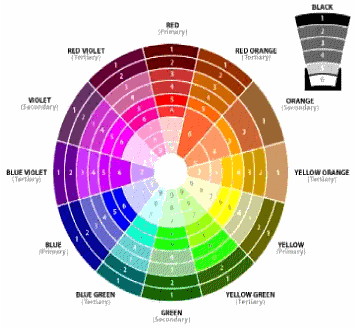
This table has been copied from The colours in the Rock Plant Colour Wheel on the left; like 'Red 12 is Blood Red', correspond to the same colour 'Blood Red' in the following table:- One of these colours is to be used in these galleries to provide as near a match to the colour of the respective flower petal or respective leaf found of each plant in the internet. |
|||||||||||||||
White |
Silver or Gray 80 |
Fog or Gray 60 |
Dove Gray or Gray 40 |
Mine Shaft or Gray 20 |
Black |
|
Vitamin C from Orange-s |
Orange |
Red Necta-rine |
|
|
|
|
|
|
|
|
|
|
|
|
|
|
|
|
|
|
|
|
|
|
Green Spiritz |
|
|
|
|
Orange Buddha Gold |
Sun-glow Yellow |
Dim Yellow Peach |
Atomic Tang-erine-Orange |
Orang-elin |
Super Red |
|
|
|
|
Karaka Red |
|
|
|
|
|
|
|
|
|
|
|
|
|
|
|
|
Electric |
Green Just for Fun |
Madras Blue |
Green Grass Stain |
Mossy Green Rock |
Ralph Yellow |
Electric Yellow |
Wheat Brown |
Brown Tusc-any |
Dark Cherry Red |
Blood-red |
OU Crim-son Red |
Boston Univ-ersity Red |
Red |
Water-melon Pink |
Bright Red |
|
|
|
|
|
|
|
|
|
|
|
|
|
|
|
|
Lovely Lime Green |
Young Green Grape |
Green Past-ure |
Costa del Sol Green |
Anot-her Mossy Green |
Sum-mer Orange Break |
Golden-Yellow Fizz |
Brown Gold Line |
Brown Choc-olate |
Red Claret |
Red Lady-bug |
Pers-ian Red |
Red Nect-arine |
Deep Red Rose |
Pink Bikini |
Broad-way Pink |
|
|
|
|
|
|
|
|
|
|
|
|
|
|
|
|
Bright Green |
Light Green |
Slight-ly Opt-imistic Green |
Lacan-don Green |
Not Your Green |
Pale Yellow |
Unmel-low Yellow |
Rusty Brown Pelican |
Brown Nut-meg Wood |
Brown Copper Rose |
Red Fuzzy Wuzzy |
Seat-tle Orange Salmon |
Red Colin |
Mag-enta Cornu-copia |
Rose Pink |
Process Red Pagen-ta |
|
|
|
|
|
|
|
|
|
|
|
|
|
|
|
|
Slimer 2 Green |
Time to App-reciate Green |
Vihrea Green |
Esper-anza Green |
Distant Green Neon |
Pine Glade Yellow |
Canary-Yellow |
Brow-ser Brown Caram-el |
Brown Heat-land |
Faded Red Roses |
Light Pink Salmon |
Flex-eril Pink |
Faded Red |
Fresh Red Egg-plant |
Mag-enta Razzle Dazzle Rose |
|
|
|
|
|
|
|
|
|
|
|
|
|
|
|
|
|
Astro-turf Green - Empty |
Green Fabula Fabul-ae |
Verdun Green |
Lars-beck Green |
Pale Green |
Green Lime-ade |
Bone Yellow |
Peach-Orange |
Deep Orange Saffron |
Flat-pink |
Pink |
Forbid-den Mag-enta |
Mauve Red |
Dried Red Blood |
Red Bruisin |
Plain Red Jane |
|
|
|
|
|
|
|
|
|
|
|
|
|
|
|
|
Frankie The Green Lizard |
Lily Pad Green |
|
|
Green Wasabi |
Aurora Borealis Green |
Off-white Green |
|
|
|
Purple Lav-ender |
Dingy Mauve Purple |
I Dont Purple Now |
True Purple |
Royal Purple |
Purple Beet |
|
|
|
|
|
|
|
|
|
|
|
|
|
|
|
|
Pakis-tan Green |
Swamp Muck Green |
Irish Flag Green |
Green Bonsai |
High-land Green |
Weak Green |
|
|
|
Mag-enta Dev-otion |
Deeper Pink |
Mag-enta Shifts |
What Hur Violet? |
|
Purple Ameth-eyst |
Purple Cali-hoe |
|
|
|
|
|
|
|
|
|
|
|
|
|
|
|
|
Pine Green |
Her-man the Worm'n Green |
Star-bucks Green |
US Mint Greens |
Putt-ing Green |
Whisp-er Blue |
Baby Blue |
Dodger Blue |
Celest-ial Blue |
Laven-der Blue |
Mauve |
Ameth-yst Purple |
Gurple Purple |
Blue Plum Wine |
Mardi Gras Purple |
Deep Mag-enta |
|
|
|
|
|
|
|
|
|
|
|
|
|
|
|
|
|
Likely Green |
Fun Green |
Pen Green |
Winter-green |
Light Cyan Blue |
Um Sunken Pool Blue |
Dell Blue |
Blue Gray |
Praise Blue |
Blue-bell |
Purple The Symbol |
Blue Serene Spirit |
Violet |
The Purple Bands |
Grape Mag-enta |
|
|
|
|
|
|
|
|
|
|
|
|
|
|
|
|
Neon Avocado Green |
Minty (Bright Green) |
Near Lime Green |
Green Haze |
Aqua-marine Blue |
Blue Aqua |
Patina Blue |
Dark Mid-night Blue |
Dark-ening Blue Sky |
Cobalt Blue |
Blue Peri-winkle |
Blue Kimb-erly |
Purpl-ish Blue |
Anot-her Purple |
Purple Rasp-berry |
Pure Bright-ness Purple |
|
|
|
|
|
|
|
|
|
|
|
|
|
|
|
|
Spring Green |
Under The Blue Sea |
Crayola Green Sham-rock |
Cyan Blue Shift |
Lighter Turqu-oise Blue |
Gareen Light Green |
Rain-forest Green |
Skinny Blue |
Dar Powder Blue |
Royal Blue |
Sophie Blue |
Blue (pig-ment) |
Blue Steely Eyes |
A Blue Popple Eater |
Look to the Purple Sky |
Blue Safe |
|
|
|
|
|
|
|
|
|
|
|
|
|
|
|
|
Light Teal Blue |
Aphro-dite's Blue Robe |
|
Robin Egg Blue |
Gentle Green |
Blue Stone |
Green Dirty Oil |
Curious Blue |
Blue Mariner |
Blue |
Blue For You |
Navy Blue |
French Blue |
Mid-night Blue |
Put the Bass in the Blues |
Corn-flower Blue |
|
|
|
|
|
|
|
|
|
|
|
|
|
|
|
|
Green Mint to do that |
|
|
|
|
Sky Blue |
Blue Splish |
Pole Blue |
Iris Blue |
Blue Below |
Covie Blue |
|
|
|
|
Deep Blue |
|
|
|
|
|
|
|
|
|
|
|
|
|
|
|
|
|
|
|
|
|
|
Arrow Blue |
Azure Rad-iance Blue |
Kiblupa Blue |
Blue Electric |
|
|
|
|
|
|
|
|
|
|
|
|
|
|
|
|
|
|
|
|
|
|
Variegated |
Variegated |
Variegated 1 |
|
|
|
|
|
|
|
||||||
|
|||||||||||||||


Copied from Ivydene Gardens Rock Garden Plants Suitable for Small Gardens in Colour Wheel Gallery: Introduction |
Vancouver Island Rock and Alpine Garden Society is a club of plant lovers living near Victoria, British Columbia, Canada, who visit, study, photograph, draw and grow alpine plants, bog dwellers and woodlanders, whether native or exotic. We encourage the propagation and distribution of plants.
List of Desirable Plants (from Vancouver Island Rock Asterisks following entries in the list denote plants known to the author from local gardens. Double asterisks indicate species which have done particularly well in the author's rock garden which is located mostly on south-facing slopes. No, or only short-term experience is available for the unmarked species, but they are expected to perform well and should be tried wherever obtainable.
|